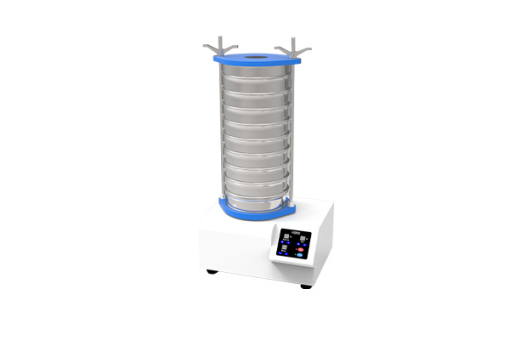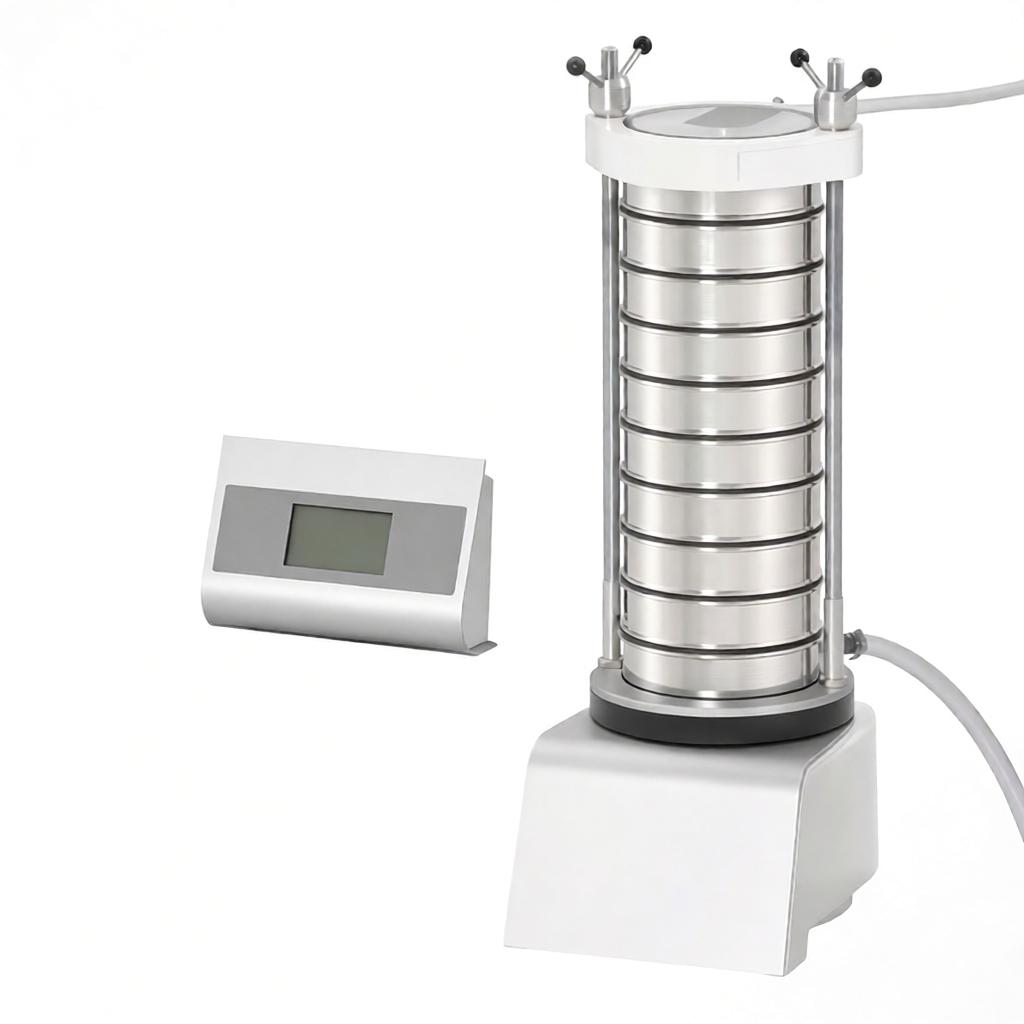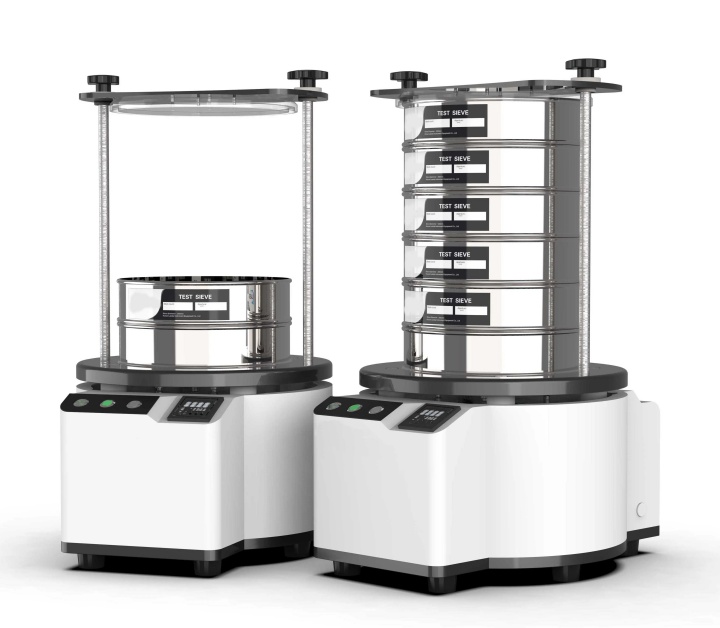
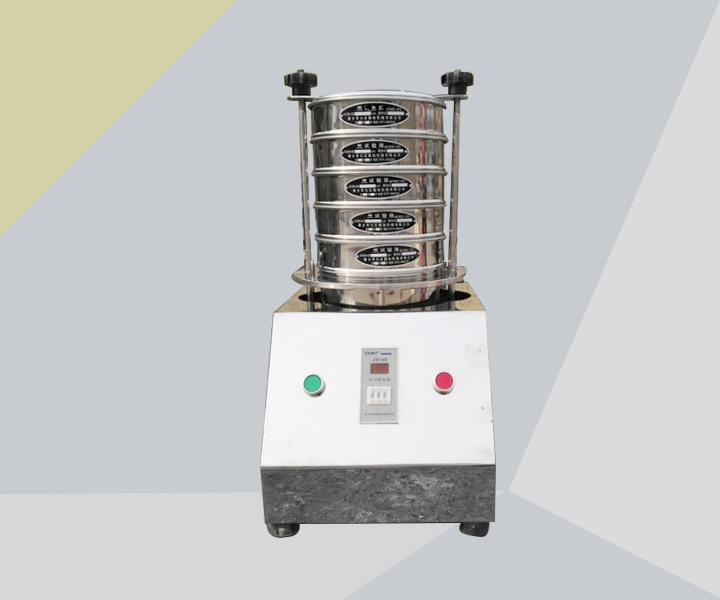
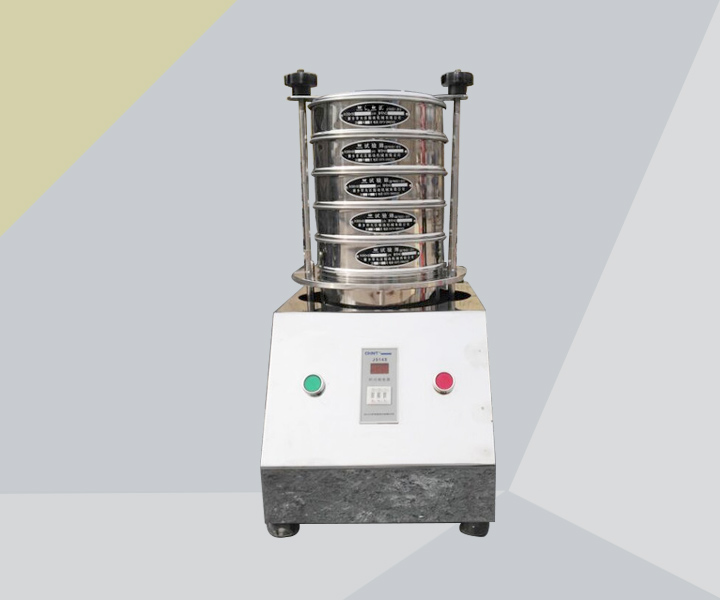
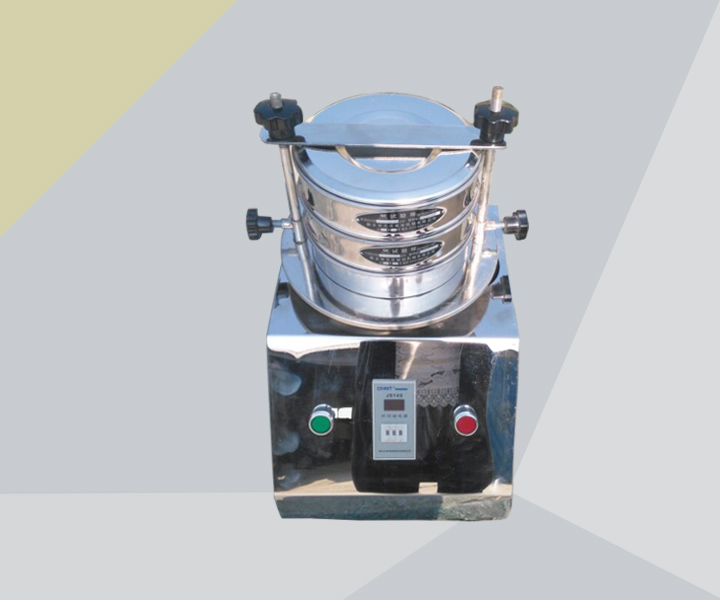
Electromagnetic Sieve Shaker
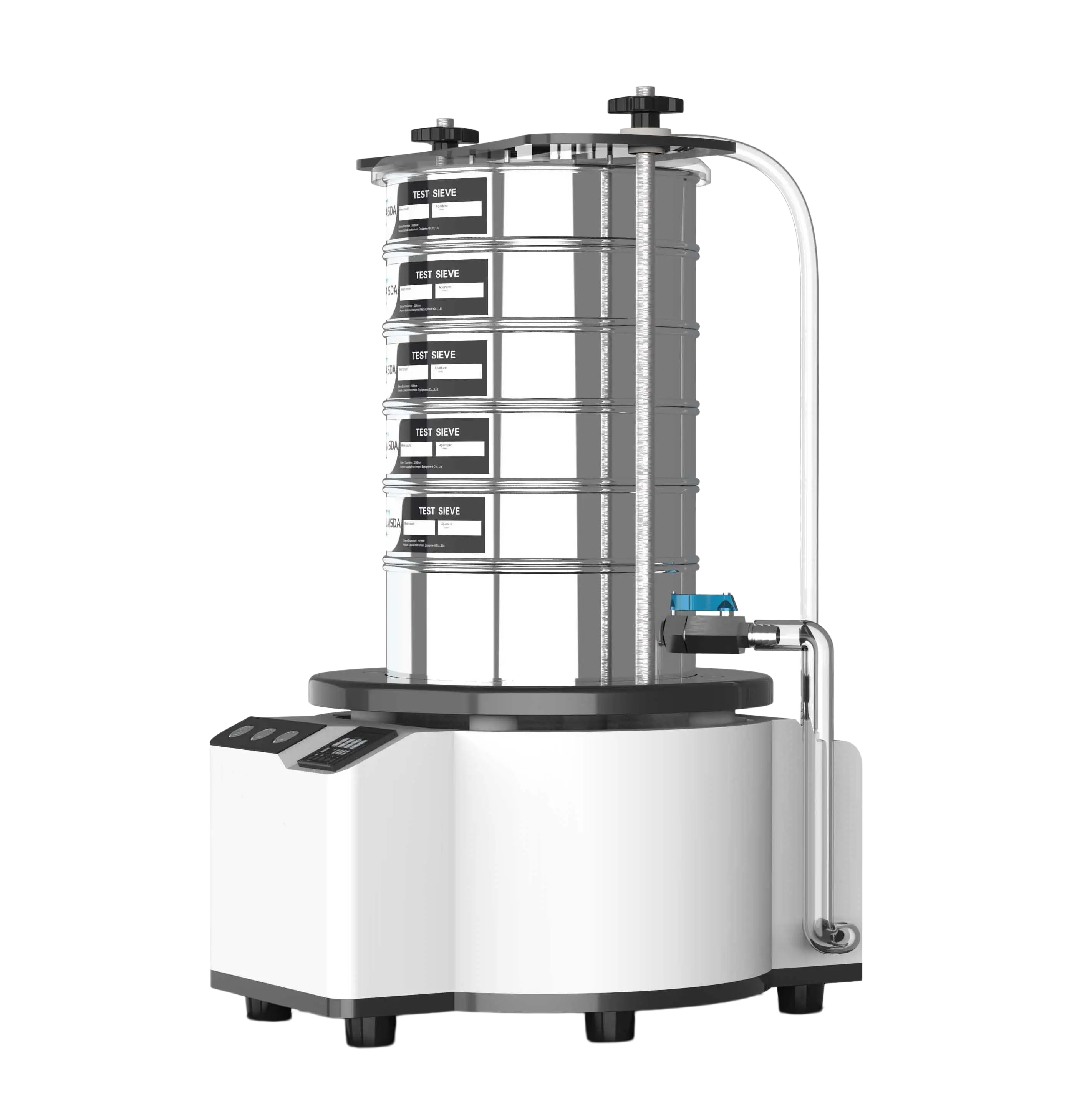
The Electromagnetic Sieve Shaker is designed for laboratory particle size analysis, fine particle separation, and multi-stage screening. It is suitable for laboratories, teaching departments, and material testing applications that require efficient and repeatable separation of particulate materials.
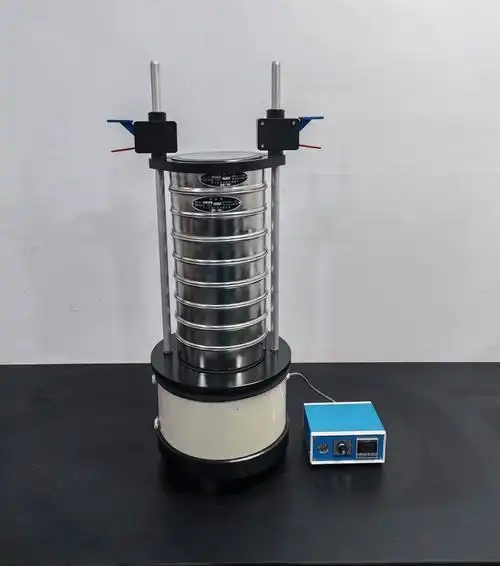
With a capacity of up to 8 layers of test sieves, the sieve shaker allows multiple particle size fractions to be separated during one screening operation. By selecting the appropriate test sieve and mesh size, it can be used for powders, fine particles, and other particulate materials according to specific testing requirements.
Key Specifications
| Item | Specification |
|---|---|
| Sieve Diameter | According to product configuration |
| Maximum Sieve Layers | Up to 8 layers |
| Sieve Type | Test sieves |
| Application | Particle size analysis and particle separation |
| Material Options | SS304 / SS316 / SS202 |
| Certification | CE / ISO 9001 |
Product Features
Product Features
- Electromagnetic Vibration: The electromagnetic drive provides stable vibration for efficient particle separation and laboratory sieve analysis.
- Multi-Layer Screening: The sieve shaker can accommodate up to 8 layers of test sieves, allowing multiple particle size fractions to be separated in one screening operation.
- Fine Particle Separation: It is suitable for particle size analysis and screening of powders and fine particulate materials when the appropriate test sieve and mesh size are selected.
- Stainless Steel Options: SS304, SS316 and SS202 material options are available according to product configuration and application requirements.
- Easy Operation: The sieve shaker is designed for convenient laboratory operation and routine particle size testing.
- Easy Maintenance: The straightforward structure makes routine cleaning, inspection and maintenance convenient.
Product Applications
The Electromagnetic Sieve Shaker is designed for particle size analysis, particle separation and quality control of powders and particulate materials. It can be used in laboratories, teaching departments and material testing applications where reliable particle size testing is required.
- Food Industry: Particle size testing of flour, powders, grains and other food materials.
- Pharmaceutical Industry: Particle size analysis of powders and pharmaceutical materials.
- Chemical Industry: Screening and particle size determination of chemical powders and raw materials.
- Pigment Industry: Particle size separation and quality control of pigment powders.
- Mining and Minerals: Particle size analysis of mineral and granular materials.
- Scientific Research: Laboratory particle size testing, material research and teaching applications.
Packing & Delivery
The Electromagnetic Sieve Shaker is securely packed in a wooden case to help protect the equipment during international transportation.
We can arrange international shipment according to the destination and customer requirements. Shipping methods and logistics arrangements can be discussed before order confirmation.
Product Structure
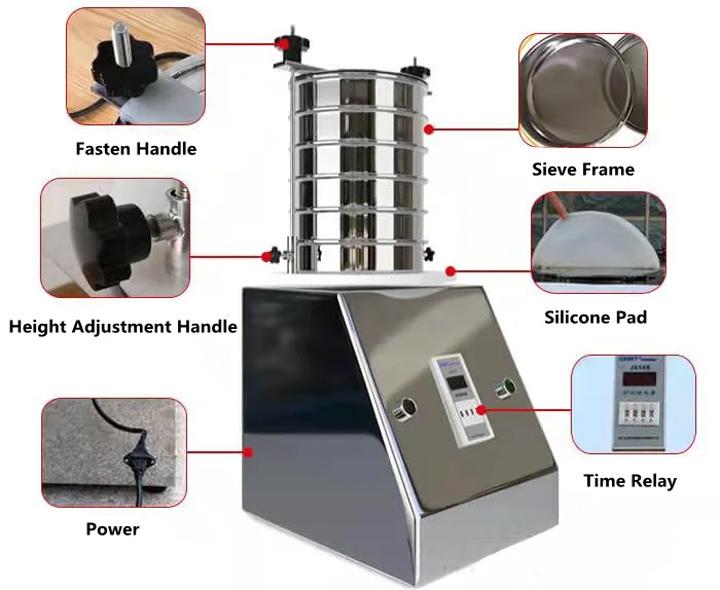
| Handle | Clamping Ring | Upright Stanchion | Screen |
| Nut | Pallet | Vibrating Body | Spring Seat |
| Power Switch | Spring | Machine Base | Tail |
| Shell Part | Vibration Motor | Electrical Relay | Cover Board |
Technical Specifications
| Screen No. | Diameter (mm) | Mesh | Particle Size (μm) |
|---|---|---|---|
| No.1 | 200 | 10 meshes | 2000±70 μm |
| No.2 | 200 | 24 meshes | 850±29 μm |
| No.3 | 200 | 50 meshes | 355±13 μm |
| No.4 | 200 | 65 meshes | 250±9.9 μm |
| No.5 | 200 | 80 meshes | 180±7.6 μm |
| No.6 | 200 | 100 meshes | 150±6.6 μm |
| No.7 | 200 | 120 meshes | 125±5.8 μm |
| No.8 | 200 | 150 meshes | 90±4.6 μm |
Certifications: CE and ISO 9001.
How Does an Electromagnetic Sieve Shaker Work?
An Electromagnetic Sieve Shaker uses electromagnetic vibration to move material across a stack of test sieves. When the equipment is switched on, the electromagnetic drive generates a controlled vibrating motion that causes the particles to move and pass through the sieve openings according to their size.
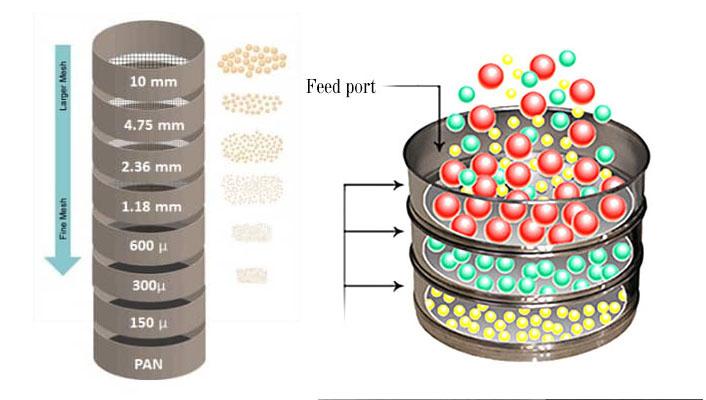
During the sieving process, test sieves with different mesh sizes are arranged from larger to smaller openings. Larger particles remain on the upper sieves, while smaller particles pass through the openings and are collected on the lower sieves or receiving pan. This multi-layer screening process allows different particle size fractions to be separated during one operation.
The electromagnetic vibration system is suitable for laboratory particle size analysis and fine particle separation. By selecting an appropriate sieve diameter and mesh size, users can perform particle size testing according to the characteristics of the sample and the requirements of the application.
Electromagnetic Sieve Shaker for Particle Size Analysis
The Electromagnetic Sieve Shaker can be used as sieve analysis equipment for particle size analysis of powders and other particulate materials.A stack of test sieves with different mesh sizes separates the sample into different particle size fractions during the screening process.
After sieving, the material retained on each sieve can be collected and evaluated to determine the particle size distribution of the sample. Using multiple test sieves in one operation can provide a more complete separation of different particle size ranges.
The selection of the test sieve should be based on the expected particle size, material characteristics and testing requirements. The sieve shaker can be used in laboratory testing and quality control applications involving food, pharmaceutical, chemical, pigment, mining and mineral materials, as well as scientific research.
How to Choose the Right Test Sieve?
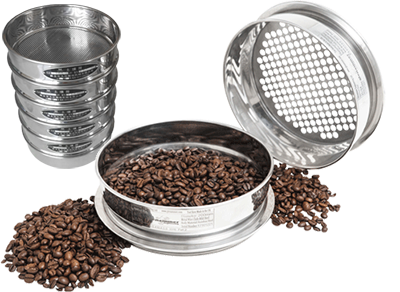
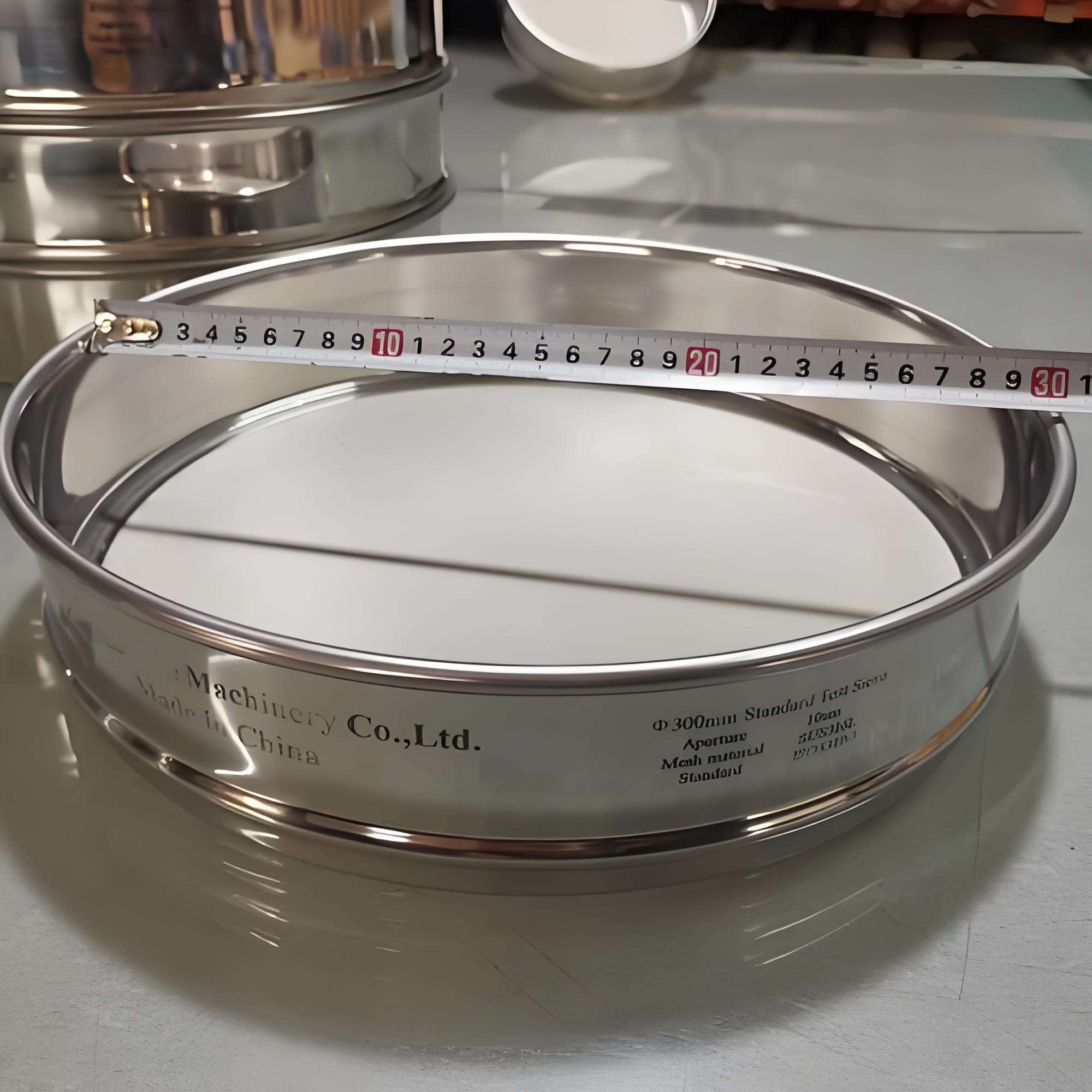
Choosing the appropriate test sieve is important for accurate particle size analysis. The main factors to consider include sieve diameter, mesh size, particle size range, sample characteristics and the required number of particle size fractions.
The mesh size determines the size of the sieve openings. A smaller mesh opening is suitable for separating finer particles, while a larger opening is used for coarser materials. When several test sieves are stacked together, they can separate the sample into multiple particle size fractions during one screening operation.
The sieve material and diameter should also be selected according to the application and the compatible configuration of the sieve shaker. For reliable testing, the test sieve should be suitable for the material being analyzed and the required particle size range.
For more information about test sieve structure, mesh classification and applications, see our test sieve guide.
Get a Quote