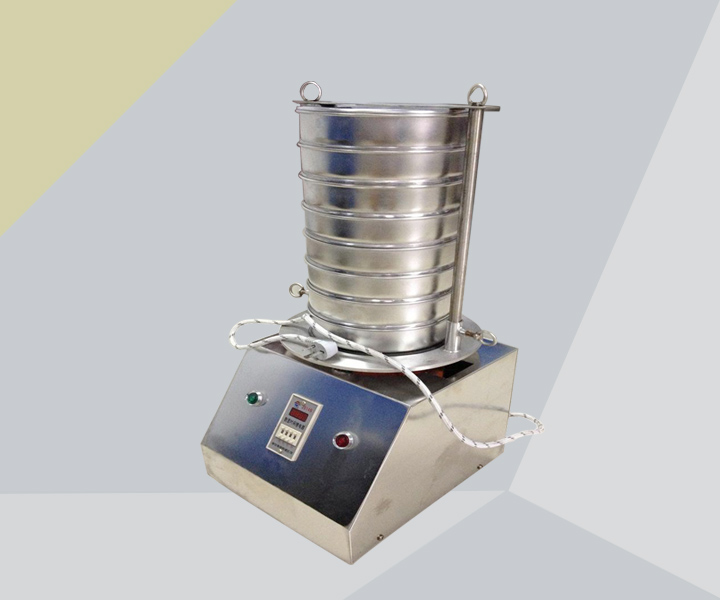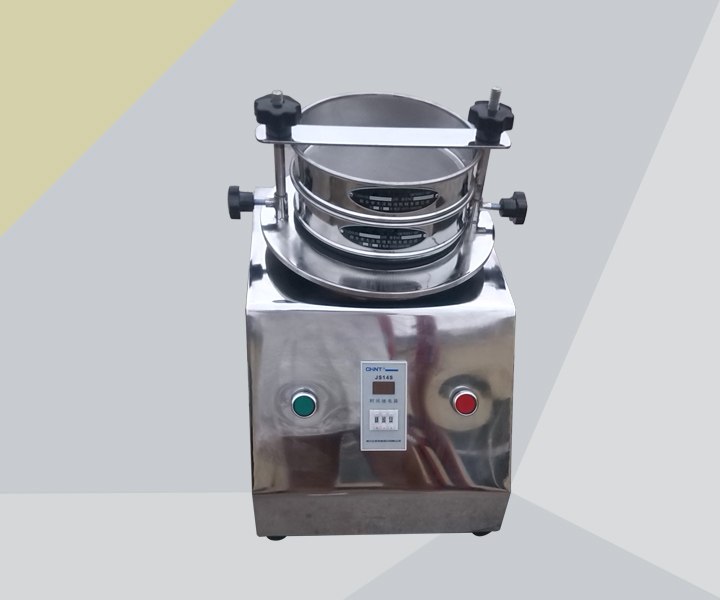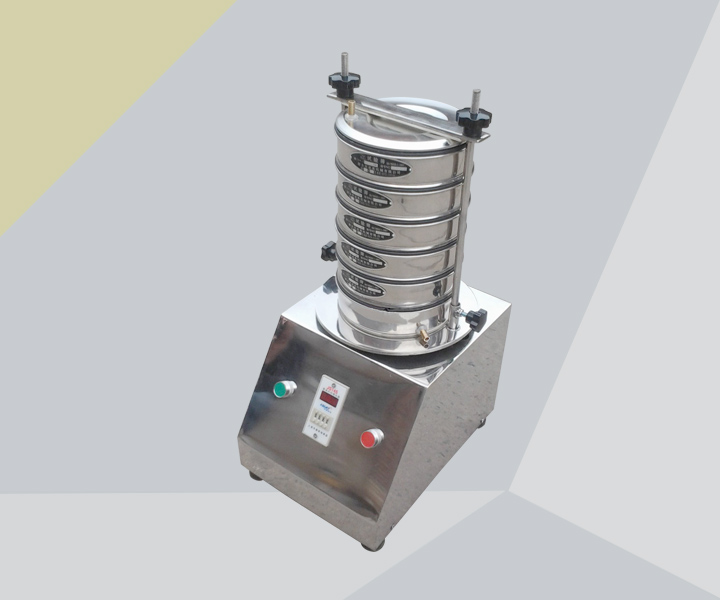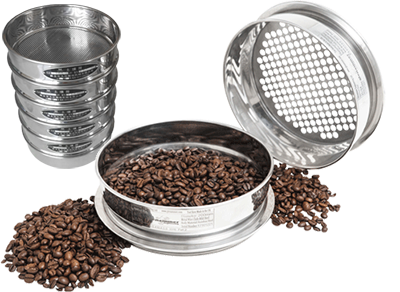
Plastic particle usually refers to a granular material formed by a high molecular polymer after heating, melting, extrusion, cooling and pelletizing. These particles are generally spherical, cylindrical, elliptical or irregular in shape, and the particle size ranges from 1 to 5 mm. Plastic particle sieve is an experimental device specially used for particle size classification. The device is mainly used for raw material testing, production process monitoring, product quality evaluation, and formula comparison analysis. In actual production, the particle size distribution directly affects the processing parameter setting and molding consistency, so it needs to be screened and tested.
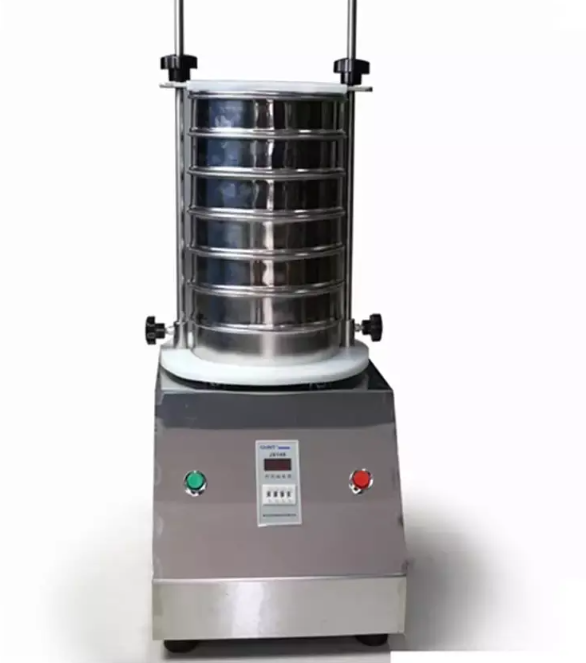
Working principle of plastic particle sieve
The basic working principle of plastic particle sieve is to make the sample move on a set of sieves arranged in descending order of aperture through vibration or other driving methods. The particles are graded by particle size under the combined action of gravity, vibration force and sieve structure.
The specific process is as follows: When the plastic particles are placed on the top of the sieve and the sieve machine is started, the sieve body produces periodic vibration (usually vertical or circumferential vibration). Smaller particles fall into the next sieve through the pores of the upper sieve, while particles larger than the current sieve holes are retained on the surface of the sieve. In this way, particles of different particle size ranges will be separated layer by layer during the sieving process and finally collected on the corresponding sieve layer or chassis. The particle size distribution of the sample can be obtained by weighing or counting the particles of each layer. This principle is suitable for materials with good particle fluidity and relatively controllable particle size. For plastic particles with sticky or strong electrostatic effects on the surface, the screening efficiency and accuracy may be affected to a certain extent. Therefore, some sieve machines are equipped with a net cleaning device or use electromagnetic vibration to meet specific needs.
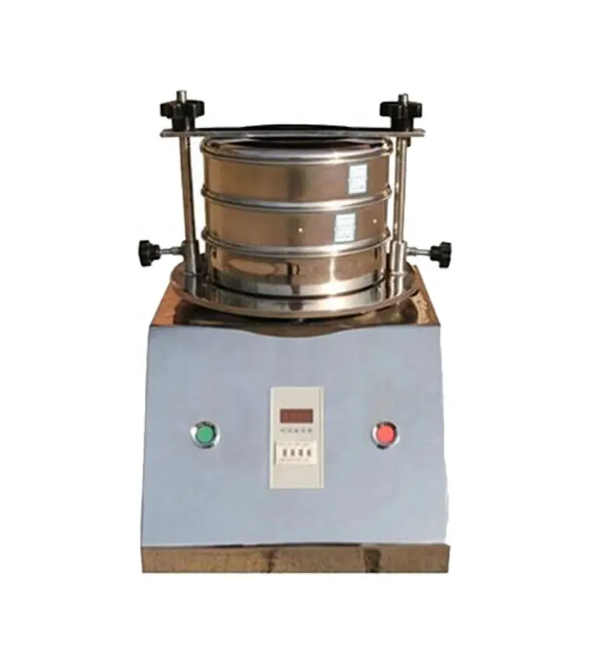
Plastic particle sieve structure
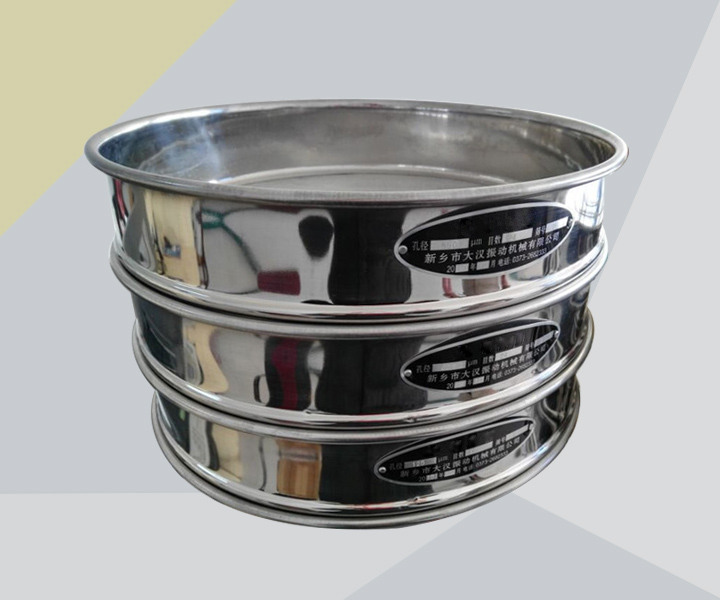
Sieve (sieve frame): The core part of the test sieve is a round or square frame composed of several metal meshes, and the mesh aperture decreases from top to bottom. The sieve is usually made of stainless steel and has certain corrosion resistance and mechanical strength. The mesh size and aperture of the sieve should be selected according to the particle size range of the sample.
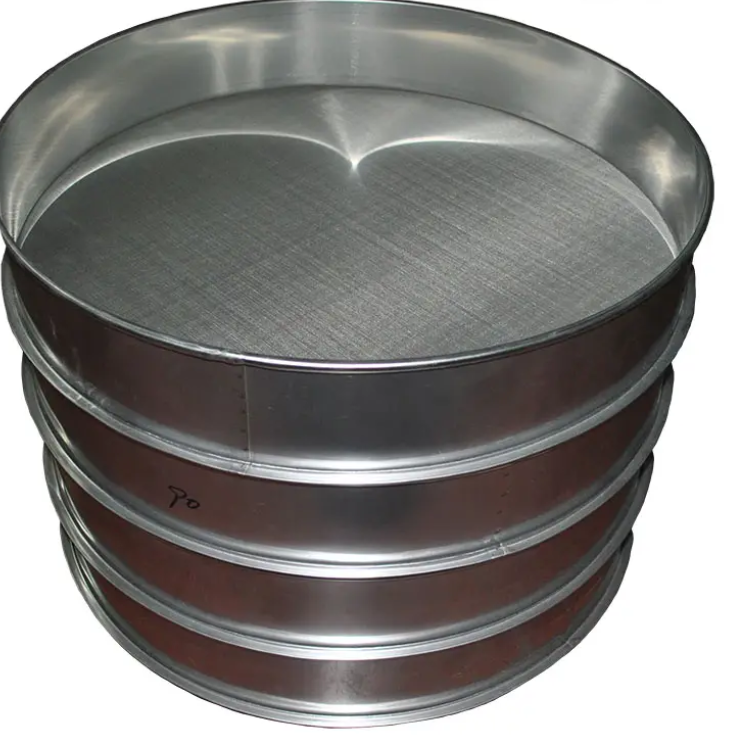
Vibration device: It includes a vibration motor or an electromagnetic vibrator, which is the core component that provides driving force. The vibration generated by the device can disperse and jump the material on the sieve, thereby promoting the particles to pass through the sieve holes. The vibration frequency and amplitude are usually adjustable to meet the screening needs of different materials.
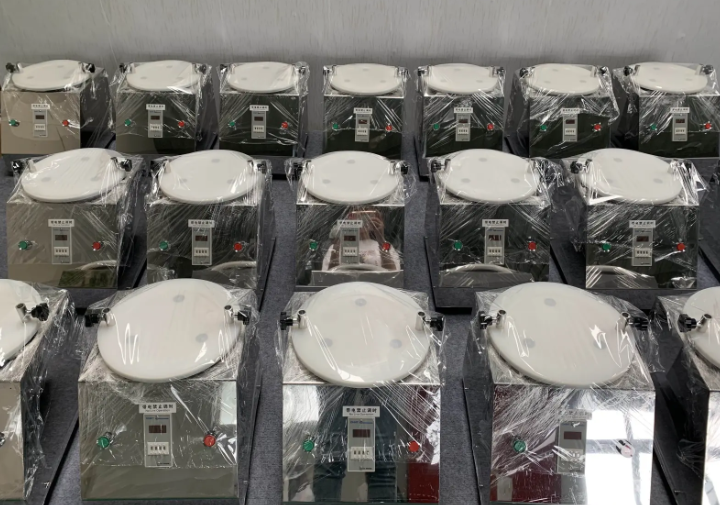
Sieve machine body: It includes a frame, a closed cover, a chassis and other structures for fixing the sieve, which are used to support the sieve and collect the sieved samples. The frame must have a certain stability to keep the screening process smooth.
Control system: The controller is generally used to set the vibration frequency, screening time and start and stop operations. Some equipment is equipped with a timing device to facilitate the consistency of repeated experimental operations.
Screen cleaning device (optional): To prevent the screen from clogging, some devices are equipped with a rubber ball or brush structure under the screen, which bounces with the vibration to remove the clogged particles.
Typical application scenarios of plastic particle sieve
Production process control: In the processing links such as plastic modification, filling, and blending, the particle samples are screened regularly to monitor whether the material state is stable and adjust the process parameters in time. For example, in the production process of filling masterbatch or flame retardant masterbatch, the enterprise needs to control the particle size consistency of each component particle to ensure the uniformity of material mixing.
Formula development and experimental analysis: In the process of developing new materials or new formulas, the test sieve can be used for performance comparison analysis of samples with different particle sizes to provide a reference for optimizing the combination. For example, when researchers study the structure-performance relationship of polymer materials, they need to control the particle size variable to design experiments.
Raw material inspection: During the procurement or acceptance stage of plastic raw materials, the particles provided by the supplier are tested for particle size to determine whether they meet the preset specification requirements. Some extrusion or injection molding equipment manufacturers need to use test sieves to screen and evaluate the feed particles when testing supporting materials.
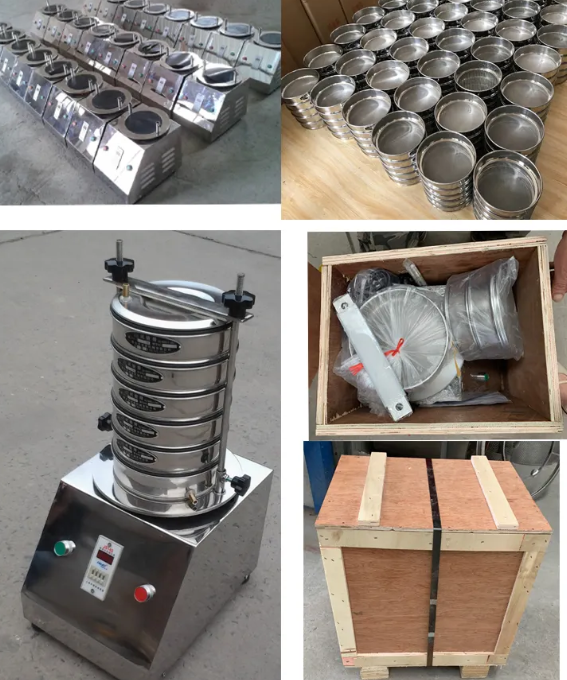
In actual use, the Plastic Particle Sieve has the characteristics of clear structure, specific function and strong adaptability. Its operation mode is based on mechanical vibration or electromagnetic drive. By changing the mesh aperture, it can flexibly meet the needs of particle screening of different specifications. The equipment itself has low requirements on the use environment, and the maintenance work is relatively intuitive, which is suitable for daily repetitive testing. For samples with regular particle shape and good fluidity, the screening results have high repetitive stability.