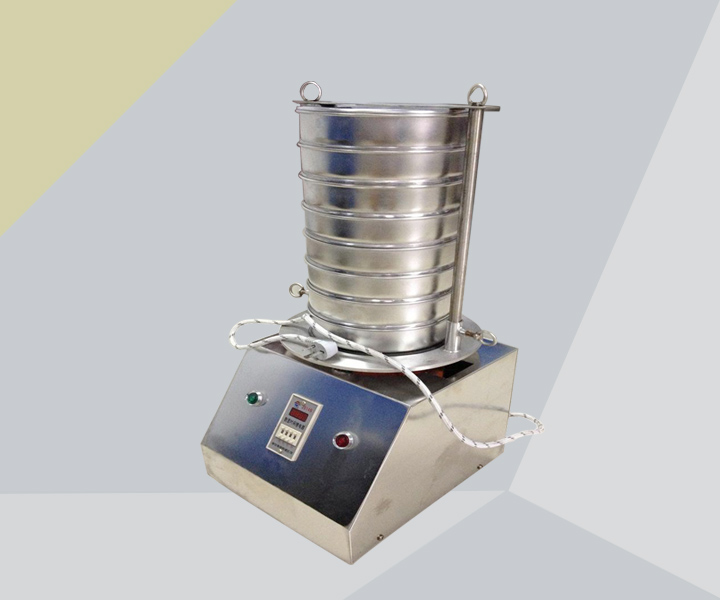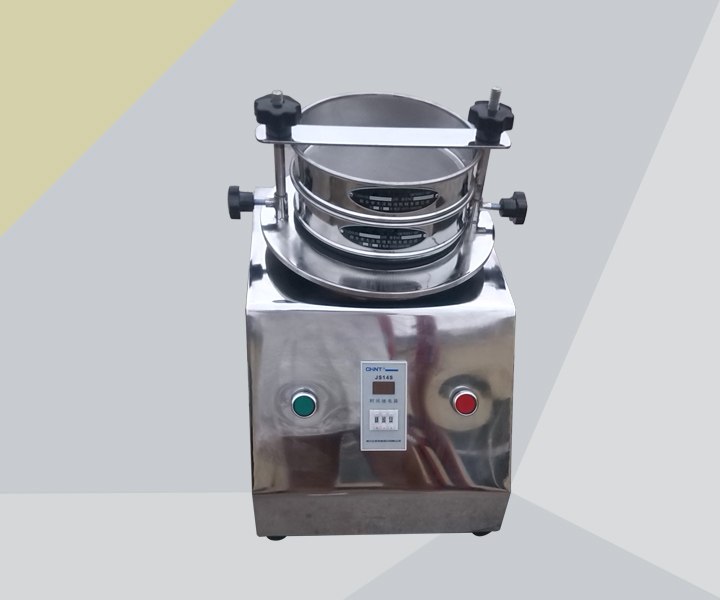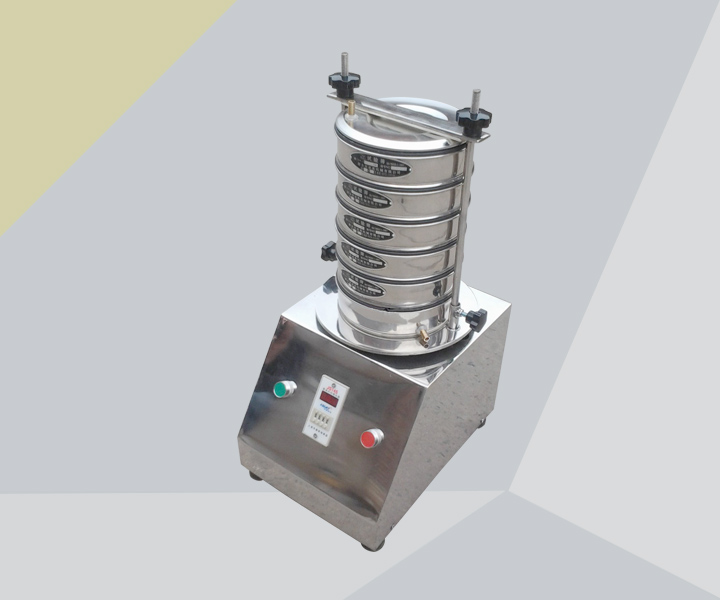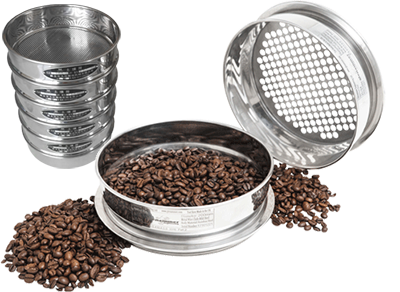
Drug powder sieve is a core device used in the pharmaceutical industry to control the particle size distribution of powders. It can meet the particle size control requirements of special dosage forms such as sustained-release preparations and inhalation preparations. Its working principle is based on the physical interception effect of mechanical vibration and sieve holes. The powder particles are thrown in a state through high-frequency and low-amplitude vibration, and the sieves with different apertures are combined to achieve graded screening of powders. This process not only needs to meet the particle size control requirements of drug production, but also needs to deal with the unique physical and chemical properties of drug powders, such as fluidity, electrostatic properties, hygroscopicity, etc.
Screening principle
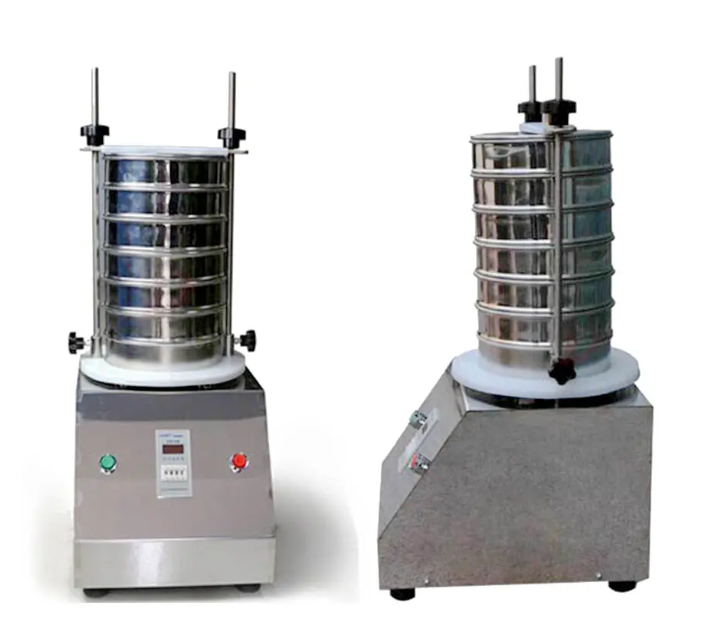
The electromagnetic vibrator or eccentric wheel system generates high-frequency vibration (usually 50-60Hz) to make the powder particles on the screen form a three-dimensional throwing motion. In this process, the powder particles are affected by gravity, inertia and the reaction force of the screen surface:
Particle size classification: When the particle size is smaller than the size of the screen hole, it passes through the screen under the action of gravity; particles with larger particle size are retained on the screen surface, forming a classification effect.
Vibration parameter control: The adjustable amplitude range is 0.5-3mm, and the screening efficiency is optimized by adjusting the vibration intensity. For example, for starch materials that are easy to agglomerate, the amplitude needs to be increased to destroy the force between particles; while for Chinese medicine extract powder with a lower density, the amplitude needs to be reduced to prevent material splashing.
Structure and material
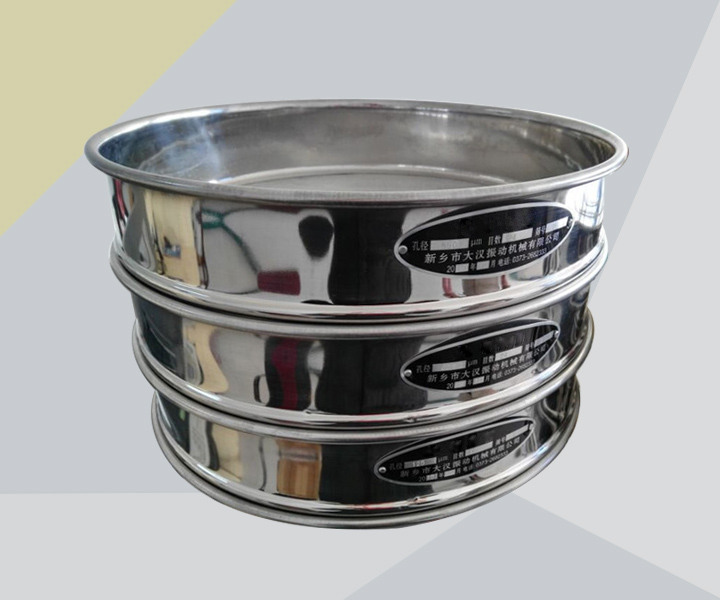
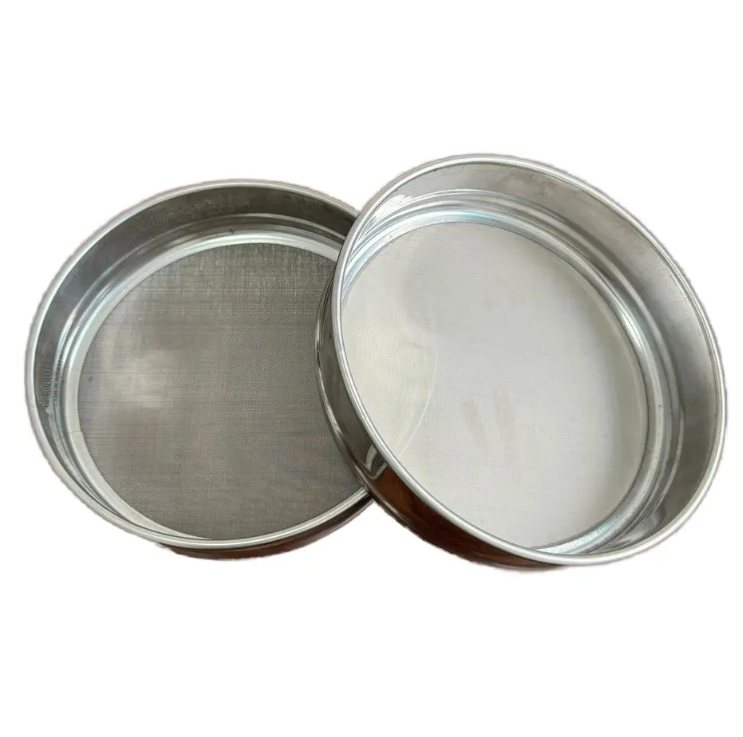
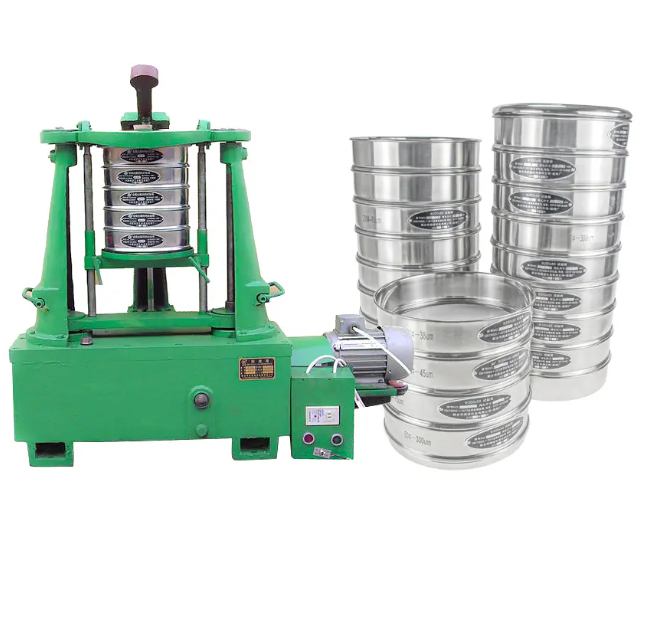
The main structure consists of four parts: screen frame, screen, vibration system and control system. The screen frame is made of 304 stainless steel or brass to ensure the corrosion resistance and structural strength of the equipment. As a core component, the screen provides a variety of material options: metal wire woven mesh (such as stainless steel wire, copper wire) is suitable for conventional material screening; nylon mesh is used for special drug detection sensitive to metal ions; punching plate screen is often used for standard material detection due to its aperture stability.
The screen provides a complete specification chain from 3 mesh to 500 mesh. The No. 1 screen corresponds to 10 mesh (aperture 2.00mm), and the No. 9 screen reaches 200 mesh (aperture 0.075mm). Multiple layers of screens can be used in combination to form a coarse to fine screen sequence combination from top to bottom, realizing multi-level particle size analysis.
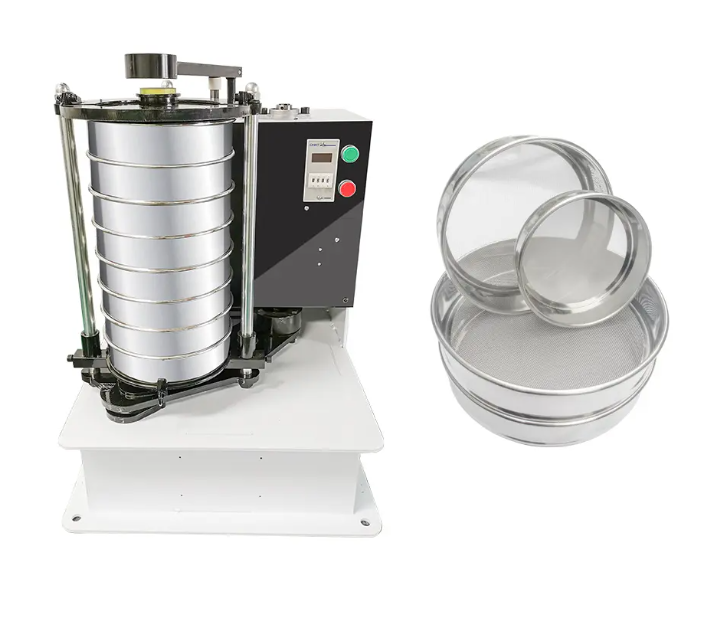
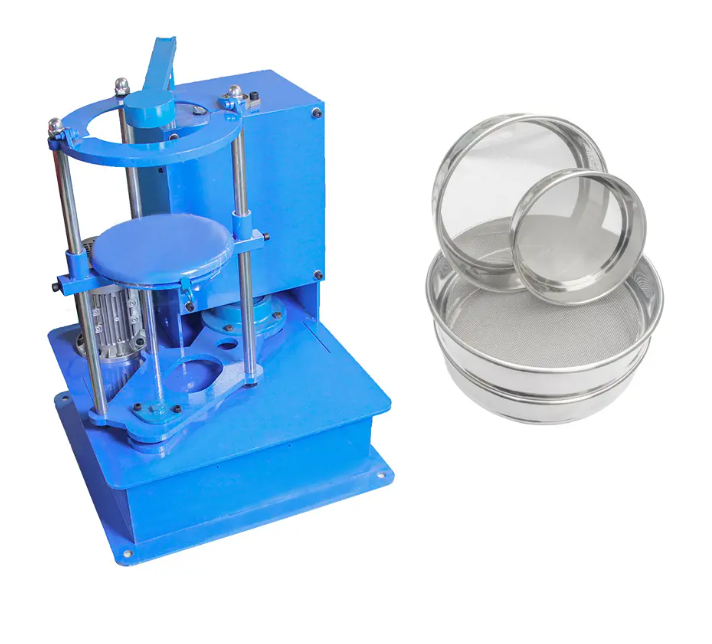
The vibration system is driven by a special vibration motor, and a three-dimensional throwing motion is realized through a spring suspension device. The motor power is configured according to the diameter of the screen surface. A 200mm diameter screen surface is usually equipped with a 50W motor to ensure uniform transmission of vibration force.
The control system integrates timer and amplitude adjustment functions, and the digital display interface can set operating parameters to ensure the reliability of repeatable detection.
Practical application
Raw material testing:
Particle size distribution test of raw materials to ensure compliance with process requirements. For example, cephalosporin antibiotic raw materials need to be compared with the residual amount of 40-mesh and 60-mesh sieves to determine whether the material meets the micronization standard.
Intermediate control:
In tablet production, the particle size of particles before tableting is controlled to prevent excessive coarse particles from causing tablet weight differences or excessive fine particles from causing sticking problems.
Finished product inspection:
Flowability test of capsule filling materials, using a combination of repose angle measurement and sieving analysis to ensure that the filling amount difference meets the regulations. For example, a capsule product requires an angle of repose ≤40° and a 80-mesh sieve permeability ≥95%.
Traditional Chinese medicine production:
For medicinal powder containing volatile oil components, ultrasonic assisted sieving technology is used to destroy the oil film on the surface of the material through 28kHz high-frequency vibration to fully expose the active ingredient particles.
For mineral traditional Chinese medicine (such as cinnabar and realgar), a 0.075mm sieve is required for fine powder detection.
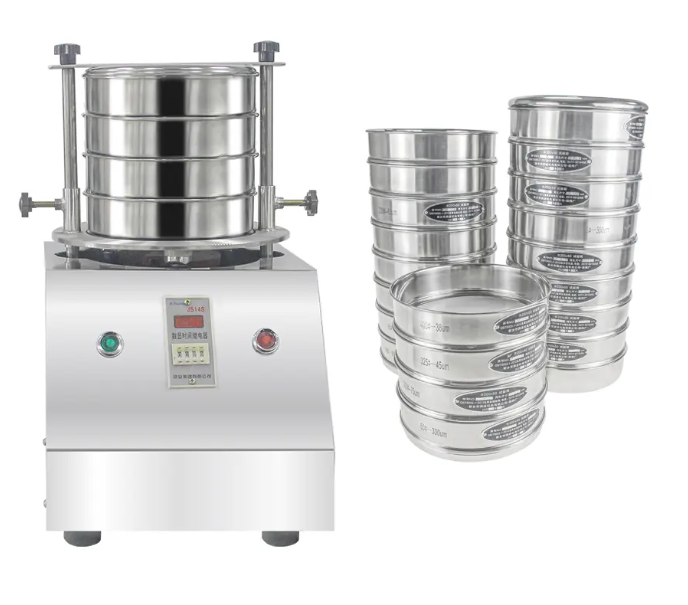
Drug powder sieve is mainly used in raw material testing, intermediate control, finished product inspection and other links, ensuring the quality and stability of drug production. In the raw material drug testing link, the equipment verifies the material particle size distribution through multi-stage sieving and excludes batches with abnormal particle size; in the preparation process, its data supports the parameter setting of key processes such as tableting and filling to avoid the risk of content uniformity caused by out-of-control particle size.