How to Choose a Laboratory Sieve Shaker for Particle Size Analysis?
Monday August-24 2026 17:19:06
How to Choose a Laboratory Sieve Shaker for Particle Size Analysis?
Choosing the right laboratory sieve shaker for particle size analysis starts with the material and test method, not simply with machine price or motor power. The suitable configuration depends on particle-size range, material characteristics, sieve diameter, number of sieve layers, sample quantity, sieving method, shaker type, and testing requirements.
A practical selection process is:
Following this order helps laboratories choose the required equipment without unnecessary capacity or features.
1. Start With Particle Size and Material Characteristics
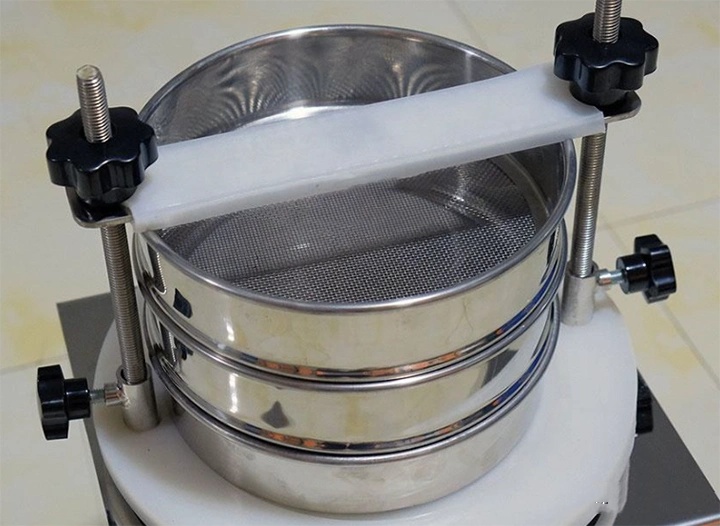
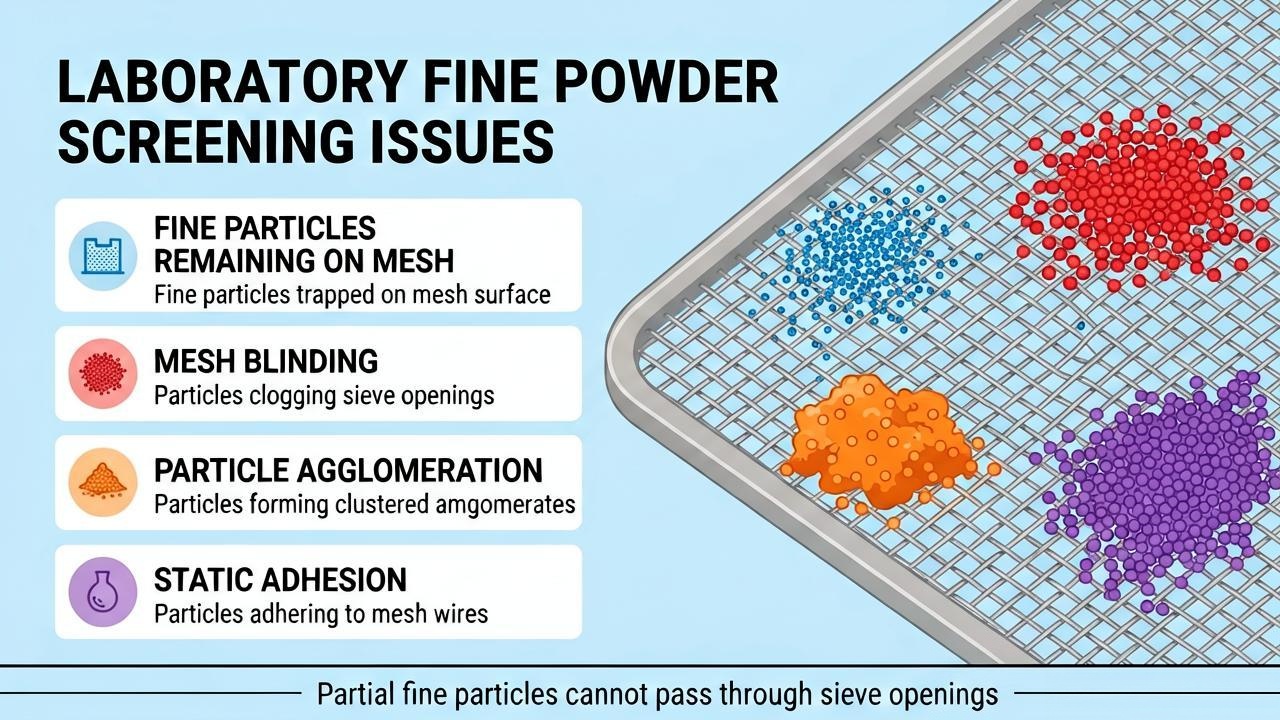
Particle size is the starting point, but material behavior is equally important. Coarse and free-flowing materials are generally easier to screen, while fine or cohesive powders may cause agglomeration, static adhesion, or mesh blinding.
View Material Characteristics Guide
| Material Characteristic | Common Screening Issue | Selection Consideration |
|---|---|---|
| Coarse particles | Usually easy to separate | Conventional laboratory sieving may be suitable |
| Free-flowing granules | Generally good mesh passage | Standard vibration may be sufficient |
| Fine powder | Reduced passage through mesh | Consider controlled vibration |
| Cohesive powder | Agglomeration | Consider suitable vibration or ultrasonic assistance |
| Static-sensitive material | Particle adhesion | Consider ultrasonic assistance |
| Material prone to mesh blinding | Reduced screening efficiency | Consider ultrasonic-assisted sieving |
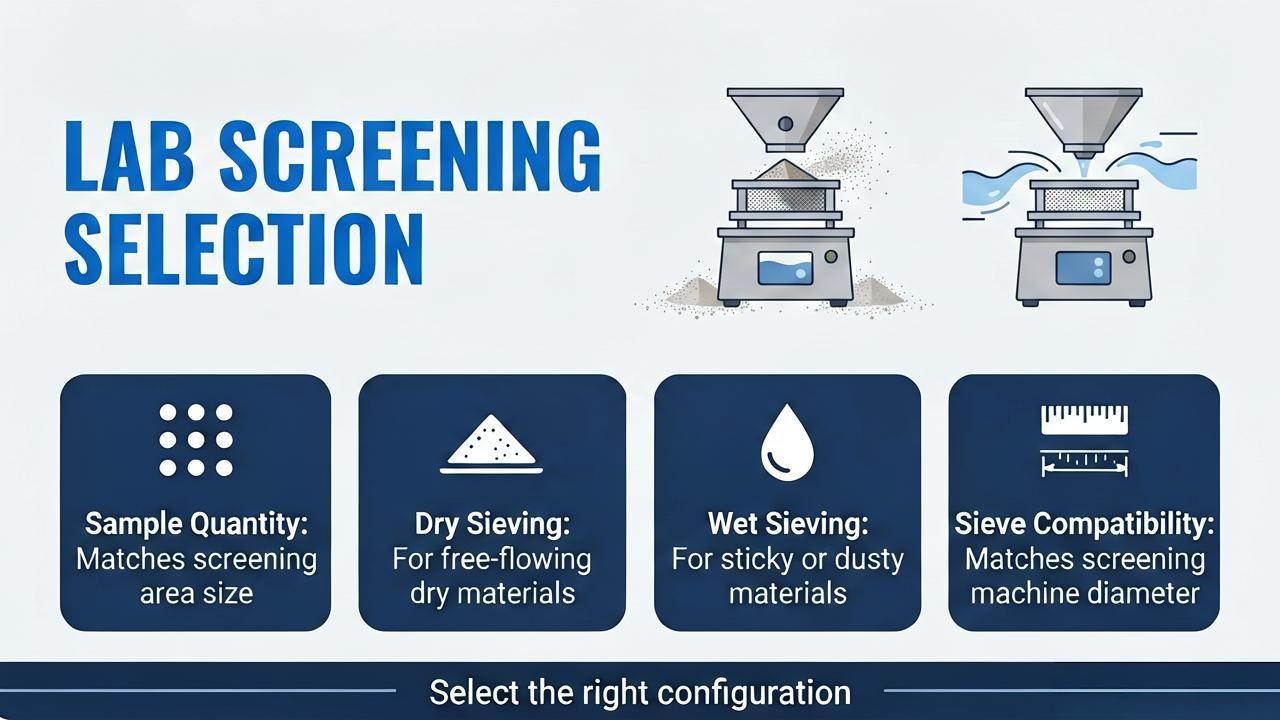
| Wet material | Dry separation may be unsuitable | Consider equipment configured for wet sieving |
Particle size alone is therefore not enough. Materials with a similar size range can require different screening conditions because they behave differently on the sieve surface.
2. Choose the Right Sieve Diameter and Number of Layers
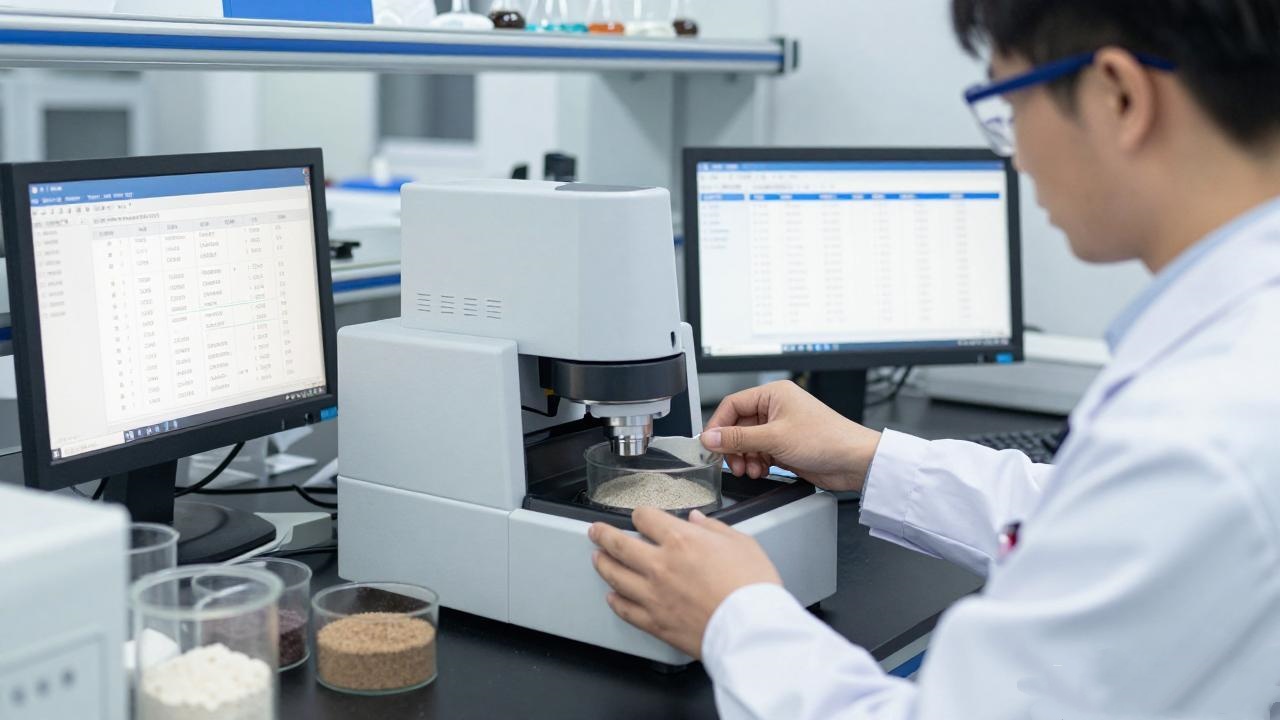
Sieve diameter and sieve aperture serve different purposes. The aperture determines the particle-size separation, while the sieve diameter affects available screening area, material distribution, and practical sample capacity.
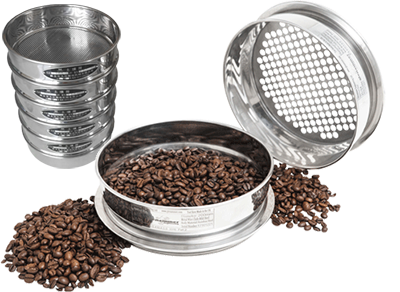
Common laboratory sieve diameters include 100 mm, 200 mm, and 300 mm. The appropriate diameter depends on sample quantity, existing test sieves, laboratory space, and the applicable test method.
The number of sieve layers should correspond to the particle-size fractions required by the analysis. A simple screening test may need only one or two sieves, while a complete particle-size distribution may require a larger series.
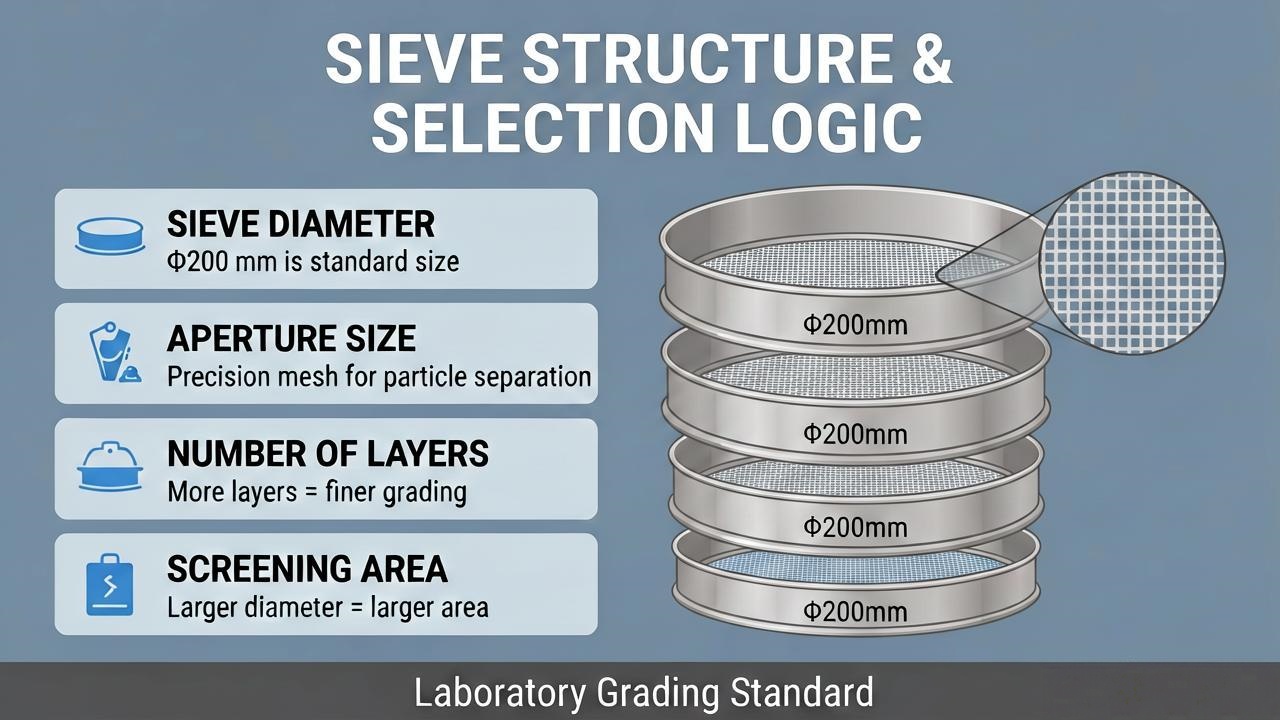
More layers do not automatically produce better results. Use the sieve sizes required by the test.
View Sieve Configuration Selection Guide
Sieve aperture: Select the required aperture according to the particle-size separation specified by the test.
Sieve diameter: Select a suitable diameter according to sample quantity, screening area, laboratory space, and existing test sieves.
Number of layers: Use only the sieve fractions needed to obtain the required particle-size distribution.
Existing sieve set: Confirm compatibility before purchasing a new shaker so that the current laboratory configuration can continue to be used when practical.
3. Match the Shaker Type to the Application
Different laboratory sieve shakers use different movement or energy-input methods. The appropriate type depends on material behavior, sample volume, required screening conditions, and the test method.
View Shaker Type Selection Guide
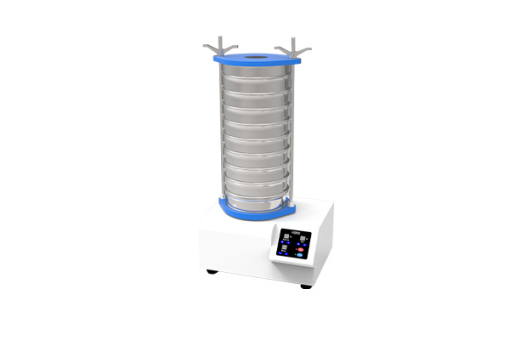
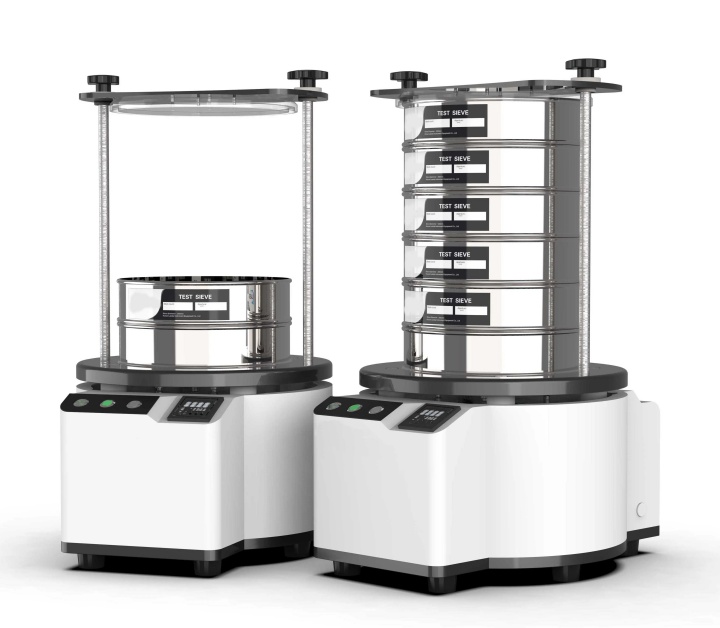
Conventional Laboratory Sieve Shaker: A practical choice for routine screening of free-flowing powders, granules, and other particulate materials.
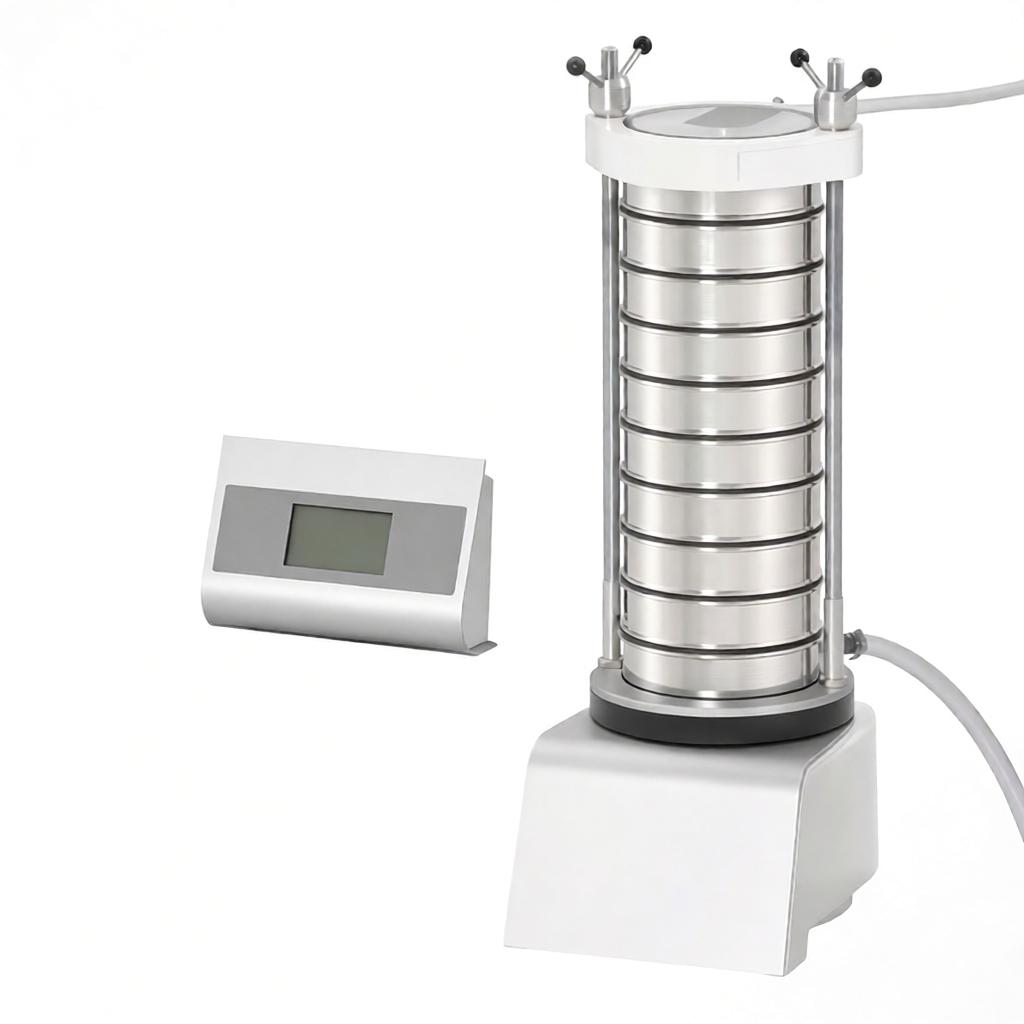
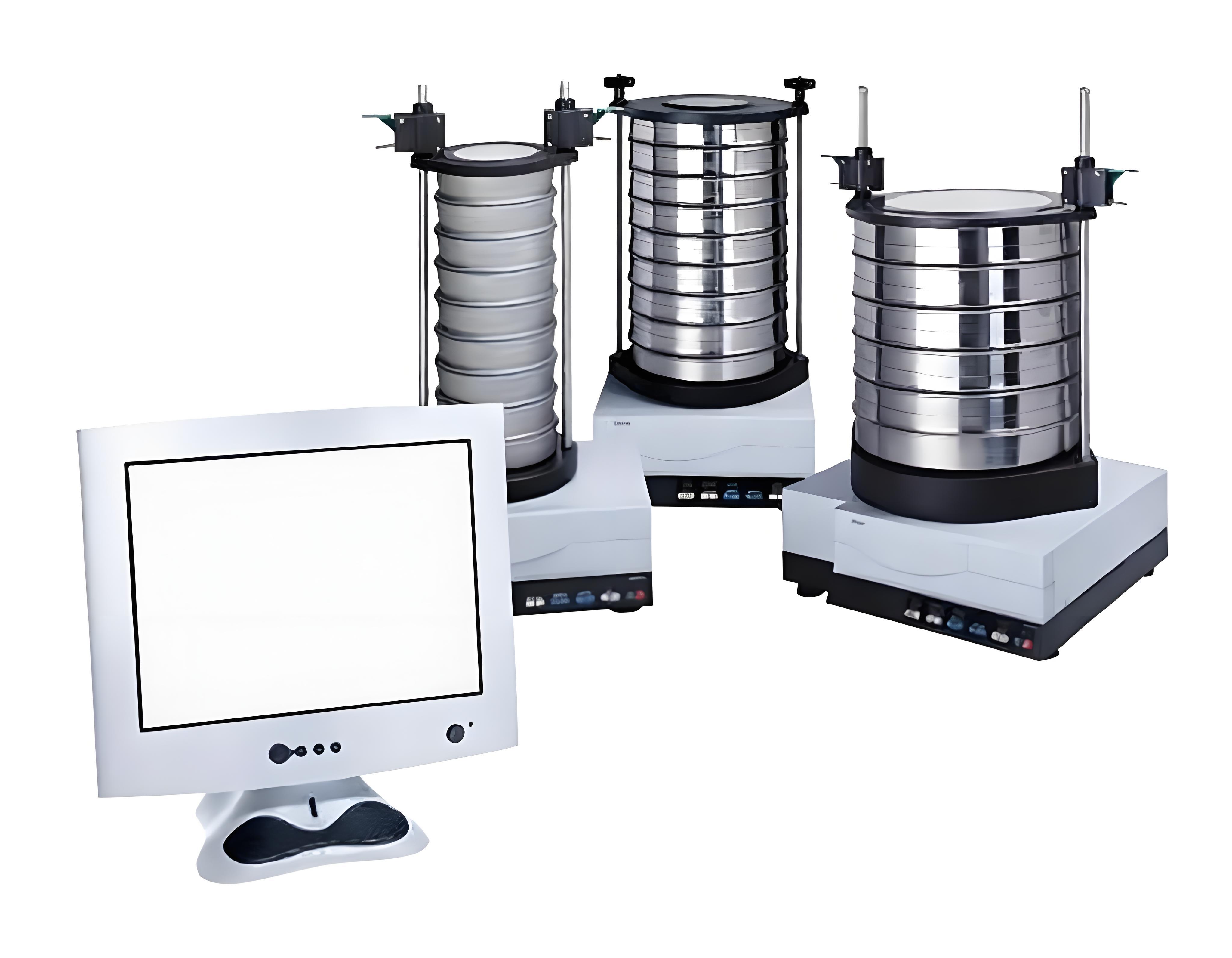
Electromagnetic Sieve Shaker: Useful when controlled vibration and repeatable multi-layer screening are important.
Ultrasonic-Assisted Sieving: More appropriate for fine powders and difficult-to-screen materials affected by mesh blinding, agglomeration, or static adhesion.
Wet Sieving Configuration: Intended for liquid-assisted particle-size testing and requires suitable wet-sieving accessories and setup.
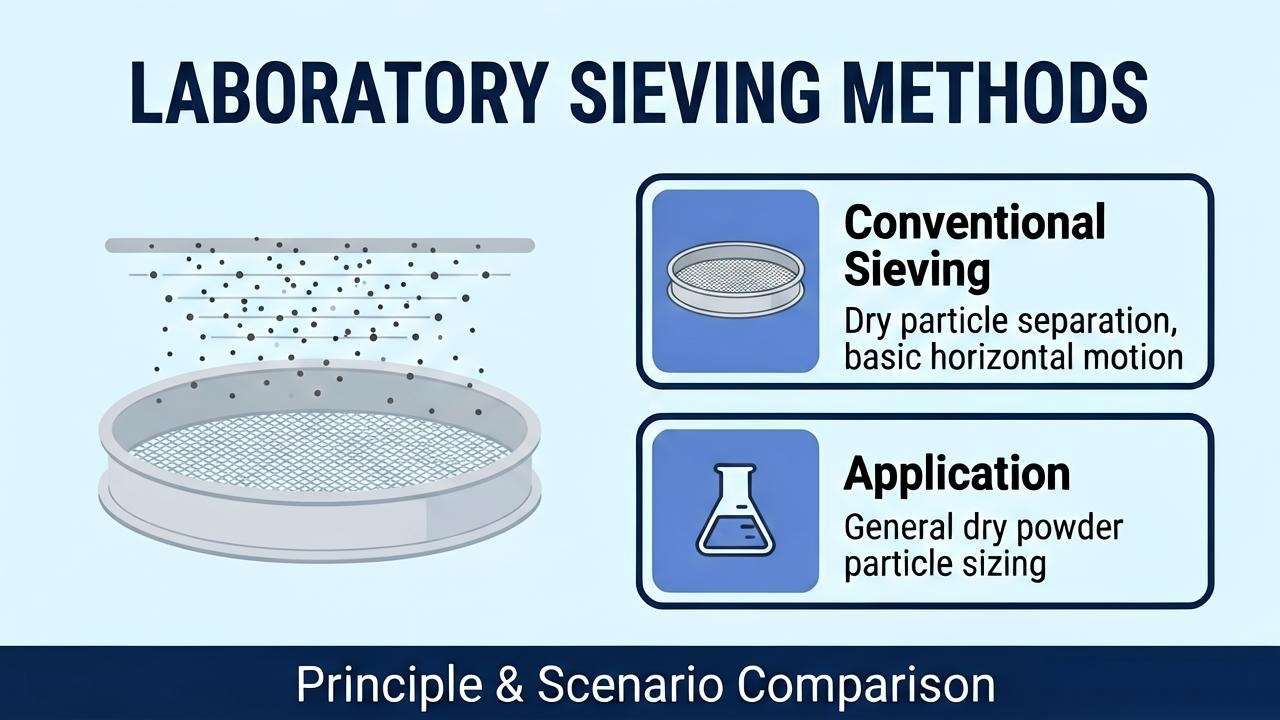
The goal is to establish stable and repeatable screening conditions for the actual material and test rather than simply choosing the strongest vibration.
Controlled vibration can be useful when different materials or sieve configurations are tested.
4. Consider Fine Powders and Mesh Blinding
Fine-powder screening requires additional attention when particles remain on the mesh instead of passing through the openings.
View Fine-Powder Screening Considerations
Mesh blinding: Consider ultrasonic assistance when particles block mesh openings during operation.
Agglomeration: Consider suitable vibration or ultrasonic assistance when fine particles form clusters.
Static adhesion: Consider ultrasonic assistance when charged particles adhere to the mesh.
Fine particles remain on the mesh: Review vibration conditions and sample loading when cohesive forces or insufficient particle movement reduce passage efficiency.
Ultrasonic assistance is a targeted solution for difficult fine-powder applications rather than a universal replacement for conventional sieving.
5. Match Sample Quantity and Testing Frequency
Sample quantity should be considered together with sieve diameter and screening area. A laboratory working with small samples does not necessarily need a large-diameter shaker, while larger sample quantities may require more screening area.
Testing frequency also affects equipment selection. Occasional testing may favor simple operation, while frequent quality-control testing makes consistent screening time and stable operation more important.
View Sample Quantity and Testing Frequency Guide
How much material is tested per run?
How often is the test performed?
These answers help determine the appropriate sieve diameter, stack capacity, and operating features.
6. Choose Dry or Wet Sieving
The intended sieving method should be defined before selecting the equipment.
View Dry and Wet Sieving Selection Notes
Dry sieving is commonly used for powders, granules, aggregates, and other dry particulate materials.
Wet sieving may be required when particles are difficult to separate in a dry condition or when the test procedure specifically requires liquid-assisted screening.
For routine dry analysis, a conventional or electromagnetic laboratory sieve shaker may be suitable depending on the material and required movement.
Wet testing requires a configuration intended for wet sieving, including suitable sieve compatibility, liquid handling, sample quantity, and operating conditions.
Selecting the method first helps prevent purchasing equipment that does not support the intended test.
7. Check Sieve Compatibility and Testing Standards
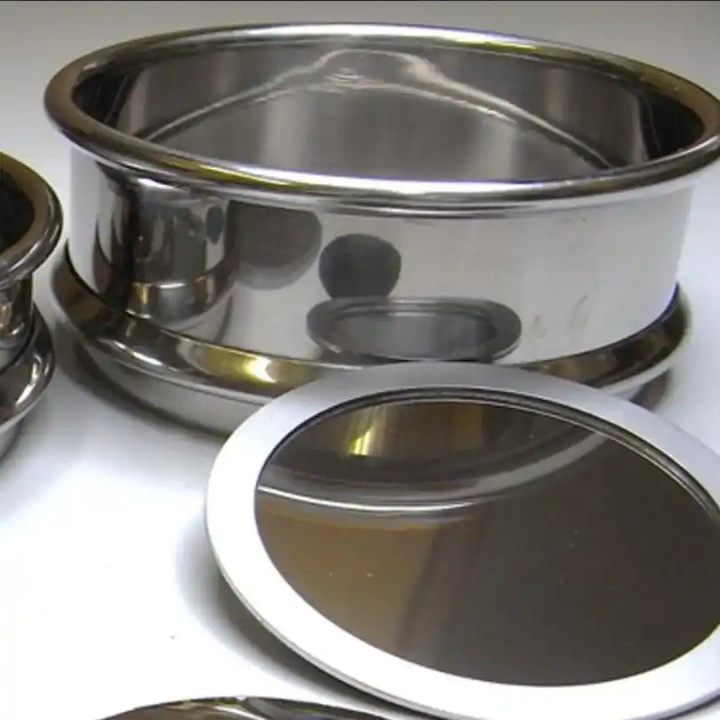
A sieve shaker and test sieve should be considered as one complete testing system.
View Compatibility and Standards Information
Sieve-frame compatibility: The sieve frames should match the clamping or holding system.
Existing sieve configuration: Existing test sieves should be compatible with the selected shaker where practical.
Testing standard: Depending on the application and region, requirements may come from ASTM, ISO, DIN, or a customer-specific procedure.
For example, ASTM E11 provides requirements for woven wire test sieves and related construction. When a test procedure specifies ASTM-compliant sieves, establish the required aperture and sieve configuration first, then select a compatible shaker.
For quality-control testing, stable operating conditions and consistent screening time can also affect repeatability. Specific calibration requirements depend on the applicable standard and laboratory procedures.
8. Which Laboratory Sieve Shaker Should You Choose?
View the Quick Selection Guide
| Testing Requirement | Suitable Choice |
|---|---|
| Routine laboratory particle-size analysis | Laboratory Sieve Shaker |
| Several particle-size fractions in one run | Electromagnetic Sieve Shaker |
| Fine powder with mesh blinding | Ultrasonic Sieve Shaker |
| Cohesive or electrostatic fine powder | Ultrasonic-assisted sieving |
| Wet particle-size analysis | Wet Sieving Equipment |
| Existing sieves with specific diameter requirements | Compatible Sieve Shaker |
For routine laboratory particle-size analysis, start with a standard configuration that matches the existing test sieves.
When several size fractions need to be separated in one operation, an electromagnetic configuration may be suitable.
When fine powders repeatedly blind the mesh or show strong electrostatic adhesion, ultrasonic assistance should be considered.
For wet testing, use equipment specifically configured for wet sieving.
Dahan provides different sieve-shaker configurations that can be matched to material characteristics, sieve setup, sample quantity, and testing requirements.
9. Common Selection Mistakes
View Common Selection Mistakes
Choosing only by price or motor power: Neither factor alone determines particle-size separation performance.
Ignoring material behavior: Different materials may require different screening conditions.
Selecting the shaker before confirming the sieve configuration: Diameter, aperture, layers, sample quantity, and compatibility may not match.
Using more sieve layers than necessary: Adds complexity without providing useful separation information.
Laboratory Sieve Shaker Selection Checklist
View Complete Selection Checklist
1. Target particle-size range
2. Material characteristics
3. Sieve diameter and aperture range
4. Number of sieve layers
5. Sample quantity
6. Dry or wet sieving method
7. Shaker type and vibration requirements
8. Sieve compatibility and applicable testing standard
Once these requirements are defined, selecting the appropriate laboratory sieve shaker becomes much more straightforward.
FAQ
View Frequently Asked Questions
What is the best sieve shaker for particle size analysis?
There is no single best machine for every material. The appropriate choice depends on particle-size range, material behavior, sieve configuration, sample quantity, testing method, and required repeatability.
How do I choose the right sieve diameter?
Choose the sieve diameter according to sample quantity, screening area, existing test sieves, laboratory space, and the applicable test method. The aperture, rather than the frame diameter, determines the intended particle-size separation.
How many sieve layers do I need?
Use the number of layers required to obtain the particle-size fractions needed for the analysis. A simple screening test may require only a few sieves, while a full particle-size distribution may require more.
Which sieve shaker is suitable for fine powders?
A conventional shaker may be suitable for free-flowing fine powders. When the material causes mesh blinding, agglomeration, or static adhesion, ultrasonic-assisted sieving may be more suitable.
Should I choose an electromagnetic or ultrasonic sieve shaker?
Choose an electromagnetic system when controlled multi-layer screening is important. Consider ultrasonic assistance when fine particles have difficulty passing through the mesh because of blinding, agglomeration, or static effects.
Conclusion
Choosing a laboratory sieve shaker for particle size analysis should begin with the material and testing requirements rather than machine price or motor power.
Define the particle-size range, understand material behavior, select the sieve diameter and number of layers, determine sample quantity and dry or wet testing requirements, and then match the appropriate shaker type.
For routine laboratory testing, a standard laboratory sieve shaker may be sufficient. For controlled multi-layer screening, an electromagnetic system can be considered. For difficult fine powders, ultrasonic assistance may provide a better solution.
The most suitable equipment is the configuration that provides the right screening conditions, sieve compatibility, practical operation, and repeatability for the actual laboratory application.
Do you want to know the output? model? price? Please click (inside product page) or online consultation to learn more.
Dahan can also customize it for you according to your needs. Come and get the design that suits you.
Kon Leung, Ph.D.
Staff Simulation Engineer at BISSELL Homecare, Inc.