Mechanical vs. Electromagnetic Sieve Shaker: How to Choose?
Tuesday August-25 2026 14:29:35
Mechanical Sieve Shaker vs. Electromagnetic Sieve Shaker: How to Choose
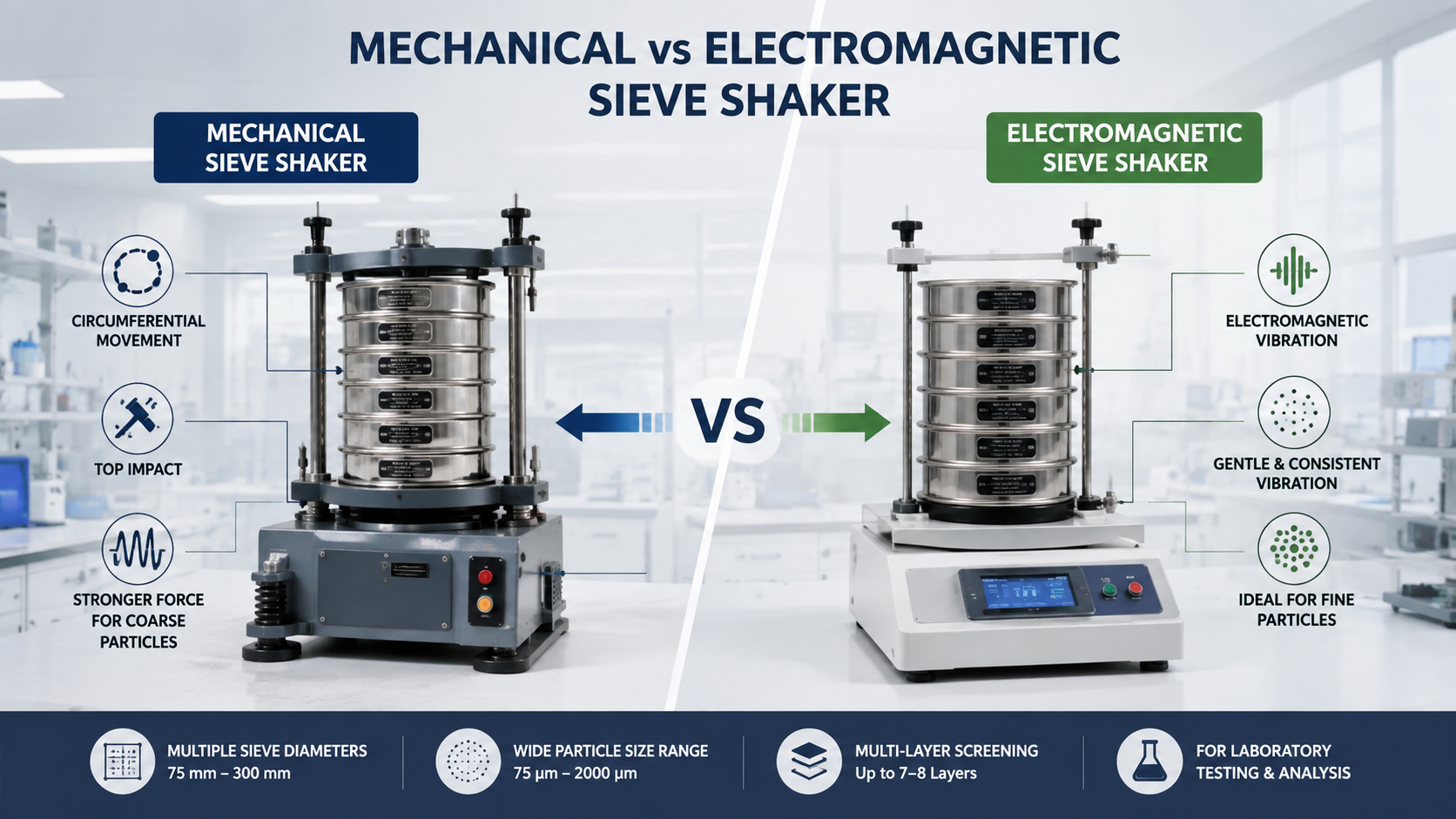
Mechanical and electromagnetic sieve shakers are both used with test sieves for laboratory particle size analysis, but they create different screening motions and provide different equipment configurations.
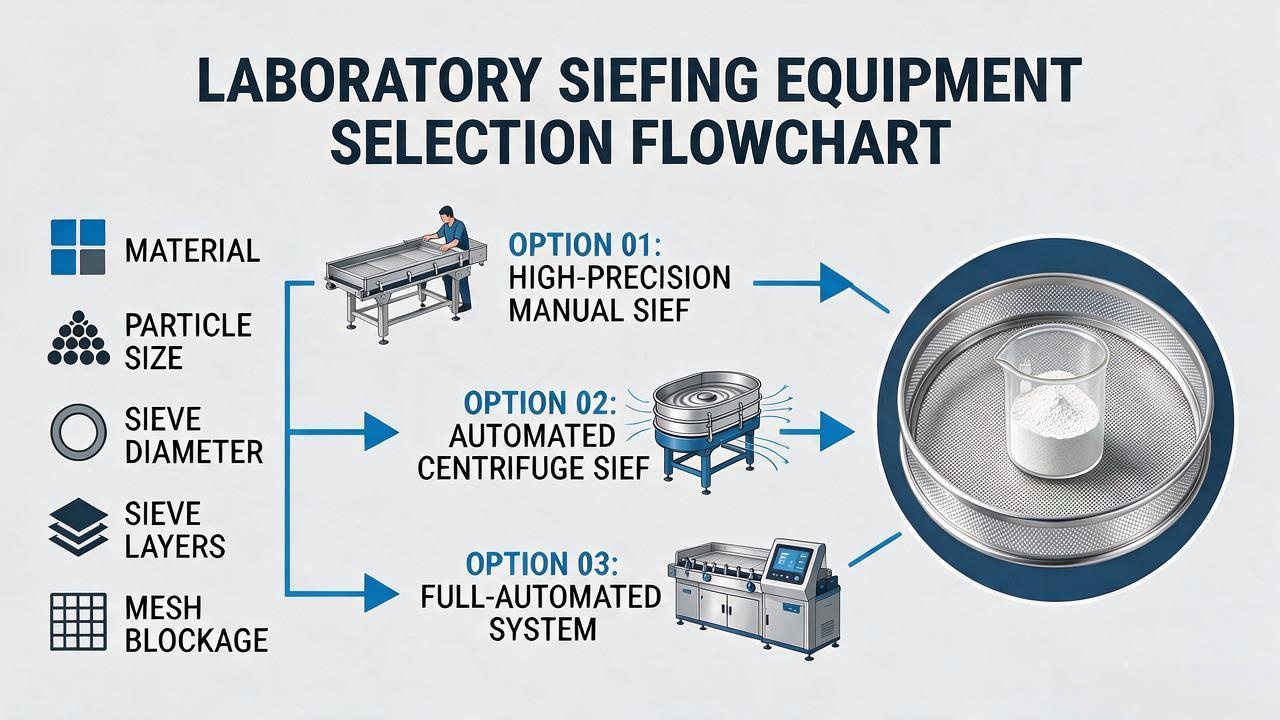
The choice between a Mechanical Sieve Shaker vs. Electromagnetic Sieve Shaker should be based on the material, sieve diameter, particle-size range, number of sieve fractions, and testing procedure rather than on the drive type alone.
A mechanical sieve shaker can fit routine screening when conventional mechanical movement and top-impact vibration meet the test requirement. An electromagnetic sieve shaker can be considered when a laboratory needs a wider selection of sieve diameters or a multi-layer configuration for particle size analysis.
For difficult fine powders, the limiting factor may instead be mesh clogging, static charge, or agglomeration. In such cases, ultrasonic deblinding may need to be considered.
Mechanical Sieve Shaker vs. Electromagnetic Sieve Shaker: Quick Answer
Choose a mechanical sieve shaker when the laboratory mainly performs routine screening with conventional mechanical motion, particularly with 200 mm or 300 mm test sieves.
Choose an electromagnetic sieve shaker when several sieve diameters, up to eight sieve layers, or multi-fraction particle size analysis are required.
If fine powder repeatedly blocks the mesh, consider ultrasonic deblinding rather than changing the primary shaker.
Mechanical Sieve Shaker vs. Electromagnetic Sieve Shaker: Key Differences
The most useful comparison is the actual equipment configuration and testing workflow.
| Selection Factor | Mechanical Sieve Shaker | Electromagnetic Sieve Shaker |
|---|---|---|
| Drive method | Mechanical movement + top impact | Electromagnetic vibration |
| Sieve diameter | 200 / 300 mm | 75 / 100 / 200 / 300 mm |
| Published sieve layers | 7 layers | Up to 8 layers |
| Screening motion | Circumferential movement + top impact | Electromagnetic vibration |
| Published particle-size information | Depends on selected test sieve | 75–2000 μm |
| Typical use | Routine classification and screening | Particle size analysis and multi-fraction separation |
| Sieve material options | Depends on test sieve | SS304 / SS316 / SS202 |
| Timing | 0–99 min | Configuration-dependent |
The mechanical configuration provides a defined shaking and impact action, while the electromagnetic configuration provides a broader published sieve-diameter range. The appropriate choice depends on the actual test setup.
View Mechanical Sieve Shaker Information
What Is a Mechanical Sieve Shaker?
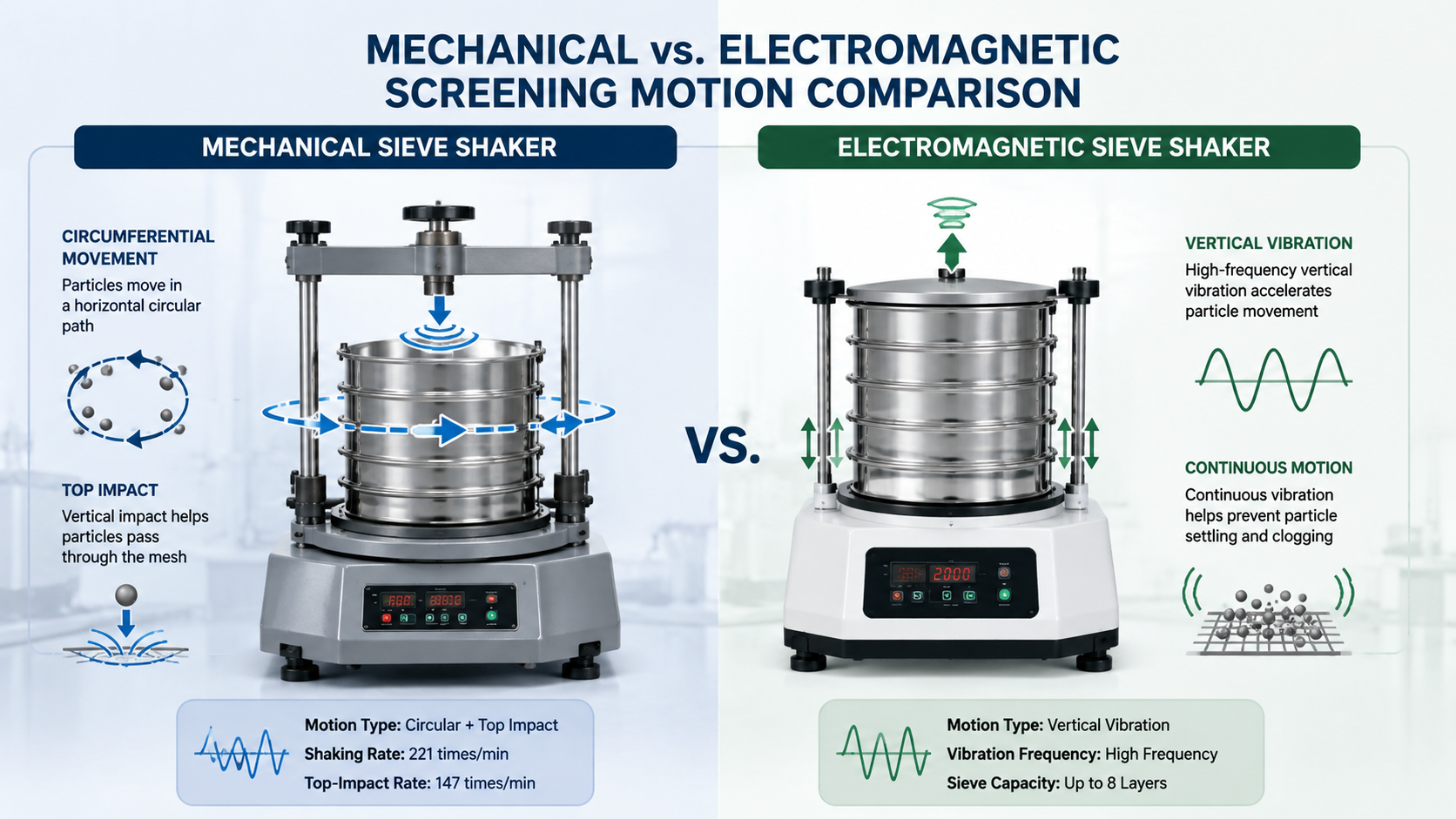
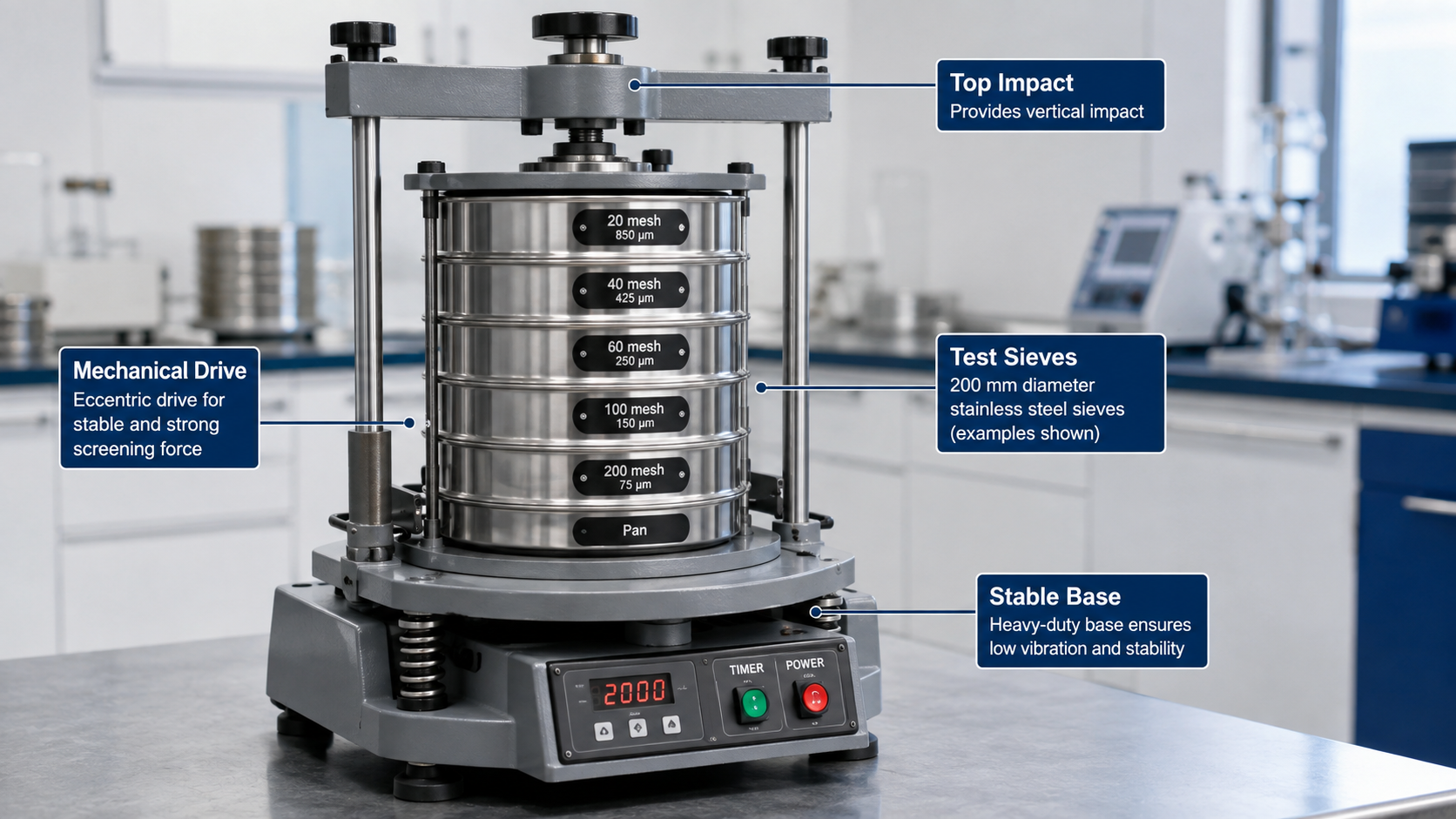
A mechanical sieve shaker uses motor-driven mechanical components to move a stack of test sieves. The mechanical sieve published on this site combines circumferential movement with top-impact vibration and is designed for 200 mm and 300 mm test sieves.
Its published configuration includes 221 shaking times per minute, 147 top impacts per minute, and a 0–99 minute timing range. It is intended for routine particle-size composition checks and material classification.
Mechanical Sieve Shaker: Published Configuration
| Parameter | Specification |
|---|---|
| Sieve diameter | 200 mm / 300 mm |
| Sieve layers | 7 layers |
| Shaking rate | 221 times/min |
| Top-impact rate | 147 times/min |
| Sieve aperture | 0–0.038 mm |
| Timing range | 0–99 min |
| Turning radius | 12.5 mm |
| Motor power | 0.38 kW |
| Power voltage | 380 V |
The product page also states that up to 8 test sieves can be installed when the bottom sieve is included, so the actual stack should be confirmed according to the test configuration.
View Electromagnetic Sieve Shaker Information
What Is an Electromagnetic Sieve Shaker?
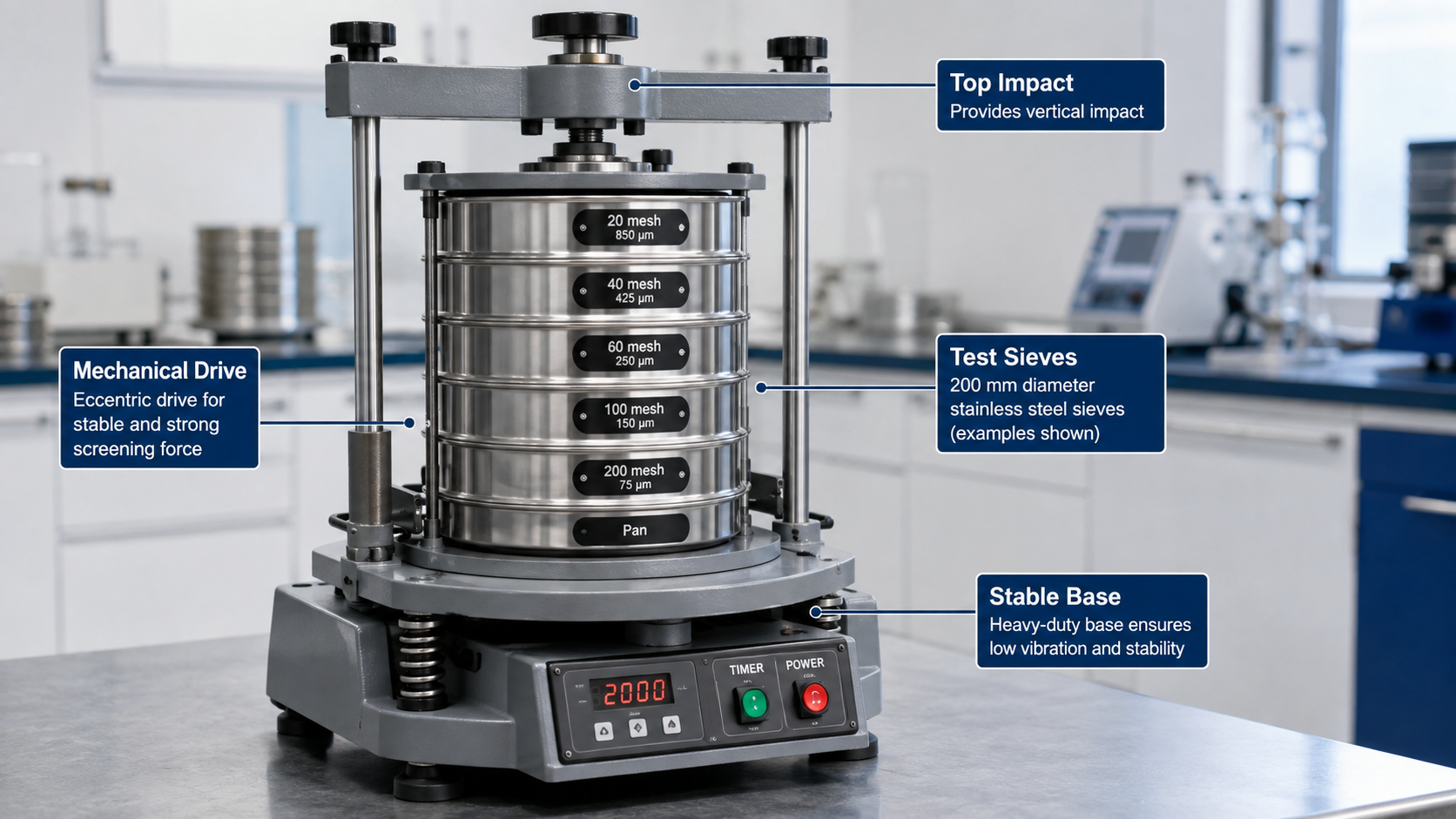
An electromagnetic sieve shaker uses electromagnetic vibration to move the test sieve stack for particle size analysis and particle separation.
The configuration published on this site supports 75 mm, 100 mm, 200 mm, and 300 mm sieve diameters, a published particle-size range of 75–2000 μm, a 10–200 mesh range, and up to eight sieve layers.
Electromagnetic Sieve Shaker: Published Configuration
| Parameter | Specification |
|---|---|
| Sieve diameter | 75 / 100 / 200 / 300 mm |
| Particle-size range | 75–2000 μm |
| Mesh range | 10–200 mesh |
| Sieve layers | Up to 8 layers |
| Application | Particle size analysis and particle separation |
| Sieve material | SS304 / SS316 / SS202 |
| Certification | CE / ISO 9001 |
View Screening Motion and Laboratory Workflow
Screening Motion and Laboratory Workflow
Mechanical and electromagnetic shakers both move particles through a sieve stack, but the movement is generated differently.
The mechanical configuration combines circumferential movement with top impact, which can fit a laboratory with a stable screening procedure. The electromagnetic configuration uses electromagnetic vibration and supports more sieve-diameter options, which can be useful when the laboratory changes sieve setups between tests.
The practical question is whether the laboratory mainly repeats one established procedure or regularly changes its sieve configuration.
View Particle Size and Sieve Opening Information
Particle Size: The Sieve Opening Determines Separation
The shaker provides the screening movement, but the test sieve provides the opening through which particles pass.
The final result can also be influenced by the selected mesh, sample loading, screening time, moisture, particle shape, and mesh condition.
The electromagnetic configuration published on this site has a 75–2000 μm particle-size range and 10–200 mesh range. Its published 200 mm sieve selection includes openings from 2000 μm to 90 μm.
Published Electromagnetic Sieve Openings
| Mesh | Particle Size |
|---|---|
| 10 mesh | 2000 ± 70 μm |
| 24 mesh | 850 ± 29 μm |
| 50 mesh | 355 ± 13 μm |
| 65 mesh | 250 ± 9.9 μm |
| 80 mesh | 180 ± 7.6 μm |
| 100 mesh | 150 ± 6.6 μm |
| 120 mesh | 125 ± 5.8 μm |
| 150 mesh | 90 ± 4.6 μm |
An electromagnetic shaker should therefore not be selected simply because the sample is described as fine. The test sieve must also match the required separation size.
View Material Characteristics and Screening Requirements
How Material Characteristics Affect the Choice
Material behavior should be considered together with the shaker configuration.
Free-Flowing, Abrasive, and Coarse Materials
Free-flowing, abrasive, and coarse materials can often be screened with conventional mechanical movement when the selected sieve configuration meets the test requirement. The mechanical sieve on this site is listed for abrasive particle classification and material composition checks.
Fine Powders
Fine powders require attention to mesh opening, sample loading, moisture, electrostatic behavior, and agglomeration. The electromagnetic configuration can be considered when its published sieve range matches the test requirement.
Cohesive or Electrostatic Materials
If particles stick to the mesh or form agglomerates, changing from mechanical to electromagnetic vibration may not solve the underlying problem.
Material and Screening Requirement Guide
| Material or Test Condition | Main Concern | Selection Direction |
|---|---|---|
| Free-flowing material | Conventional particle movement | Mechanical can be suitable |
| Abrasive or coarse material | Movement and top impact | Mechanical can be suitable |
| Multiple particle-size fractions | Sieve stack configuration | Electromagnetic can be considered |
| Fine powder | Mesh opening and sample behavior | Check sieve and shaker configuration |
| Cohesive powder | Agglomeration and mesh blockage | Consider deblinding |
| Electrostatic powder | Particle adhesion to mesh | Consider ultrasonic assistance |
View Noise, Laboratory Space, Maintenance and Cost
Noise, Laboratory Space, and Maintenance
Noise and footprint should be evaluated from the actual machine configuration rather than assumed only from the drive principle.
The mechanical sieve published on this site has an outline dimension of 586 × 370 × 952 mm. For the electromagnetic configuration, sieve diameter and stack height should be considered when planning laboratory space.
Maintenance also depends on the machine structure. Mechanical equipment contains moving and impact components, while electromagnetic equipment requires inspection of its electrical and vibration components.
Maintenance and Cost Comparison
| Cost Consideration | Mechanical | Electromagnetic |
|---|---|---|
| Initial price | Configuration-dependent | Configuration-dependent |
| Main maintenance focus | Mechanical and impact components | Electrical and vibration components |
| Accessories | Test sieves and related accessories | Test sieves and related accessories |
| Downtime consideration | Mechanical component inspection | Electrical and vibration inspection |
Noise, footprint, ease of use, maintenance, cost, and particle-size range are also recurring comparison factors in established mechanical-versus-electromagnetic sieve shaker resources.
View Repeatability and Operator Procedure
Repeatability and Operator Procedure
A sieve shaker is only one part of particle-size analysis.
Repeatability can also be affected by sieve condition, sample preparation, sample mass, screening time, moisture, and operator procedure.
Mechanical and electromagnetic shakers can both be used in repeatable testing when the sieve stack, sample preparation, screening time, and operating procedure are kept consistent.
Mechanical Sieve Shaker vs. Electromagnetic Sieve Shaker: Which Should You Choose?
| Laboratory Requirement | Recommended Direction |
|---|---|
| Routine screening with a stable procedure | Mechanical |
| Mainly 200 mm or 300 mm test sieves | Mechanical |
| Conventional shaking and top impact are suitable | Mechanical |
| Different sieve diameters are required | Electromagnetic |
| Up to eight sieve layers are useful | Electromagnetic |
| Multiple particle-size fractions are required | Electromagnetic |
| Published 75–2000 μm range fits the test | Electromagnetic |
| Fine powder repeatedly blocks the mesh | Consider ultrasonic deblinding |
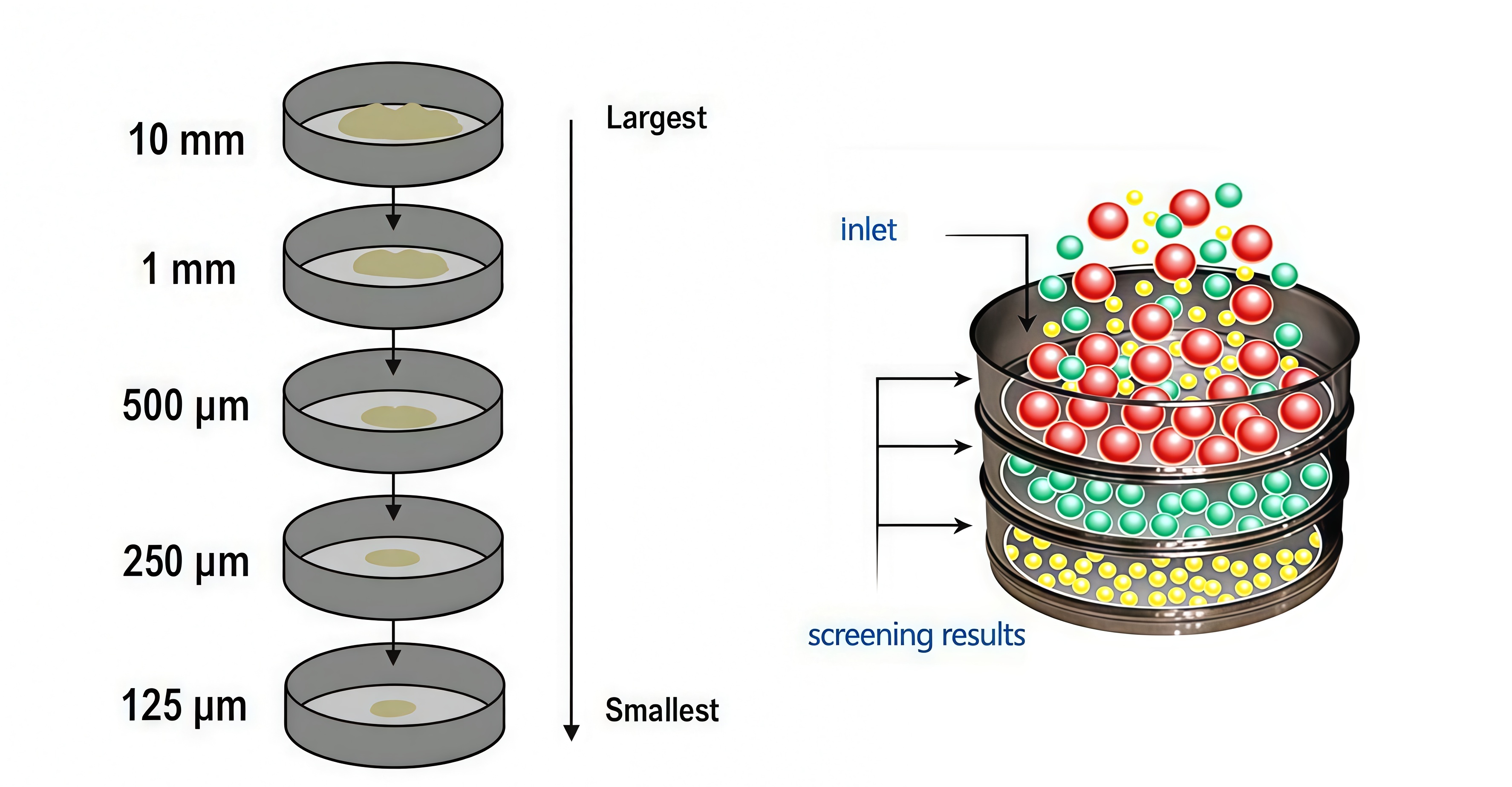
A mechanical sieve shaker can fit routine testing when conventional mechanical movement meets the separation requirement.
An electromagnetic sieve shaker can be considered when a wider sieve-diameter selection or multi-layer configuration is needed.
If mesh blockage is the main problem, evaluate deblinding separately.
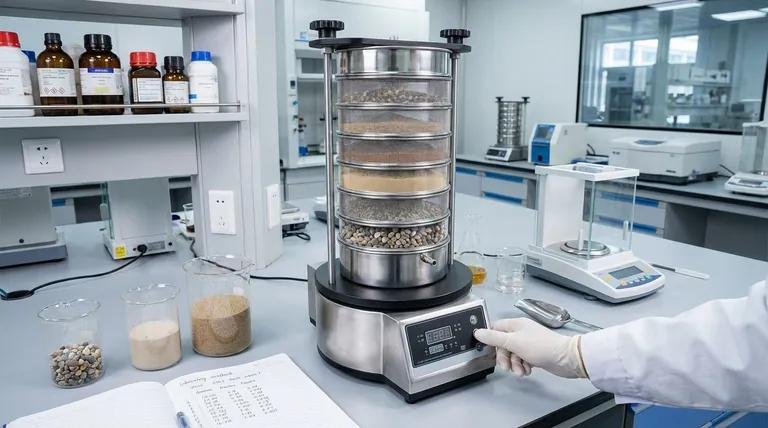
View Ultrasonic Screening Information
When Should You Consider Ultrasonic Screening?
Ultrasonic assistance becomes relevant when fine powder repeatedly blocks the mesh or when static charge, adhesion, or agglomeration prevents particles from passing through the selected opening.
The ultrasonic sieve shaker published on this site is designed for fine-powder screening, with a published screening range of 0.025–3 mm and 75 mm, 100 mm, 200 mm, and 300 mm screen-frame options.
This creates a separate selection path when the limiting factor is mesh blockage rather than the basic shaker motion.
View Request-for-Quote Information
What Should You Specify Before Requesting a Quote?
A supplier can make a more suitable recommendation when the actual testing conditions are provided.
| Information to Provide | Example |
|---|---|
| Material | Powder, granule, abrasive or cohesive material |
| Particle size | Approximate minimum and maximum size |
| Sieve diameter | 75 / 100 / 200 / 300 mm when applicable |
| Sieve layers | Number of fractions required |
| Sample quantity | Approximate mass per test |
| Screening method | Dry or wet |
| Mesh problem | Clogging, agglomeration or static charge |
| Testing frequency | Occasional or repeated testing |
| Power requirement | Local voltage and frequency |
| Special requirement | Sieve material, clamping or other configuration |
Providing these details makes it easier to determine whether the mechanical or electromagnetic configuration is suitable.
View Frequently Asked Questions
Frequently Asked Questions
Is an Electromagnetic Sieve Shaker Always Better?
No. Mechanical Sieve Shaker vs. Electromagnetic Sieve Shaker is an application-based decision. A mechanical configuration can fit routine screening, while an electromagnetic configuration can be useful when a broader sieve configuration is required.
Can a Mechanical Sieve Shaker Handle Fine Powder?
It can be used for fine-particle screening when the selected test sieve, sample quantity, and screening procedure are appropriate. If the mesh repeatedly becomes blocked, a deblinding method may be needed.
Does Electromagnetic Vibration Automatically Produce Smaller Particle Sizes?
No. The test sieve opening determines the separation size. The shaker provides the movement needed to help particles pass through the selected opening.
When Should I Consider an Ultrasonic Sieve Shaker?
Consider ultrasonic assistance when fine powder repeatedly blocks the mesh or when static charge, adhesion, or agglomeration makes conventional screening difficult.
View Final Recommendation
Final Recommendation
The best way to evaluate Mechanical Sieve Shaker vs. Electromagnetic Sieve Shaker is to start with the sample and test procedure rather than the drive type alone.
Choose mechanical screening when routine testing, conventional movement, and a 200 mm or 300 mm sieve configuration meet the requirement.
Choose electromagnetic screening when the laboratory needs several sieve diameters, up to eight sieve layers, or a published 75–2000 μm particle-size configuration.
When fine powder is difficult to pass through the mesh because of clogging, static charge, or agglomeration, consider ultrasonic deblinding as a separate solution.
Do you want to know the output? model? price? Please click (inside product page) or online consultation to learn more.
Dahan can also customize it for you according to your needs. Come and get the design that suits you.
Kon Leung, Ph.D.
Staff Simulation Engineer at BISSELL Homecare, Inc.