How to Choose a Test Sieve Shaker for Particle Size Analysis?
Friday August-28 2026 15:31:59
How to Choose a Test Sieve Shaker for Particle Size Analysis?
Choosing a sieve shaker should begin with the sample and testing method, not with the machine itself. How to Choose a Test Sieve Shaker for Particle Size Analysis depends on the required particle-size range, sieve aperture, sieve diameter, sample quantity, number of fractions, material characteristics, screening method, and testing frequency.
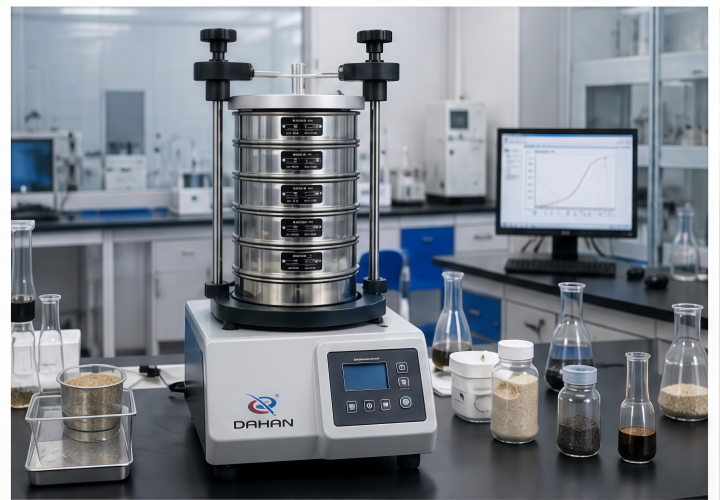
The basic selection rule is simple: choose the test sieve configuration first, then choose a shaker that can support that configuration consistently. This helps avoid unnecessary capacity and supports a repeatable particle-size analysis procedure.
What Is a Test Sieve Shaker?
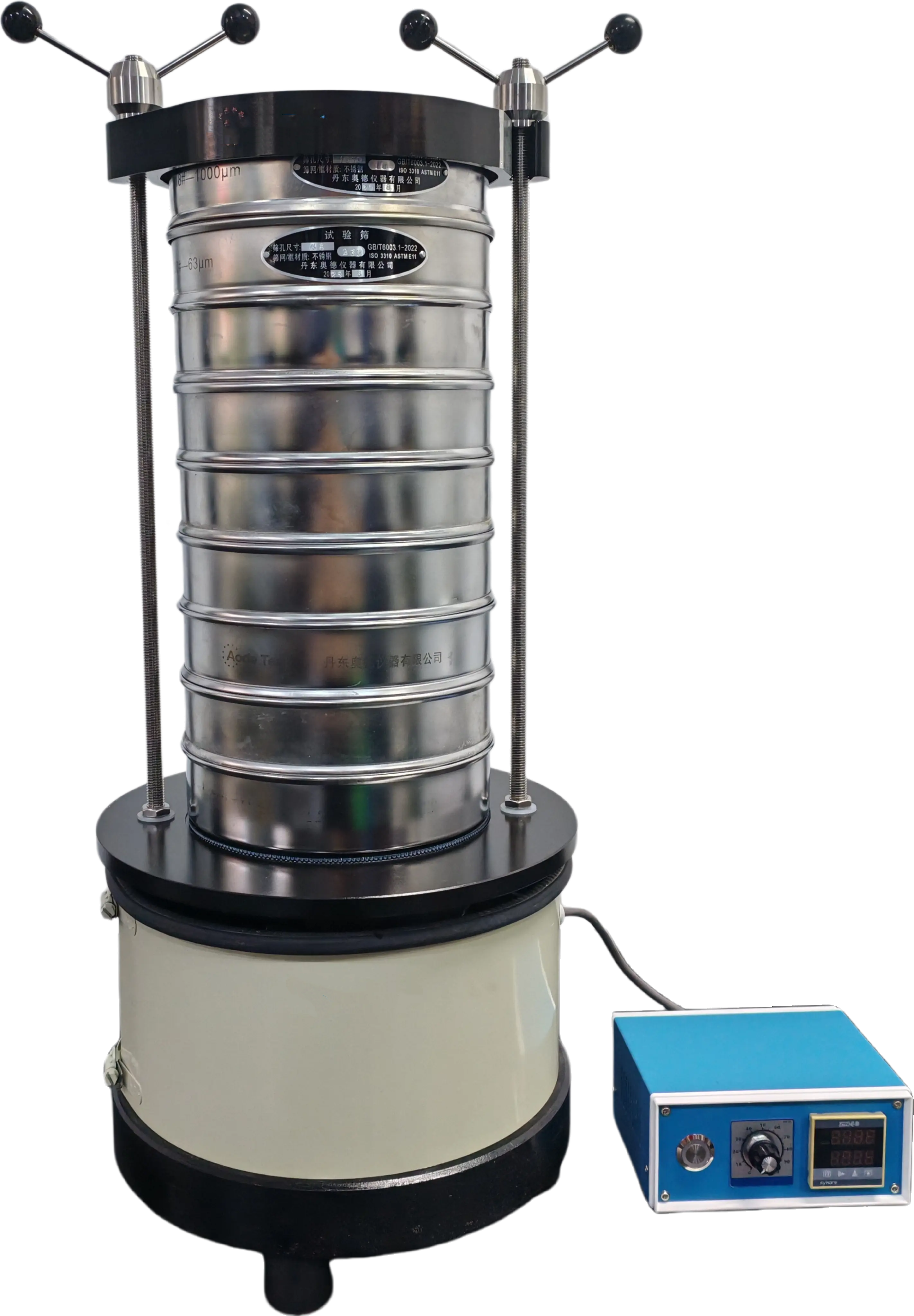
A test sieve shaker provides controlled movement to a stack of test sieves so particles can be separated into different size fractions. Smaller particles pass through the selected openings while larger particles remain on the corresponding sieve.
The sieve and shaker perform different jobs. The sieve aperture defines the intended separation size, while the shaker provides the movement required for effective screening.
For particle-size analysis, the goal is not to choose the strongest or most expensive machine. The goal is to create a suitable test setup that can be operated consistently for the sample and method.
Start With the Test Sieve Requirements
Before selecting the shaker, define the sieve configuration.
Particle Size Range
Determine the largest and smallest particle sizes that need to be evaluated. A broad distribution may require several sieve apertures, while a narrow range may need only a few separation points.
Knowing the full range is more useful than knowing only the average particle size because it determines how the sieve stack should be arranged.
Sieve Aperture and Mesh
Select the required apertures according to the particle-size range and applicable test method. Mesh number can help identify a sieve, but the actual aperture is the physical opening through which particles pass.
For standardized testing, the applicable sieve specification should take priority over general mesh conversions.
Sieve Diameter
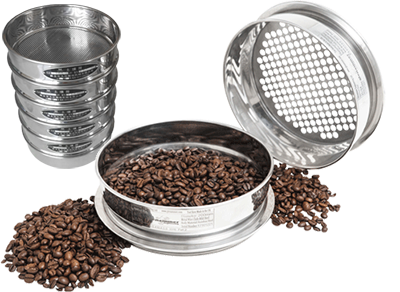
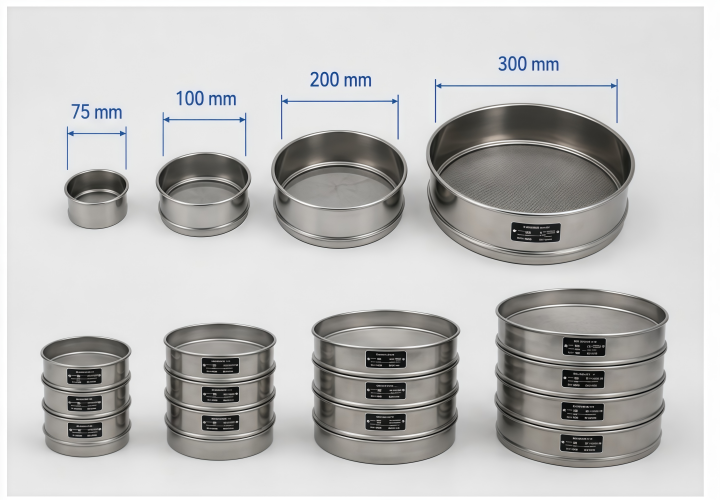
Common laboratory sieve diameters include 75 mm, 100 mm, 200 mm, and 300 mm, depending on the application and equipment configuration.
Diameter affects the available screening area, sample distribution, equipment footprint, and shaker compatibility. Select the diameter according to sample quantity and test requirements rather than simply choosing the largest available size.
Number of Sieve Layers
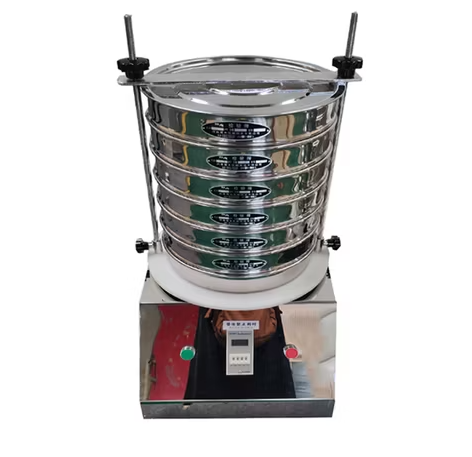
Determine how many particle-size fractions are required from one test. A multi-layer stack allows several apertures to be used during one screening operation.
Every additional sieve increases stack height and weight, so the practical choice is the smallest stack that provides the particle-size information required by the test.
How to Choose a Test Sieve Shaker for Particle Size Analysis?
Once the sieve requirements are defined, evaluate the shaker using the following factors.
The shaker must be compatible with the selected sieve series and the material being tested.
Coarse granules, free-flowing powders, and cohesive fine powders may require different screening conditions. More aggressive vibration is not automatically better, especially when excessive movement affects material distribution or repeatability.
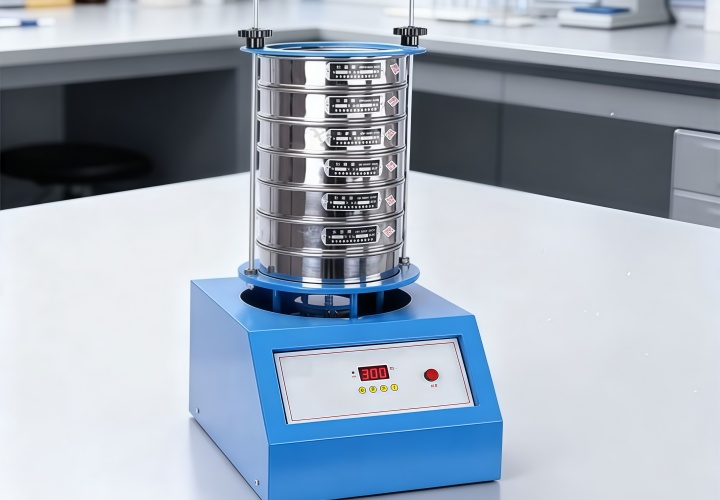
Different shaker designs also produce different motion patterns, such as mechanical, vibratory, electromagnetic, or other controlled movements. The appropriate type depends on the material, sieve configuration, and test procedure.
Confirm that the equipment accepts the diameter of the test sieves used in your laboratory.
Sample quantity should also be considered. If the sample is too large for the available screening area, the material may form a thick layer and reduce separation efficiency. A very small sample may not require a large sieve.
If the analysis requires several fractions, check the practical capacity of the shaker for the complete stack.
Consider the height and weight of the sieves, lid, and receiving pan—not just the advertised maximum number of layers.
A machine that can hold more sieves is not necessarily better. The useful capacity is the capacity needed for the actual test.
Material behavior can strongly affect screening performance.
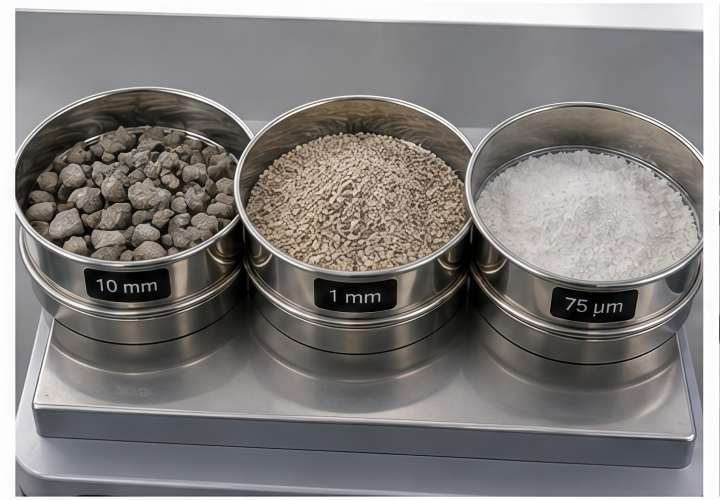
For difficult powders, identify the cause of poor screening before increasing vibration intensity. Sample preparation, moisture control, loading conditions, or an appropriate deblinding method may be more effective.
Dry sieving is suitable for many free-flowing powders and granular materials.
Wet sieving may be appropriate when liquid assistance is needed to disperse particles or improve separation. In this case, the sieve system, collection method, and shaker must be compatible with the selected procedure.
The correct choice depends on the material and applicable testing method.
The shaker's movement should be suitable for the material and sieve configuration.
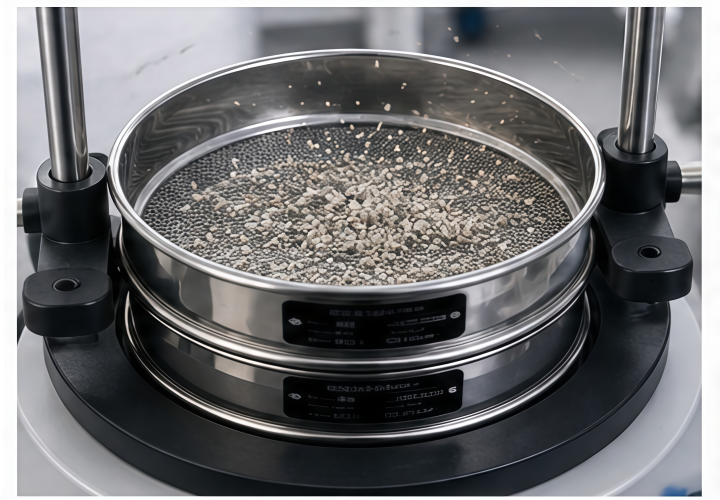
These parameters matter because screening is a process, not simply a vibration event. For routine quality-control work, record the conditions used for the method so subsequent tests can be performed under comparable conditions.
The best configuration also depends on how often the laboratory performs sieve analysis.
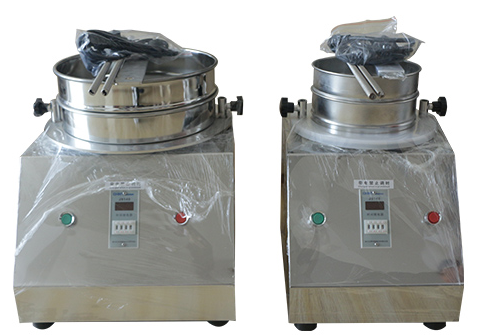
For occasional testing, a simple benchtop configuration may be sufficient.
For routine quality control, easy sieve loading, repeatable controls, and efficient sample handling become more important.
For frequent testing, consider the complete workflow, including setup, screening, unloading, cleaning, and the number of samples processed per day.
The final equipment choice should be checked against the applicable standard or laboratory procedure.
Review the required sieve specification, sample preparation, screening conditions, number of fractions, and equipment compatibility. Where required, also confirm equipment verification, calibration, or documentation requirements.
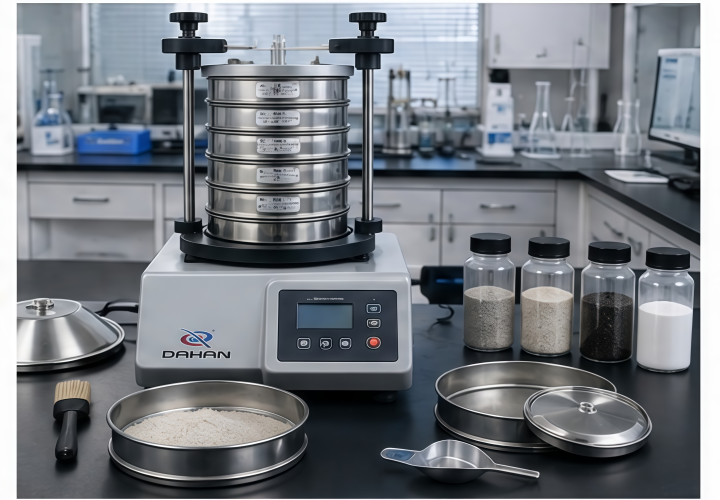
Test Sieve Shaker Selection Matrix
| Testing Requirement | Check First | Selection Direction |
|---|---|---|
| Routine particle-size analysis | Sieve diameter and aperture series | Standard laboratory configuration |
| Several particle-size fractions | Sieve stack capacity | Multi-layer configuration |
| Small sample quantity | Sample mass and screening area | Compact sieve configuration |
| Large sample quantity | Screening area and sample loading | Larger compatible configuration |
| Fine powder | Clogging, static and agglomeration | Consider deblinding assistance |
| Wet screening | Test method and equipment compatibility | Wet-sieving configuration |
| Frequent quality-control testing | Workflow and operating control | Efficient repeatable configuration |
| Standardized testing | Sieve specification and procedure | Method-compatible configuration |
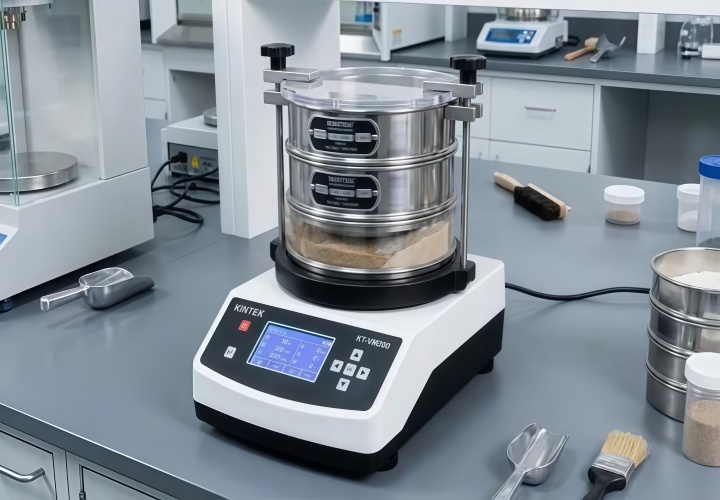
Choose by Application, Not by Machine Features
For routine granular materials: prioritize sieve diameter, sample quantity, stack capacity, and consistent screening movement.
For fine powders: pay closer attention to fine-mesh compatibility, static effects, agglomeration, and mesh clogging.
For frequent or specialized testing: consider operating controls, workflow efficiency, repeatability, wet-sieving requirements, and compatibility with the applicable procedure.
This approach makes How to Choose a Test Sieve Shaker for Particle Size Analysis a testing decision rather than a simple comparison of machine features.
Example: Choosing a Shaker for Powder Particle Size Analysis
Consider a laboratory analyzing a dry powder that must be separated into several particle-size fractions.
First, determine the required particle-size range and sieve apertures. Then select a sieve diameter based on sample quantity and available screening area.
Next, determine the number of sieve levels required and confirm that the complete stack can be accommodated safely. Check the powder for moisture, static charge, cohesion, and mesh clogging.
If the powder passes freely through the selected mesh, a conventional laboratory configuration may be sufficient. If fine particles repeatedly blind the mesh, evaluate an appropriate deblinding solution rather than simply increasing vibration intensity.
Finally, confirm the screening conditions required by the applicable test procedure.
Common Mistakes When Choosing a Test Sieve Shaker
Choosing the Shaker Before the Sieve
The required apertures, sieve diameter, and number of fractions should be defined first. The shaker should fit the test configuration.
Choosing the Largest Machine Available
A larger sieve or greater stack capacity is useful only when the sample and test require it. Unnecessary capacity can increase equipment size and handling effort.
Ignoring Material Behavior
Moisture, static, cohesion, particle shape, and agglomeration can affect screening results and mesh performance.
Focusing Only on Vibration Strength
The strongest movement is not automatically the best movement. Consistency and suitability for the material are more important.
Buying Without Checking the Test Method
The machine may physically hold the sieve stack but still be unsuitable for the required procedure. Verify the applicable method before purchase.
What Information Should You Provide Before Requesting Equipment?
Provide the following information when requesting a test sieve shaker:
With these parameters, the equipment can be evaluated according to the actual application rather than a generic specification.
Dahan can use the application details to help determine a suitable test sieve shaker configuration for the required sieve stack and screening conditions.
Frequently Asked Questions
What determines the size of a test sieve shaker?
The main factors are sieve diameter, number of layers, sample quantity, material characteristics, screening method, and the applicable test procedure.
Can one shaker handle different sieve diameters?
Some configurations can accommodate different sieve diameters, but compatibility should be confirmed before purchase.
What type of shaker is suitable for fine powder?
Fine powders should be evaluated for aperture size, sample loading, static, agglomeration, and mesh clogging. When mesh blockage is the main problem, an appropriate deblinding method may be considered.
How many test sieves should be used?
Use the sieve sizes needed to define the particle-size fractions required by the test. Additional sieves should only be added when they provide useful information.
What is the best way to choose a test sieve shaker?
Start with the particle-size range and required sieve apertures. Then select the sieve diameter, sample quantity, number of layers, screening method, and operating conditions. Finally, choose a shaker that can support the complete test configuration consistently.
Conclusion
How to Choose a Test Sieve Shaker for Particle Size Analysis should be approached as a complete test-system decision.
Start with the particle-size range and test sieve requirements. Then evaluate sieve diameter, sample quantity, stack capacity, material behavior, dry or wet screening, operating parameters, testing frequency, and the applicable method.
The right shaker is the one that fits the required sieve configuration, handles the sample appropriately, supports repeatable testing, and works efficiently within the laboratory workflow.
Dahan provides test sieve shaker configurations for different laboratory particle-size analysis requirements.
Do you want to know the output? model? price? Please click (inside product page) or online consultation to learn more.
Dahan can also customize it for you according to your needs. Come and get the design that suits you.
Kon Leung, Ph.D.
Staff Simulation Engineer at BISSELL Homecare, Inc.