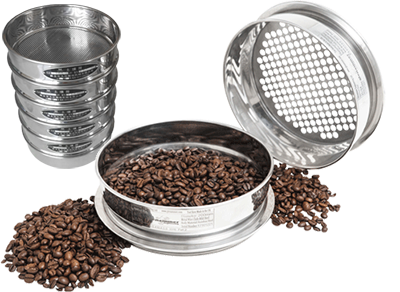
Chemical powder sieve shaker
Wednesday February-04 2026 14:43:18
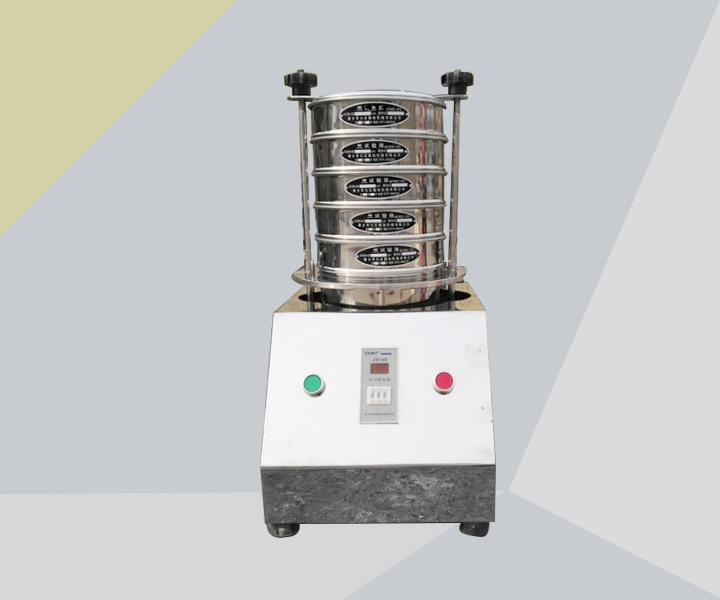
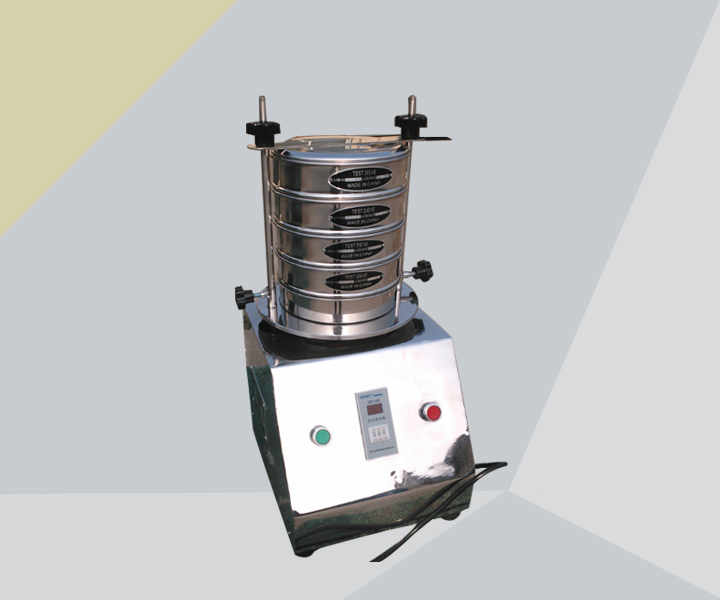
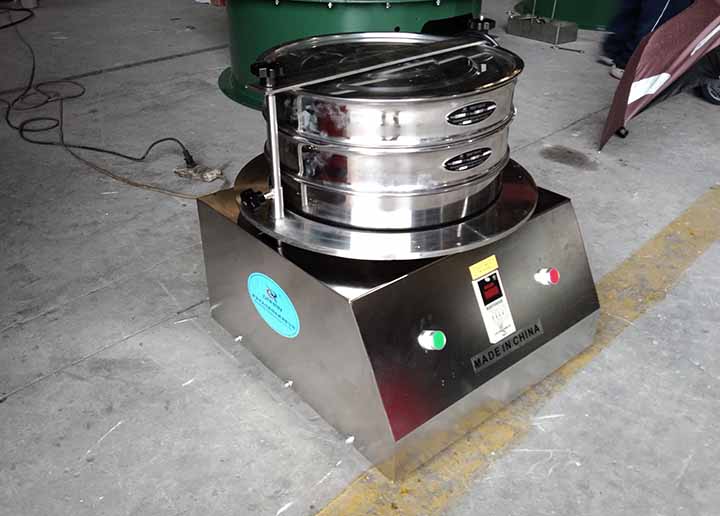
Chemical powder sieve shakers are common automated sieving devices used in laboratories and factories for particle size classification and impurity separation of chemical powders. By separating powders into different particle sizes, they facilitate subsequent quality assessment and process adjustments. Chemical powders are prone to clumping, static electricity, and some are corrosive or have poor flowability, so sieving must be both precise and compatible with the material.
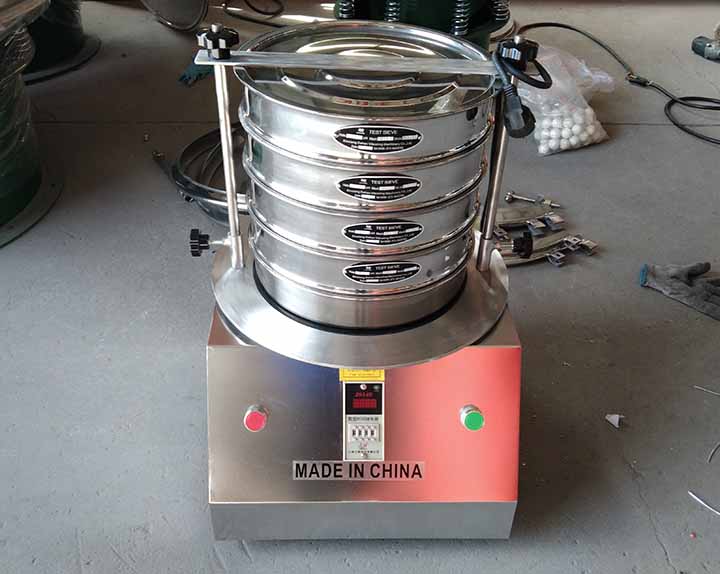
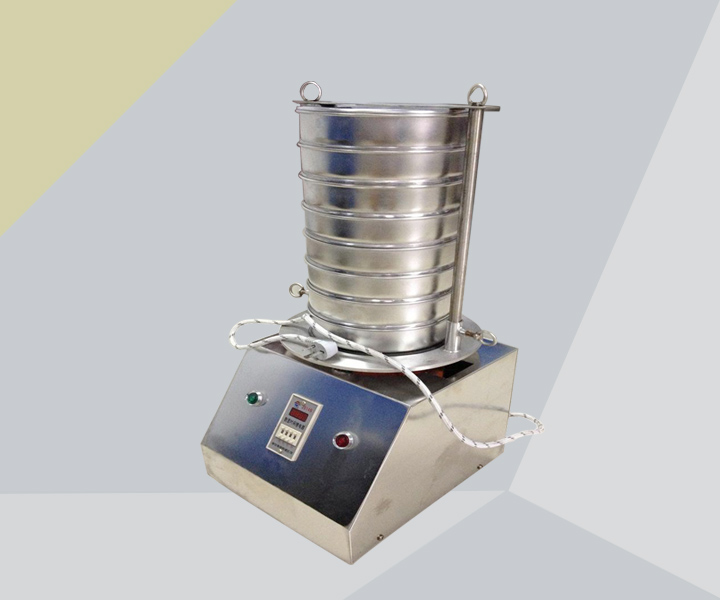
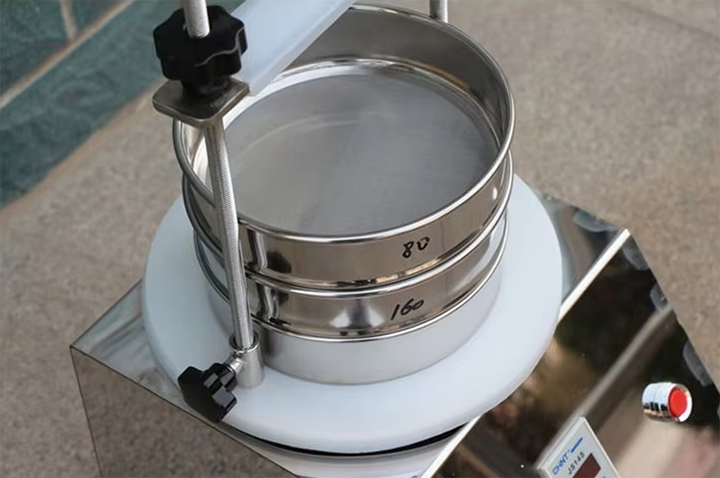
The sieving range of these devices is generally between 5 μm and 125 mm. Fine powders of 5–20 μm typically require microporous sieves, woven wire sieves can be used for 20–125 μm, and perforated plate sieves are often used for particles larger than 125 μm. Common sieve diameters are 200 mm and 300 mm, but 100 mm is also available to accommodate different sample volumes. The equipment can stack 1–8 layers of sieves, separating 2–7 particle sizes at a time. The sieves are mostly made of 304 or 316L stainless steel, which is corrosion-resistant and easy to clean. In some special cases, brass, nylon, or PTFE can also be selected to avoid reactions or reduce electrostatic adsorption.
Working Principle of a Chemical Powder Sieve Shaker
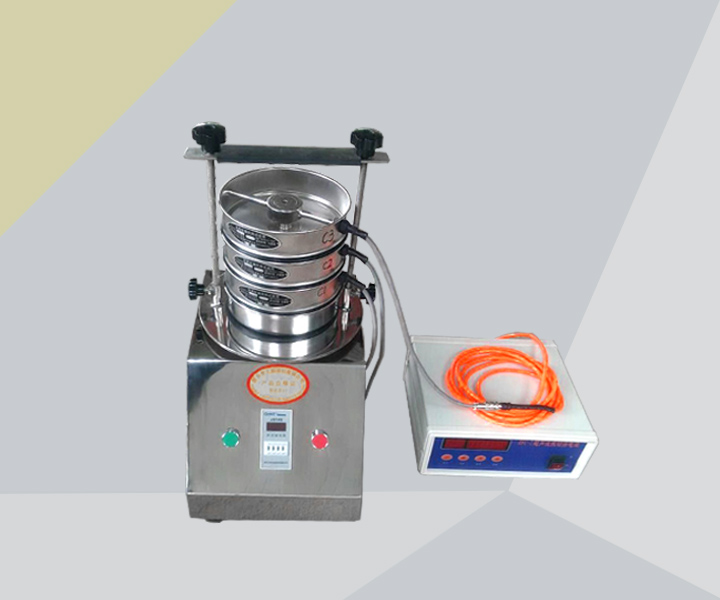
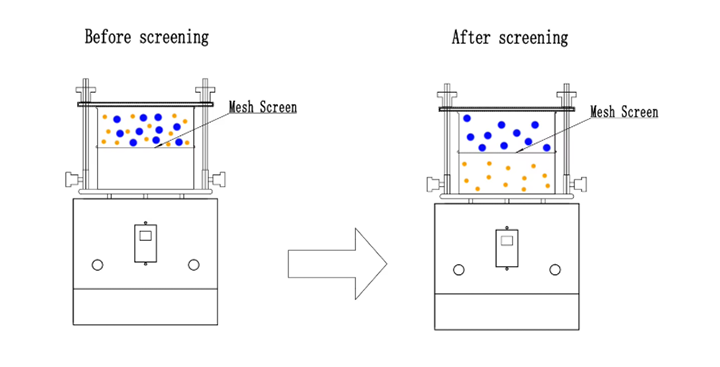
A chemical powder sieve shaker uses an electromagnetic vibrator to generate continuous vibration, causing the powder particles on the sieve to move continuously. During this process, smaller particles fall through the sieve holes to the next sieve layer, while larger particles remain on the current sieve surface, separating into different particle size grades. During use, the vibration frequency and amplitude can be adjusted according to the powder's state, such as flowability, particle size, or tendency to agglomerate. For chemical powders that are prone to clumping or sticking to the sieve, an ultrasonic device or vibrating balls can be added to help disperse the powder. After sieving, the material in each sieve layer and the bottom receiving tray can be removed separately for subsequent production use or experimental testing.
What are the advantages of using a chemical powder sieve shaker?
The benefits of using a chemical powder sieve shaker are multifaceted, making daily operation more convenient. Firstly, in terms of sieving results, particle size classification is finer, and data consistency across multiple tests is better, making it suitable for comparison and recording. A variety of sieve materials are available; 316L stainless steel and PTFE can handle acidic and alkaline powders, while nylon sieves offer better insulation, helping to reduce agglomeration and clogging caused by static electricity. In terms of structural design, the common 200–300 mm sieve diameter allows for both appropriate sample volume and more uniform powder distribution on the sieve surface. Multi-layer combinations of 1–8 layers can separate samples into several particle size ranges at once, reducing repetitive operations. Functionally, timed shutdown ensures consistent sieving conditions for each batch of samples, facilitating data comparison; models with ultrasonic capabilities can handle fine powders below 20 μm, reducing sieve clogging; some devices can also perform dry or wet sieving, suitable for water-soluble or easily agglomerated powders. Compared to manual sieving, mechanical operation reduces human error, resulting in clearer particle size data, which is beneficial for quality management and R&D applications.
Chemical Powder Sieve Shaker Specifications
| Chemical Powder Type | Typical Particle Size Range (μm) | Common Test Specifications (μm) | Sieve Mesh Number | Recommended Shaking Time | Remarks |
| Inorganic Salt Powder | 50–500 | 45 / 75 / 150 | 325 / 200 / 100 | 5–10 min | Good fluidity |
| Inorganic Salt Powder | 75–600 | 75 / 125 / 250 | 200 / 120 / 60 | 5–10 min | Conventional dry sieving |
| Oxide Powder | 1–100 | 5 / 10 / 45 | —/—/325 | 10–20 min | Prone to agglomeration |
| Oxide Powder | 10–300 | 20 / 45 / 75 | —/325/200 | 10–15 min | Obvious static electricity |
| Catalyst Powder | 20–200 | 25 / 45 / 75 | —/325/200 | 10–15 min | Pay attention to sieve blockage |
| Metal Powder | 20–150 | 20 / 45 / 63 | —/325/230 | 5–10 min | High density |
| Metal Powder | 10–100 | 20 / 45 | —/325 | 5–10 min | Avoid prolonged vibration |
| Organic Chemical Powder | 50–300 | 63 / 125 | 230 / 120 | 5–10 min | Lightweight powder |
| Organic Chemical Powder | 100–500 | 125 / 250 | 120 / 60 | 5–10 min | Can add a cover |
| Fine Chemical Powder | 1–50 | 5 / 10 / 20 | — | 15–30 min | Wet sieving recommended |
| Pharmaceutical Powder | 10–200 | 20 / 45 / 75 | —/325/200 | 10–20 min | High cleanliness requirement |
Chemical Powder Sieve Shaker Prices
The price of a chemical powder sieve shaker typically depends on the model, configuration, and application. Common types often feature a 200 mm electromagnetic vibration structure, can accommodate 1–4 sieves, and do not include ultrasonic technology; these generally cost between $350 and $800 and are suitable for routine laboratory sieving. Slightly higher-spec models support 6–8 sieves, have a timing function, and the parts in contact with the material are usually made of 304 stainless steel; these cost approximately $800 to $1,700. For processing finer chemical powders, models with ultrasonic technology can be chosen to reduce clogging; these usually come with a standard sieve and cost between $1,700 and $3,200. For high-volume applications or equipment requiring explosion-proof or corrosion-resistant features, the price can rise to $4,000 to $6,000. When selecting a chemical powder sieve shaker, it is recommended to consider the particle size range, powder characteristics, and frequency of use, while also paying attention to the suitability of the sieve material and the overall sealing structure.
Applications of Chemical Powder Sieve Shakers
In the fine chemical industry, chemical powder sieve shakers are often used to sieve catalyst, pigment, and dye powders. By separating particles by size, they help control reaction contact and result in more uniform color distribution. In the development of materials for lithium batteries and semiconductors, the sieved objects are mostly cathode materials or fine powders such as silicon powder. They are often used in conjunction with ultrasonic components to alleviate agglomeration problems. Additionally, in the production of coatings and adhesives, they can be used to remove gel particles from resin powders, making the finished product more stable during coating and adhesion.
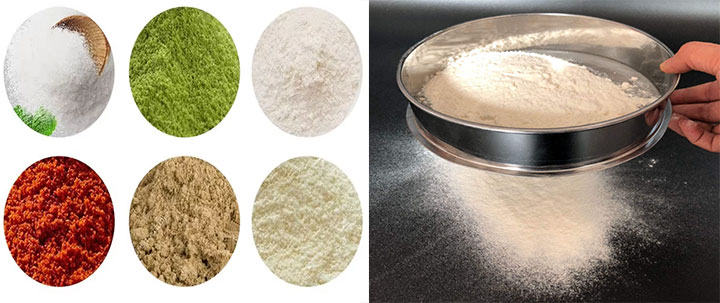
Through a standardized mechanical sieving process, chemical powder sieve shakers offer greater stability and repeatability than manual operation and can handle powders that are prone to agglomeration, statically charged, or corrosive. They support the selection of different sieve materials, multi-stage sieving, and adjustment of vibration frequency and amplitude, thus adapting to different needs in both laboratory research and factory production. The machines are available in different price ranges, from basic testing models to those capable of handling ultrafine powders, covering a variety of scenarios. Their application in industries such as chemicals, pharmaceuticals, and new materials helps control particle size distribution and optimize process flows.
Do you want to know the output? model? price? Please click (inside product page) or online consultation to learn more.
Dahan can also customize it for you according to your needs. Come and get the design that suits you.
Kon Leung, Ph.D.
Staff Simulation Engineer at BISSELL Homecare, Inc.