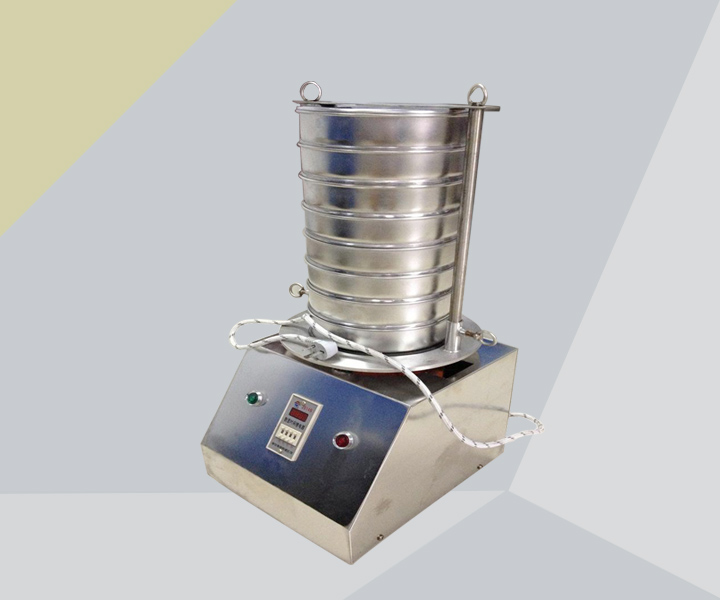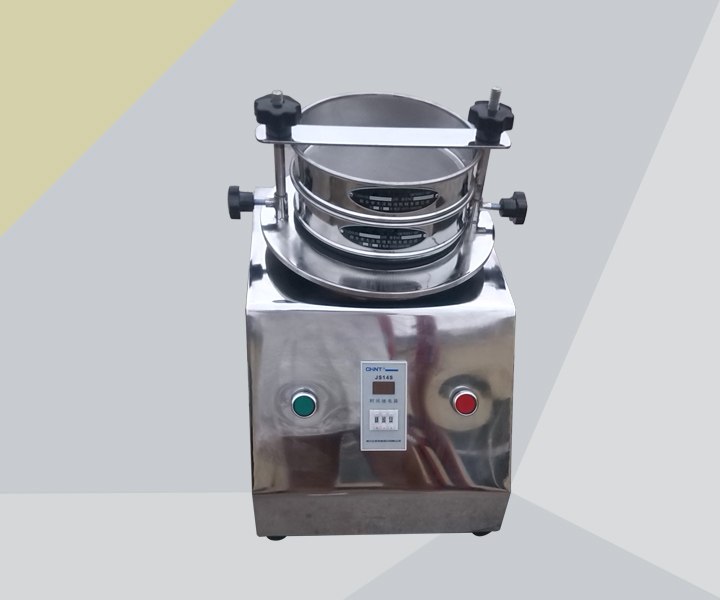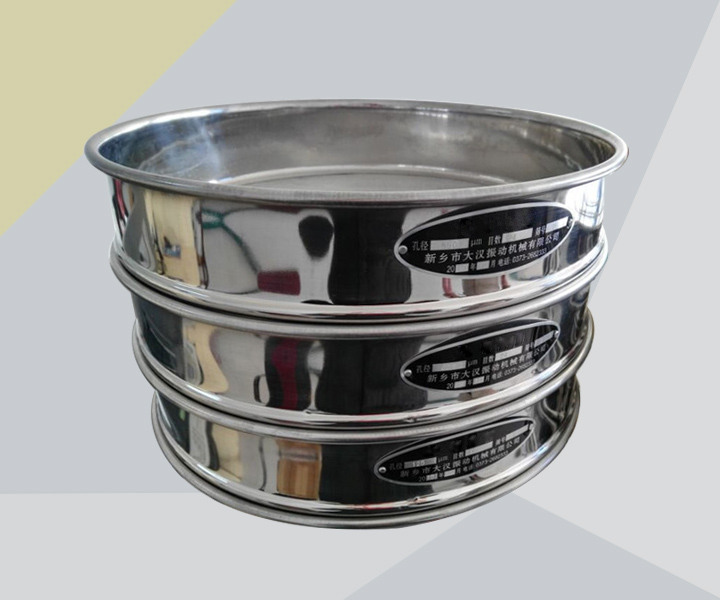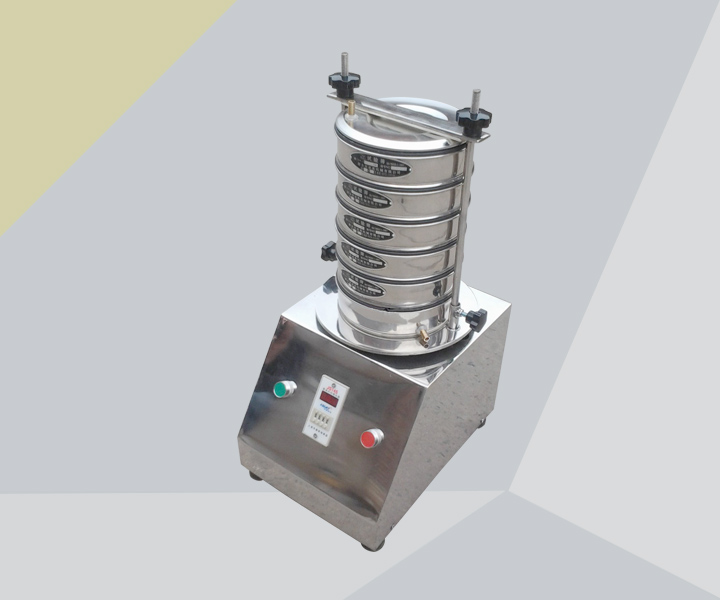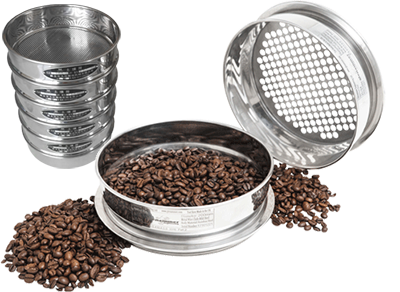
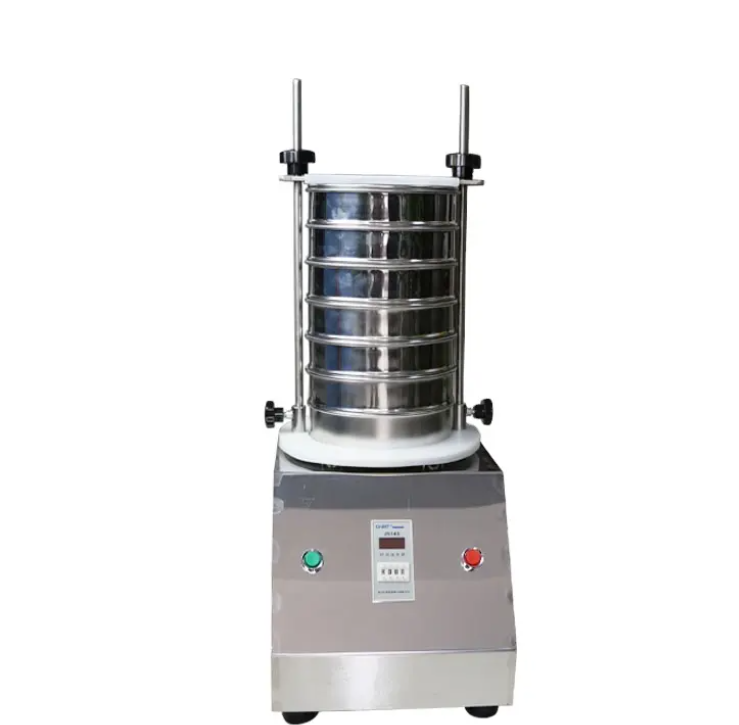
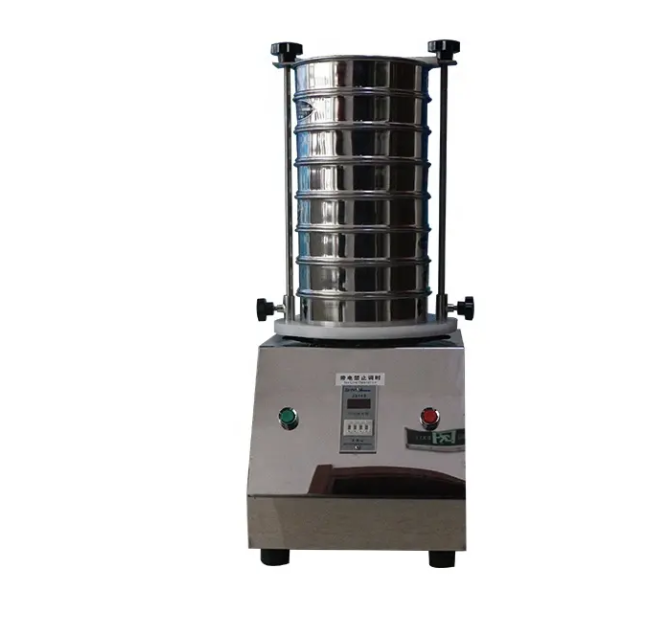
Chemical raw material sieve are suitable for screening powders, granules and particulate materials. Commonly processed materials include resin powder, catalyst carriers, pigments, mineral fillers and battery materials. The sieving mesh range usually covers 45μm to 3.35mm, and supports single-layer or multi-layer sieve combinations to achieve multi-level particle size control. Test sieves play a role in raw material acceptance, process optimization and product characterization in chemical research and development and production. Its test data provides a basis for particle size control, impurity removal and formula adjustment.
Working Principle
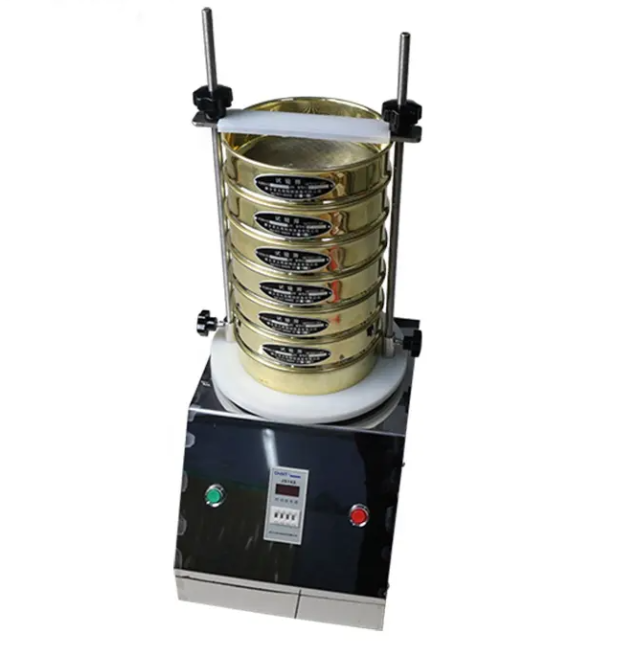
Chemical raw material sieve causes the material placed on the sieve to move relative to each other through vertical vibration or three-dimensional vibration mode. Under the action of the vibration field, the particle group presents a throwing motion trajectory. Particles smaller than the sieve hole size pass through the sieve to complete classification, and particles larger than the sieve hole are retained on the sieve surface to form screen oversize. This process follows the probability screening theory, that is, the probability of a particle passing through the sieve hole is a function of its particle size, sieve surface opening rate and vibration parameters.
The typical vibration system is driven by a vertical vibration motor, and the excitation force is generated by an eccentric weight. When the motor rotates, the centrifugal force generated by the eccentric mass forms a periodic excitation, causing the sieve body to vibrate at a complex frequency. The vibration direction angle is usually set to 45°-60°, taking into account the needs of horizontal throwing and vertical screening. For fine particle screening, the equipment can be integrated with an ultrasonic auxiliary system to improve screening efficiency.
Structural composition
Screening module
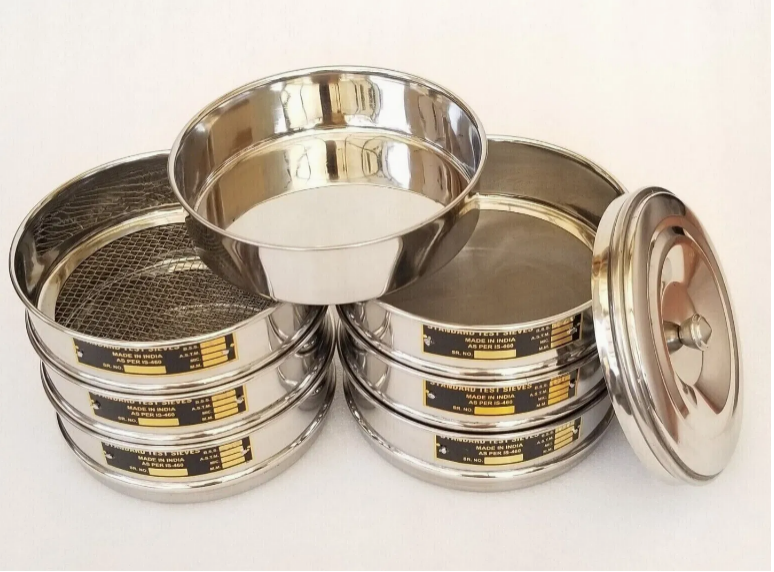
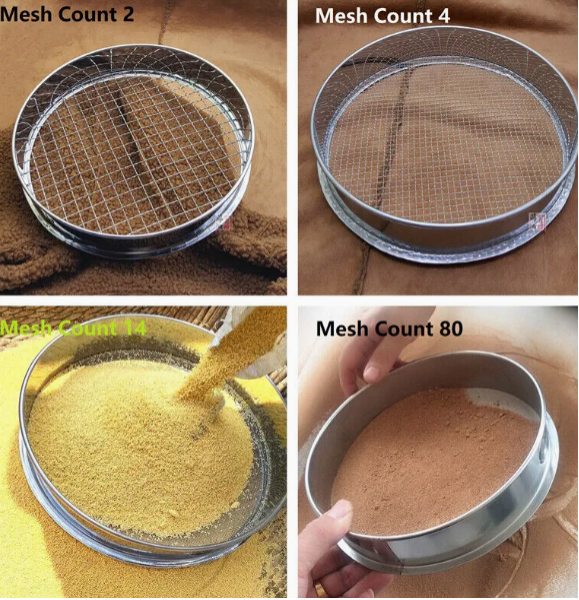
Includes standard screen frame and test screen. The screen frame has two specifications: 200mm/203mm outer diameter. The screen material is 304 stainless steel, with an aperture range of 45μm-3.35mm and an allowable error of ±2%. For precision screening needs, a laser-perforated screen can be configured with an aperture accuracy of ±1μm. The screen is fixed with a snap-on structure, and the O-ring is used to ensure that the screen surface flatness is ≤0.05mm.
Vibration module
It consists of a vibration motor, an eccentric weight and a shock-absorbing spring. The vibration motor has a power range of 30W-100W and an adjustable operating frequency of 50Hz-300Hz. The eccentric weight is configured with a mass ratio of 1:1, and the phase angle is continuously adjustable from 0° to 360° to achieve vibration trajectory control. The shock-absorbing spring uses a cylindrical helical spring with a stiffness coefficient of 50-200N/mm to effectively isolate vibration transmission.
Support module
Adopts cast aluminum alloy base, the mass accounts for 40% of the total weight of the equipment, ensuring that the system's natural frequency is lower than 1/3 of the operating frequency. Equipped with a three-level shock absorption system: rubber shock pads, air springs and mass tuned dampers, the vibration transmission rate is ≤5%.
Application areas
Raw material quality control
In polymer production, the particle size distribution of resin powder is detected by combining 45μm and 75μm standard sieves. The correlation coefficient between the screening results and the values measured by the laser particle size analyzer is 0.98, which can effectively identify coarse particles and mechanical impurities in the raw materials.
Process optimization research
In the field of catalyst preparation, test sieves are used to grade the carrier particle size. Through the combination of 20-40 mesh sieves, the carrier particle size distribution is controlled and the specific surface area and pore volume parameters are optimized. The effect of carrier particle size on catalytic activity is bimodal, with a particle size range of 0.15-0.30mm.
Product performance characterization
In the coating industry, wet sieving is used to evaluate pigment dispersibility. The color paste is diluted to 5% solid content and passed through a 325 mesh sieve. The mass of the sieve residue is used to characterize the dispersion effect. This method is 92% consistent with the test results of the particle size distribution instrument, but the operation time is shortened by 60%.
Failure analysis detection
In battery material research and development, test sieves are used for electrode material particle size analysis. By comparing the particle size distribution before and after the charge and discharge cycle, a quantitative relationship between the degree of material pulverization and capacity attenuation is established. Experiments show that after 50 cycles, the particle size D50 increases by 15%, which is significantly negatively correlated with the capacity retention rate.
In response to the needs of trace sample detection, a micro test sieve is developed. The sieve surface diameter is reduced to 50mm, the sample amount is as low as 1g, and a microfluidic injection device is provided. The device shows advantages in the characterization of nanomaterials and can detect particles with a particle size as low as 10nm.
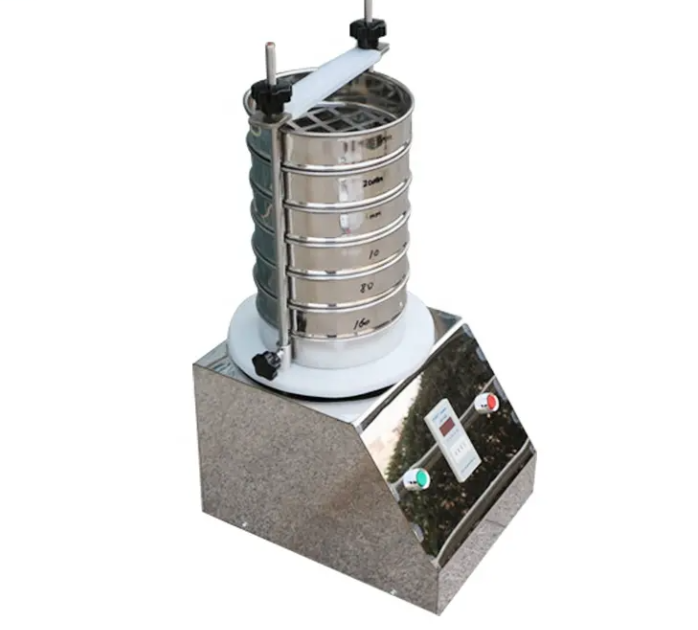
Chemical raw material sieve is a basic equipment used for material particle size analysis and quality control in laboratory environment. Its technical characteristics are mainly reflected in the manufacturing accuracy of the sieve, the stability of the vibration system and the operational compatibility. Most equipment uses laser-punched sieves, and the aperture error can be controlled within ±2μm. The snap-on fixing structure ensures the flatness of the sieve surface. The vibration mode covers vertical vibration and three-dimensional composite vibration, which is suitable for the screening needs of materials with different particle shapes. For fine particle screening, the configuration of ultrasonic auxiliary device can effectively alleviate the problem of sieve hole blockage.