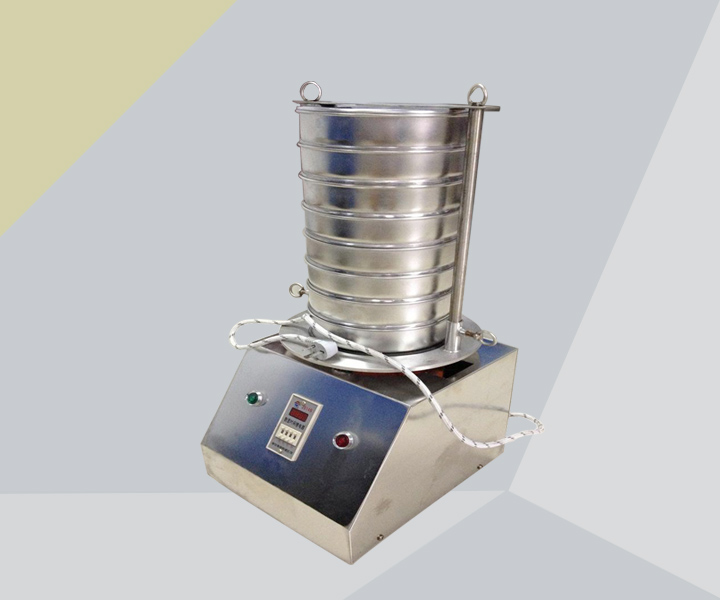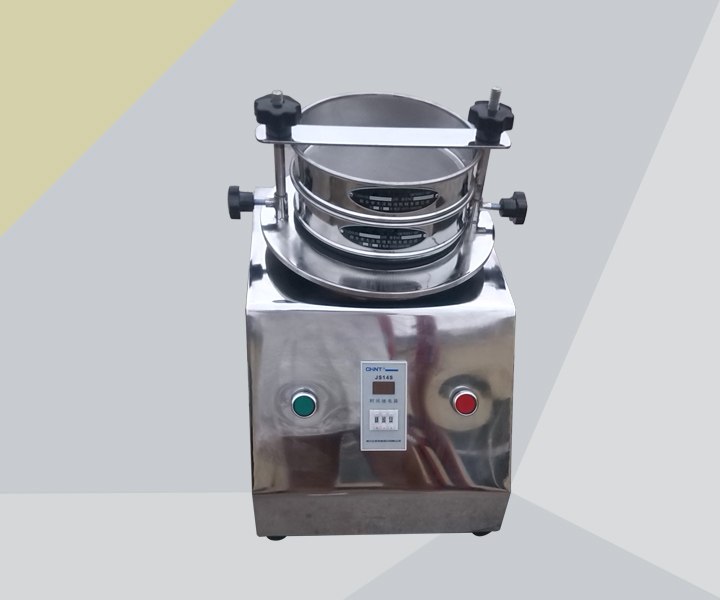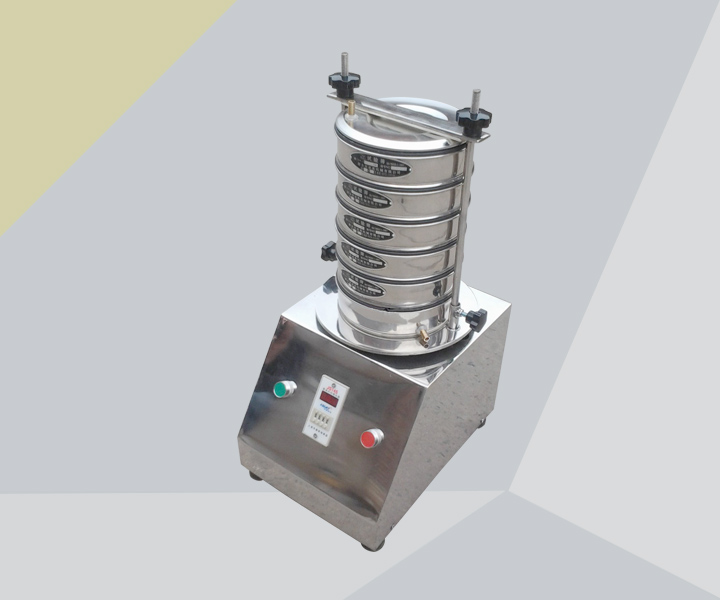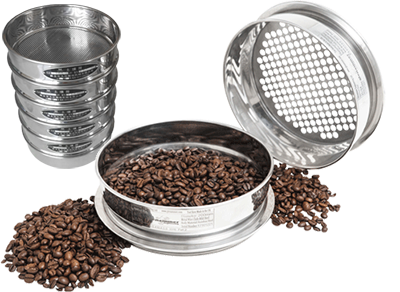
Feed grading sieve is a screening device commonly used in feed industry laboratories or small batch screening occasions. Its main function is to grade the particle size of feed raw materials or finished products in order to evaluate the particle size distribution of feed particles, detect the stability of production processes or for experimental research. Through scientific screening methods, it can more accurately reflect the particle size distribution characteristics of feed particles, providing a basis for production process and product quality control.
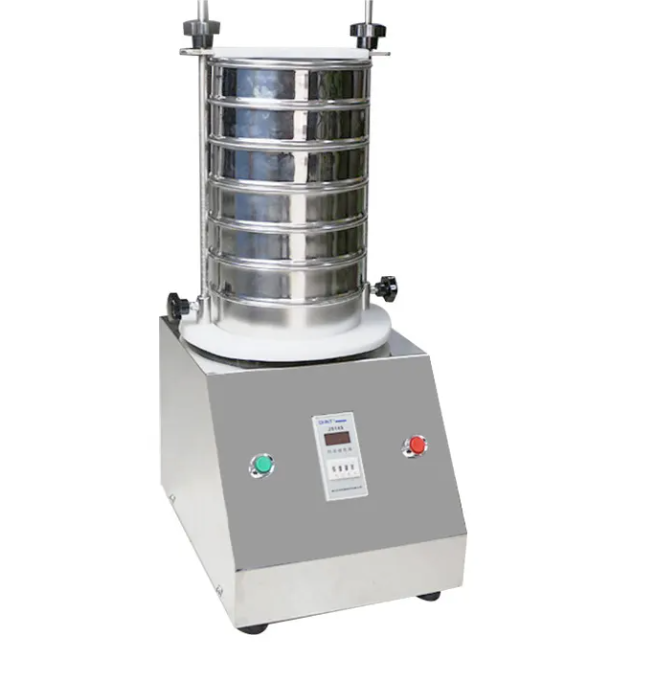
Working principle of feed grading sieve
The feed grading sieve mainly relies on the vertical or complex direction vibration generated by the vibration motor or electromagnetic drive device, so that the material placed in the sieve moves along the sieve surface under the action of vibration force, thereby realizing the grading and screening of granular materials. The whole process is based on the ability of particles to pass through sieves with different sieve hole sizes. Large particles are retained and small particles pass through, eventually forming a layered accumulation of different particle size ranges.
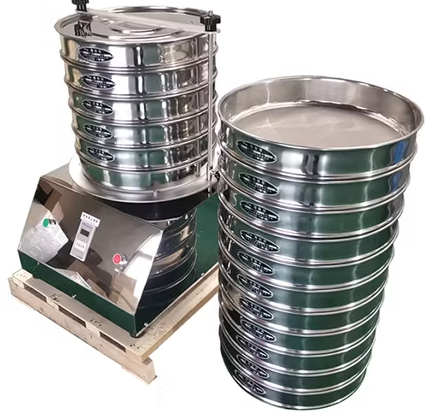
In the specific screening process, a group of standard test sieves with different sieve hole sizes are usually stacked from top to bottom, with large sieve holes on the upper layer and small sieve holes on the lower layer. The material is placed on the top sieve surface. After the sieve machine is started, the material begins to be screened under the action of vibration force. The particles stay in the corresponding sieve layers according to their size, and the smallest particle size part will fall into the receiving tray at the bottom. By weighing the mass of the material collected on each sieve layer, the particle size distribution of the material can be calculated.
The parameters such as the vibration frequency, amplitude, and screening time of the equipment during operation are usually adjustable to meet the requirements of screening conditions for different material characteristics. For common granular and powdered materials in the feed industry, such as corn meal, soybean meal, premix, pellet feed, etc., the fluidity, hygroscopicity and adhesion between particles during the screening process will have a practical impact on the screening effect.
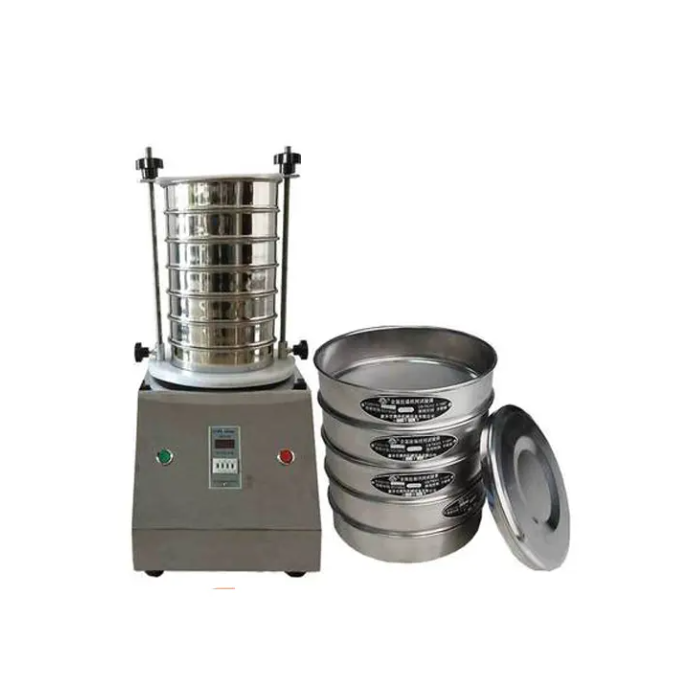
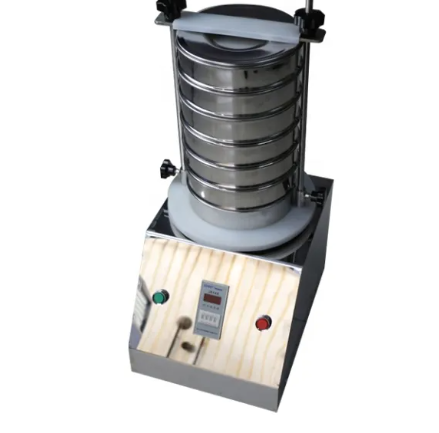
Structural composition of feed grading sieve
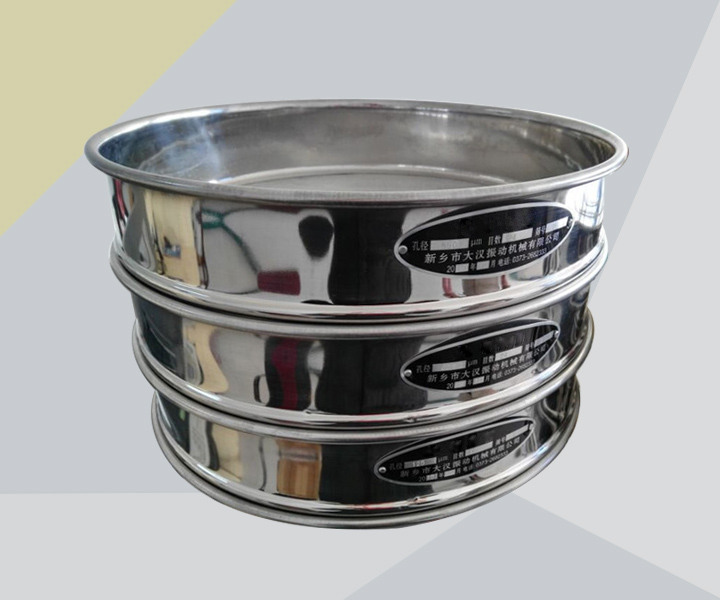
Sieve part: includes a set of standard test sieves, each sieve consists of a stainless steel sieve frame and a sieve mesh, and the sieve mesh aperture is selected according to the required particle size standard. The common sieve diameters are 200mm, 300mm, etc., and the number of layers is generally 5 to 8 layers. The specific number can be adjusted according to the material characteristics and test requirements.
Sieve machine base and vibration source: The base is usually a steel structure with a certain stability. The vibration source can be an electromagnetic vibrator or a low-power vibration motor. The driving method will affect the smoothness of the screening and the movement trajectory of the particles on the screen surface.
Fastening device: used to fix the sieve and ensure that it will not loosen during operation. Common fastening methods include screw compression, clamp fixing, etc.
Timing and control device: Some test sieve equipment is equipped with a time controller or amplitude regulator, which is used to set the screening time and control the vibration amplitude to obtain screening results with strong repeatability.
The receiving tray and cover: The receiving tray is used to collect fine powder or particles that pass through the bottom screen; the top cover is used to prevent dust from being raised during the screening process, which affects the environment and test accuracy.
The overall structure is relatively compact, which is convenient for use and transportation in the laboratory environment, and is also suitable for rapid testing beside the production line.
Application scope of feed grading sieve
Pellet feed: such as shaped particles in pig feed, chicken feed, and aquatic feed. Screening can evaluate the particle length and particle breakage rate.
Powdered feed: such as premixes and concentrates in compound feed, analyze the crushing effect and fineness distribution.
Raw material crushing detection: analyze the particle size of raw materials such as corn and soybean meal after crushing to determine whether the crushing process is reasonable.
Trace additives and mixed materials: such as vitamin premixes, etc., in order to ensure mixing uniformity and subsequent processing stability, screening inspection is a key link.
Laboratory sample testing: The R&D department or quality control department performs particle size testing on small samples, which is an important means to evaluate material processing behavior.
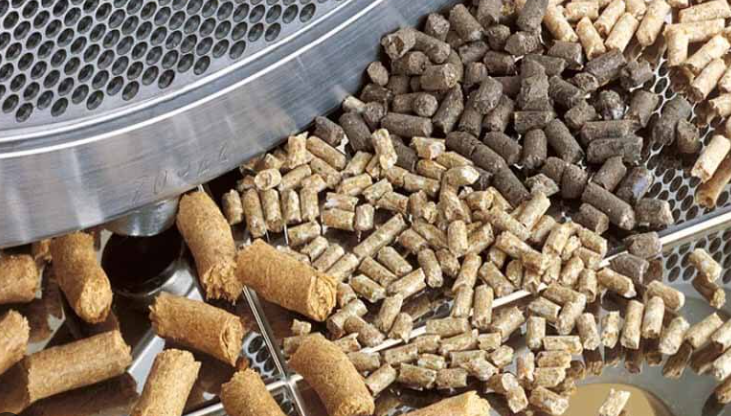
Feed grading sieve is mainly responsible for particle grading and particle size analysis in the feed processing process. It has a simple structure and clear usage, and can intuitively reflect the particle size composition of the sample. The equipment is suitable for the detection of different types of feed samples. Due to the high degree of standardization of the test method, the results are comparable to a certain extent. In daily use, it can meet the basic needs for particle size information in the process of feed production and quality inspection.