How to Choose a Heavy-Duty Sieve Shaker for Powder: Selection Guide
Saturday August-29 2026 15:31:13
How to Choose a Heavy‑Duty Sieve Shaker for Powder?
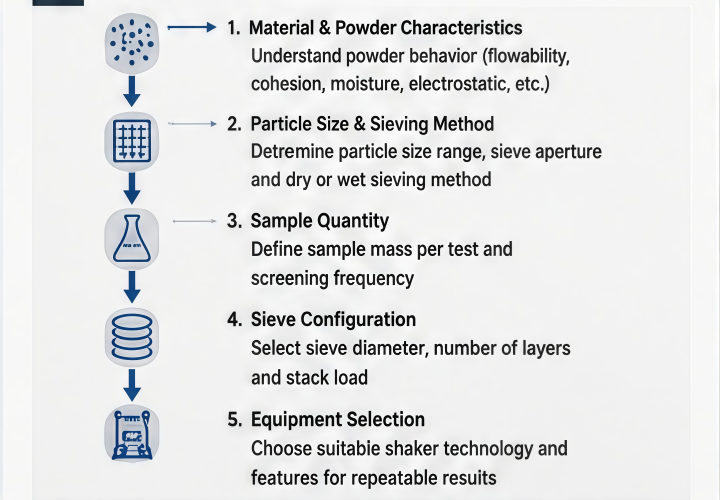
Choosing a heavy‑duty sieve shaker for powder requires more than selecting a machine with stronger vibration. The equipment should match the powder characteristics, particle‑size range, sample quantity, sieve diameter, sieve layers and screening method.
For laboratory testing and quality control, the right sieve shaker should provide stable operation, efficient particle separation and repeatable screening results.
This guide explains the key factors to consider before selecting a heavy‑duty powder sieve shaker.
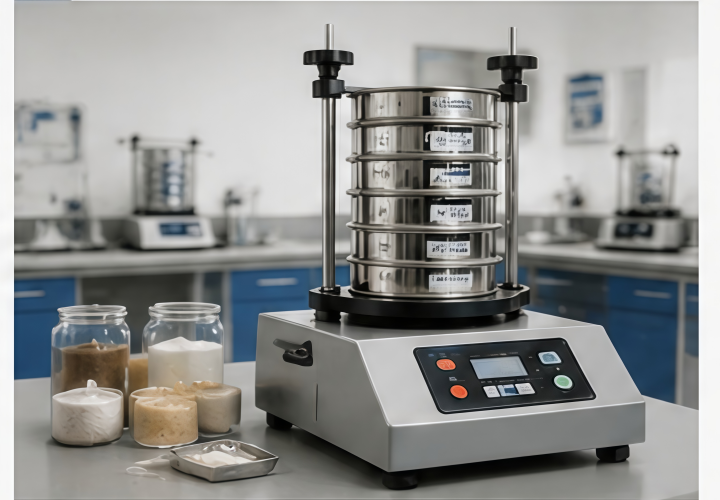
Quick Selection Guide for Heavy‑Duty Powder Sieve Shaker
Before choosing equipment, check the following factors:
| Selection Factor | What to Check |
|---|---|
| Powder characteristics | Fine, cohesive, static‑prone or free‑flowing powder |
| Particle size | Required separation range and sieve aperture |
| Sample quantity | Amount tested per cycle |
| Sieve diameter | Required screening area |
| Sieve layers | Number of particle‑size fractions |
| Screening method | Dry, wet or ultrasonic‑assisted screening |
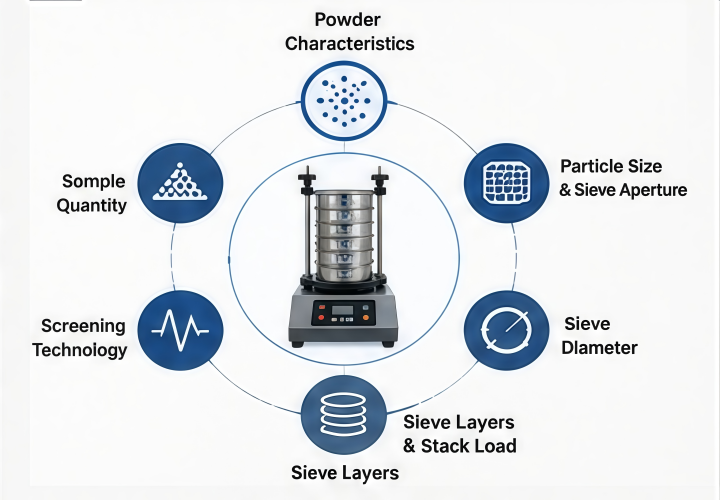
A suitable sieve shaker should be selected according to the actual application requirement rather than vibration strength alone.
What Does Heavy‑Duty Mean for Powder Sieve Shaker?
Heavy‑duty does not simply mean stronger vibration or a larger machine.
For powder screening applications, heavy‑duty capability usually refers to stable operation under higher sample loads, heavier sieve stacks, larger sieve diameters or frequent testing conditions.
Important factors include:
Sieve‑stack weight.
Sample loading capacity.
Screening stability.
Operating time.
Repeatability.
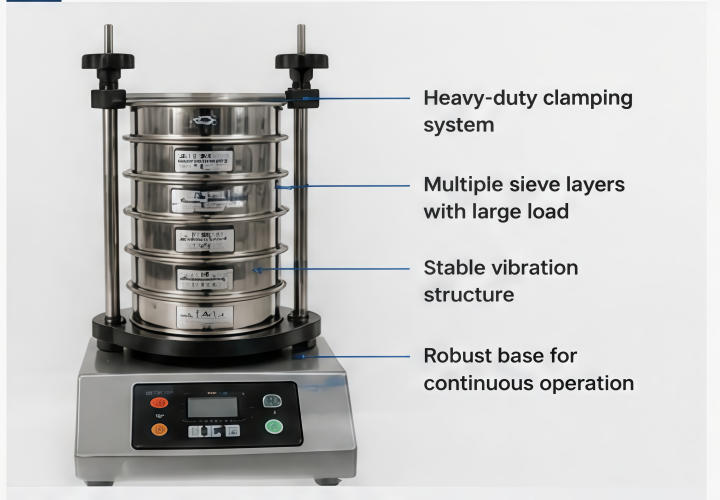
The selected equipment should match the actual workload without unnecessary oversizing.
1. Evaluate Powder Characteristics
Powder behavior directly affects screening performance. Different powders may require different screening solutions even when their particle sizes are similar.
Free‑Flowing Powder.
Free‑flowing powders usually pass through the mesh easily and can often be screened with conventional mechanical or electromagnetic movement.
Fine Powder.
Fine powders may cause mesh blockage because of particle adhesion or static electricity. Fine‑mesh screening requires careful control of sample loading and screening method.
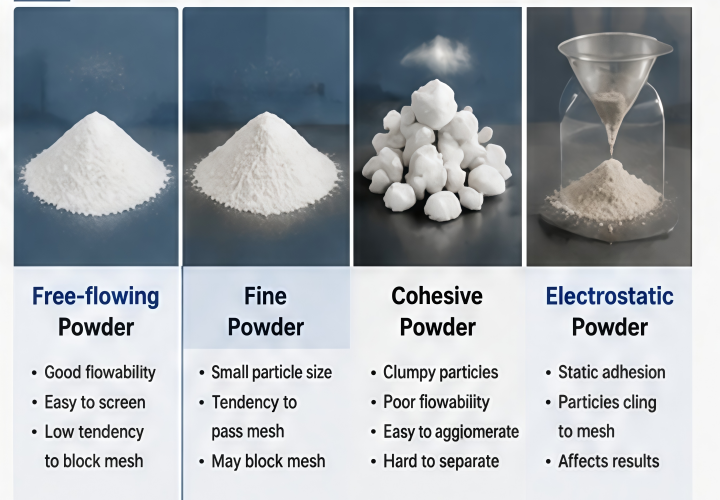
Cohesive Powder.
Powders with poor flowability may form agglomerates during screening. The equipment should provide suitable movement to improve particle separation.
Static‑Prone Powder.
Electrostatic attraction can cause fine particles to stick to the mesh. Ultrasonic assistance may be considered when conventional screening cannot maintain efficiency.
2. Match Particle Size and Screening Method
Particle size determines the required sieve aperture and screening configuration.
Before selecting a sieve shaker, confirm:
Minimum particle size
Maximum particle size
Required separation accuracy
Number of fractions required
| Application | Recommended Method |
|---|---|
| Routine powder analysis | Dry sieving |
| Sticky or difficult materials | Wet sieving |
| Fine powder with mesh blockage | Ultrasonic‑assisted sieving |
The screening method should be selected according to the material behavior rather than only the target particle size.
3. Select Sieve Diameter According to Sample Quantity
Sieve diameter affects the available screening area and should match the amount of powder tested.
Common laboratory sieve diameters include 200 mm and 300 mm.
A larger sieve provides more screening area, but it also increases equipment size and sieve‑stack weight.
| Sample Condition | Selection Direction |
|---|---|
| Small laboratory sample | Smaller sieve diameter |
| Routine quality control testing | 200 mm or 300 mm sieve configuration |
| Larger sample quantity | Larger screening area and load capacity |
The correct sieve diameter should balance sample quantity, testing accuracy and equipment capacity.
4. Determine Sieve Layers and Stack Load
The number of sieve layers depends on how many particle‑size fractions need to be separated.
More sieve layers allow more detailed particle classification in one test, but they also increase the total stack weight.
| Sieve Layers | Typical Application |
|---|---|
| 1–3 layers | Simple particle‑size checking |
| 4–6 layers | Multiple fraction analysis |
| More than 6 layers | Check stack height and load capacity |
For heavy‑duty applications, the total sieve‑stack load should always be considered together with equipment specifications.
5. Choose the Suitable Screening Technology
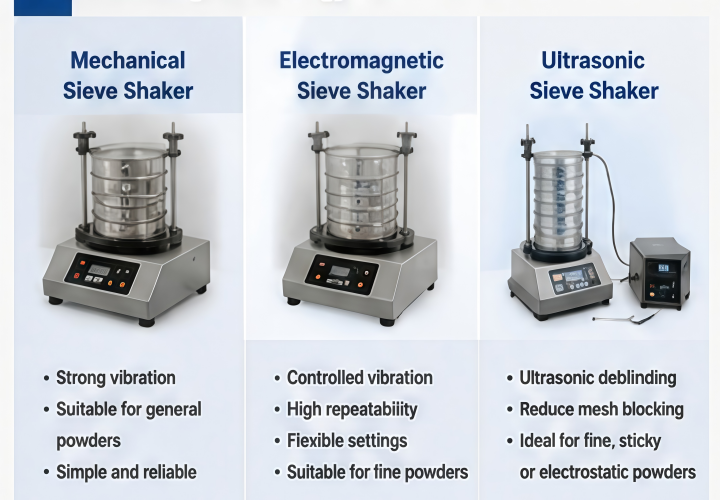
Different sieve shaker technologies are suitable for different powder applications.
| Technology | Suitable Application |
|---|---|
| Mechanical Sieve Shaker | Routine screening of free‑flowing materials |
| Electromagnetic Sieve Shaker | Repeatable laboratory analysis and multi‑layer screening |
| Ultrasonic Sieve Shaker | Fine powder, static adhesion and mesh blockage problems |
A stronger vibration force does not always provide better screening results. The movement type should match the material characteristics.
6. Consider Fine Powder and Mesh Clogging Problems
Mesh blockage is one of the most common problems during fine powder screening.
Common causes include:
Excessive sample loading
Static electricity
Moisture
Particle adhesion
Powder agglomeration
The solution depends on the actual cause.
Reducing sample quantity may solve overloading problems, while ultrasonic deblinding can help when fine particles repeatedly block the mesh.
7. Consider Repeatability Requirements
For laboratory quality control, screening results should remain consistent between different tests.
Important factors include:
Same sample preparation
Same sieve configuration
Same screening time
Same operating conditions
A suitable sieve shaker should support stable and repeatable particle‑size analysis.
Heavy‑Duty Powder Sieve Shaker Selection Guide
| Requirement | Recommended Direction |
|---|---|
| Free‑flowing powder | Mechanical or electromagnetic screening |
| Fine powder | Fine‑mesh compatible configuration |
| Static‑prone powder | Consider ultrasonic assistance |
| Multiple particle fractions | Multi‑layer sieve configuration |
| Larger sample quantity | Match sieve diameter and working load |
| Frequent testing | Select stable and repeatable equipment |
Common Mistakes When Choosing a Heavy‑Duty Sieve Shaker
Selecting Only by Vibration Strength
Higher vibration does not automatically improve screening performance. Material properties and sieve configuration are equally important.
Choosing the Largest Machine
A larger machine is not always better. The equipment should match the sample quantity and testing requirement.
Ignoring Powder Characteristics
Fine, cohesive and static‑prone powders may require different screening solutions.
Overloading the Sieve
Excessive sample loading can reduce effective screening area and increase mesh blockage.
Heavy‑Duty Sieve Shaker Buying Checklist
Before requesting a quotation, prepare the following information:
| Information | Purpose |
|---|---|
| Powder type | Understand material behavior |
| Particle‑size range | Select suitable sieve aperture |
| Sample quantity | Determine machine capacity |
| Sieve diameter | Select suitable configuration |
| Number of sieve layers | Confirm stack requirements |
| Mesh blockage problem | Evaluate deblinding requirements |
Providing complete application information helps suppliers recommend a suitable sieve shaker configuration.
Frequently Asked Questions
What makes a sieve shaker heavy‑duty?
A heavy‑duty sieve shaker is designed for higher sample loads, heavier sieve stacks, larger sieve configurations or frequent operation. It is not defined only by vibration strength.
Can a heavy‑duty sieve shaker screen fine powder?
Yes. The correct sieve aperture, sample loading and screening method should be selected. Ultrasonic assistance can be considered when fine powder causes repeated mesh blockage.
How many sieve layers should I use?
The required number depends on the number of particle‑size fractions. Always check the equipment's rated stack height and load capacity.
When should ultrasonic assistance be considered?
Ultrasonic assistance is useful when fine powder, static electricity or particle adhesion prevents efficient screening with conventional vibration.
Final Guide to Choosing a Heavy‑Duty Sieve Shaker
The best way to choose a heavy‑duty sieve shaker for powder is to evaluate the material first and select the equipment second.
Start with powder characteristics, particle size and sample quantity. Then determine the sieve diameter, sieve layers and screening method.
For routine powder analysis, conventional screening may be sufficient. For fine powders affected by mesh blockage or static adhesion, ultrasonic assistance should be considered.
A correct equipment selection starts with understanding the actual screening requirement.
Do you want to know the output? model? price? Please click (inside product page) or online consultation to learn more.
Dahan can also customize it for you according to your needs. Come and get the design that suits you.
Kon Leung, Ph.D.
Staff Simulation Engineer at BISSELL Homecare, Inc.