Ultrasonic Sieve Deblinding Solution
Ultrasonic Deblinding System for Test Sieves
Reduce mesh blinding and clogging during fine powder screening with high-frequency ultrasonic vibration. Designed for compatible laboratory test sieves and retrofit applications.
Request a Quote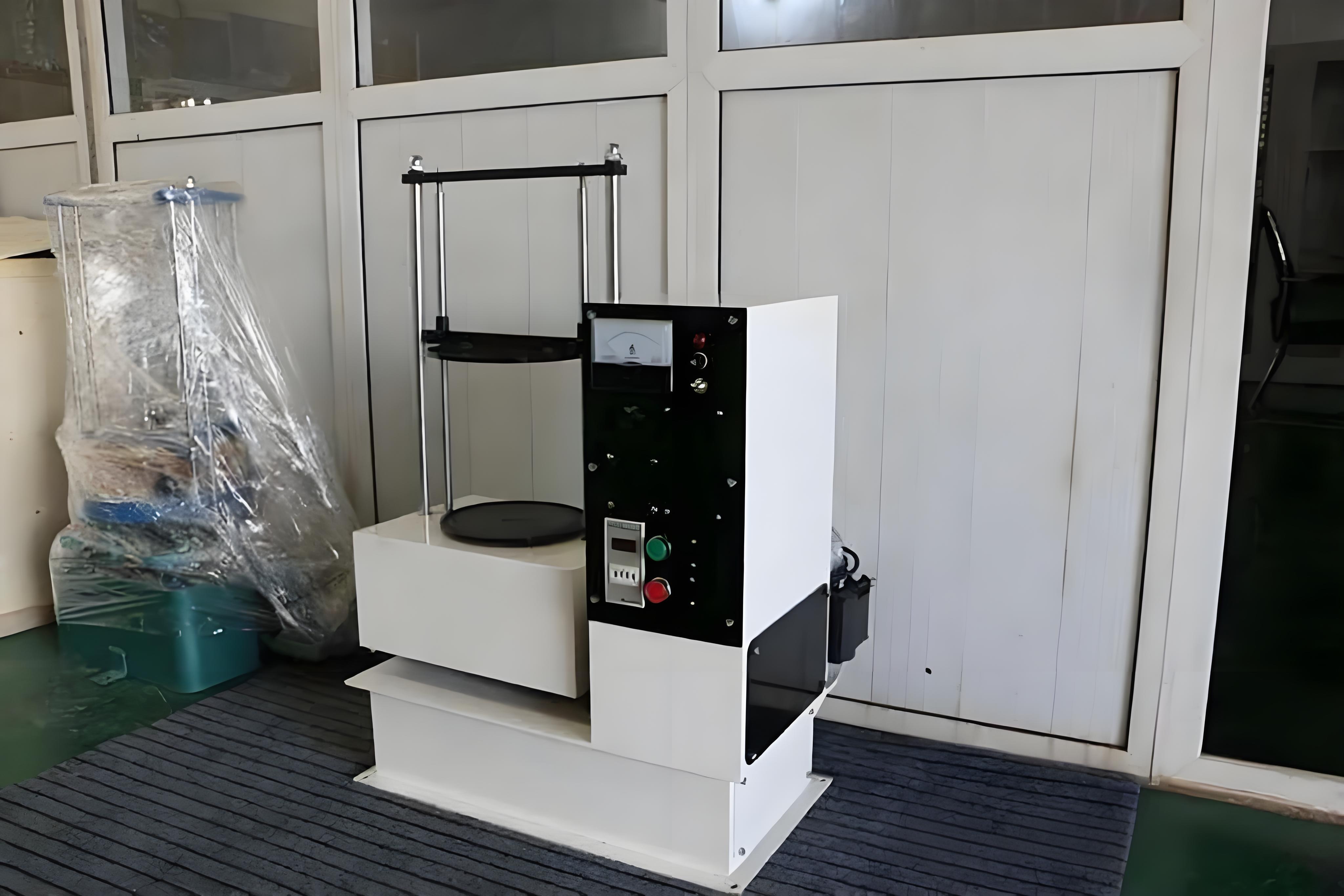
The Ultrasonic Deblinding System for Test Sieves helps reduce mesh blinding and clogging during fine powder screening. High-frequency ultrasonic vibration is transferred to the sieve mesh to help release particles trapped in fine apertures.
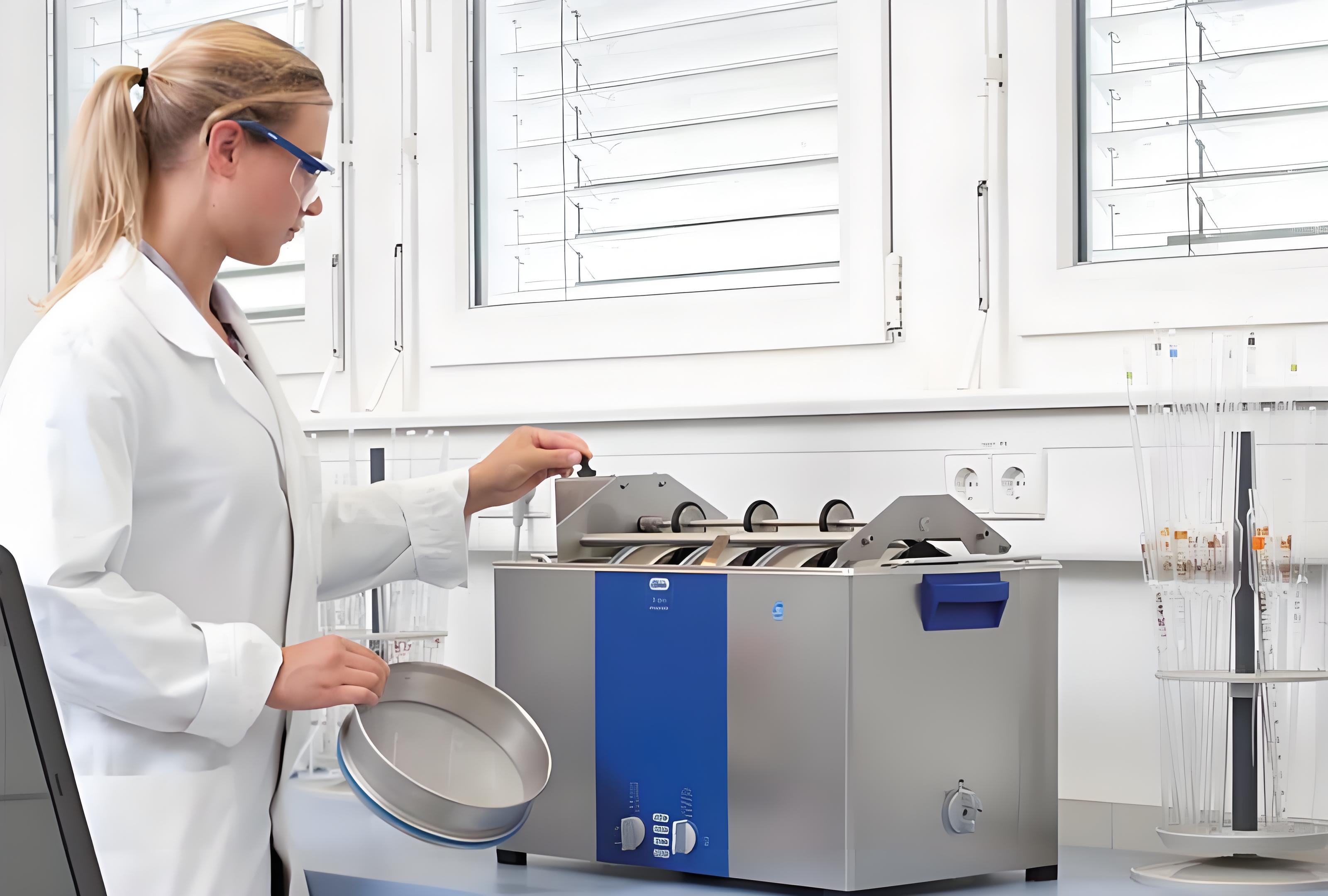
The system can be integrated with compatible ultrasonic sieve shaker systems and screening equipment, providing a retrofit option for laboratories that need to improve fine-mesh screening without replacing the complete shaker.
Product Overview
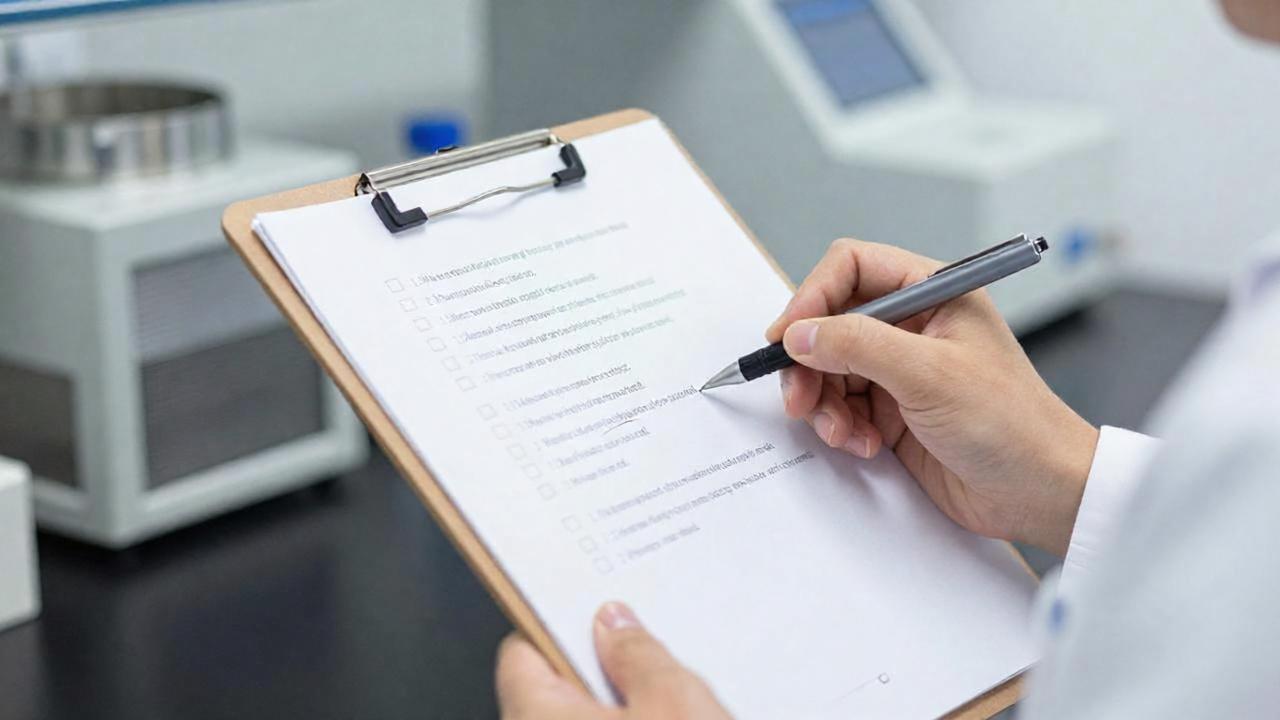
Reduce Mesh Blinding
Fine powders can become trapped in sieve apertures or adhere to the mesh during particle size analysis. As apertures become blocked, the effective screening area is reduced.
Ultrasonic vibration helps loosen particles from the mesh openings and reduce particle accumulation, supporting more stable fine-mesh screening.
Key Specifications
View Technical Specifications
| Parameter | Published Specification |
|---|---|
| Ultrasonic Frequency | 30 kHz for the published laboratory ultrasonic sieve configuration |
| Test Sieve Diameter | 200 mm and 300 mm |
| Special Sieve Diameter | 75 mm available for special requirements |
| Mesh Range | 8–500 mesh in the published laboratory configuration |
| Fine Screening Capability | Down to approximately 20 μm under suitable material and operating conditions |
| Operating Mode | Continuous / Pulse |
| Power Input | AC 220 V ±10% for the published laboratory ultrasonic power supply |
| Sieve Type | Woven wire mesh or compatible laboratory test sieve; ASTM E11 test sieve specifications can be considered where applicable |
| Installation | Retrofit or integrated configuration |
Fine screening note: Approximately 20 μm refers to published fine-screening capability under suitable conditions. Actual results depend on material characteristics, sieve specification and operating conditions.
System Components
View System Components
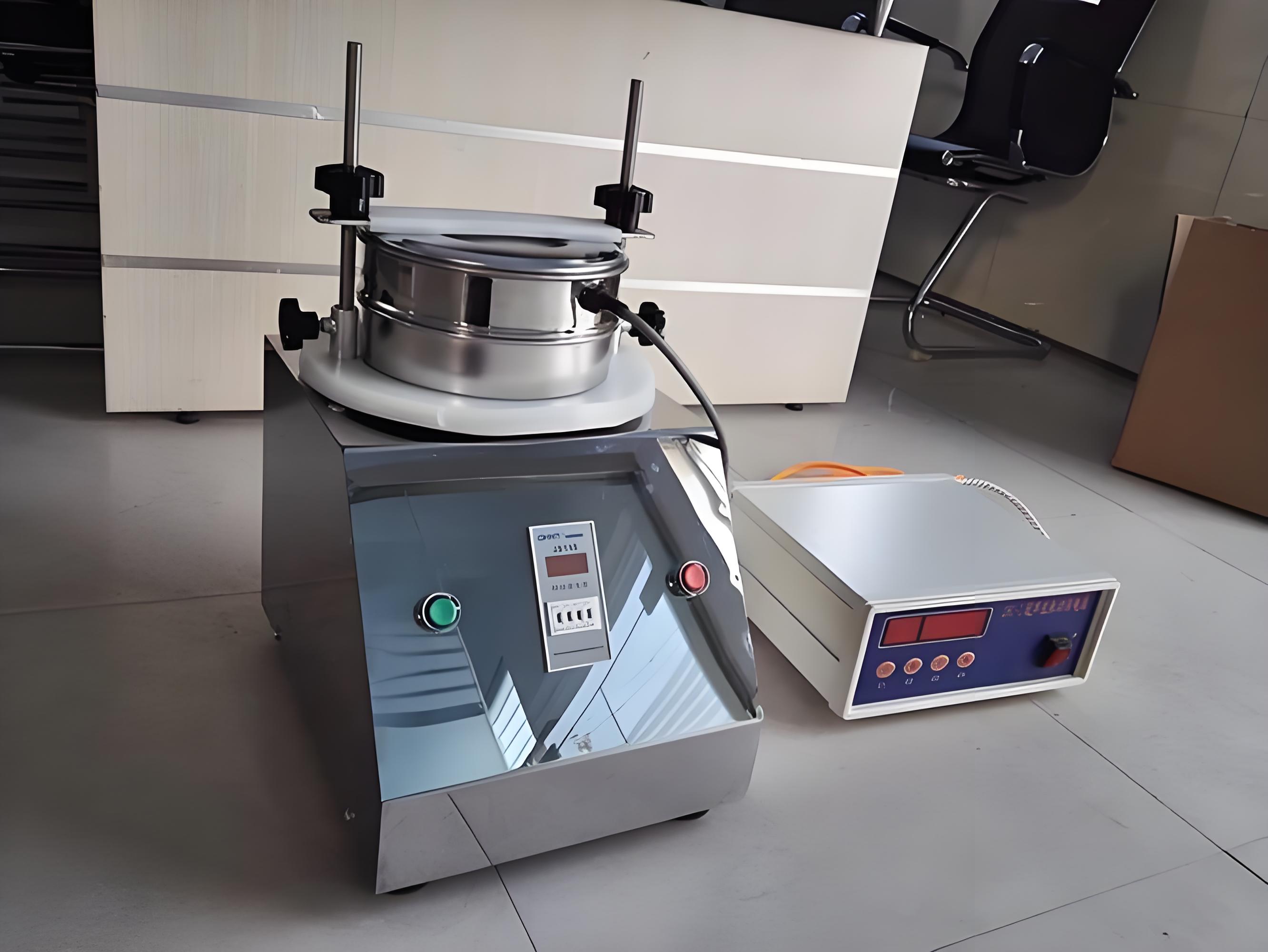
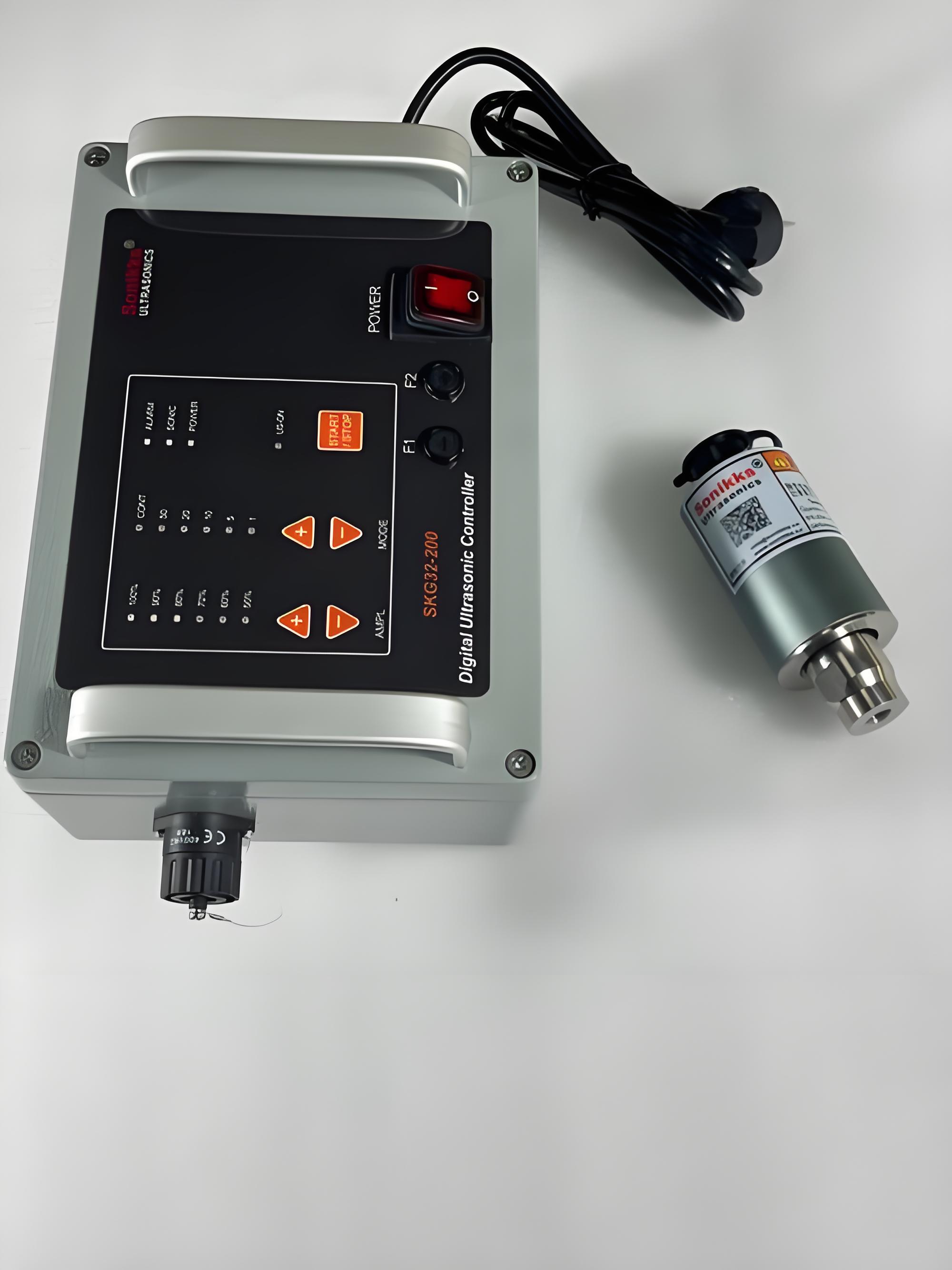
The ultrasonic deblinding system uses a generator and sieve-side ultrasonic components to transfer high-frequency vibration to the test sieve mesh.
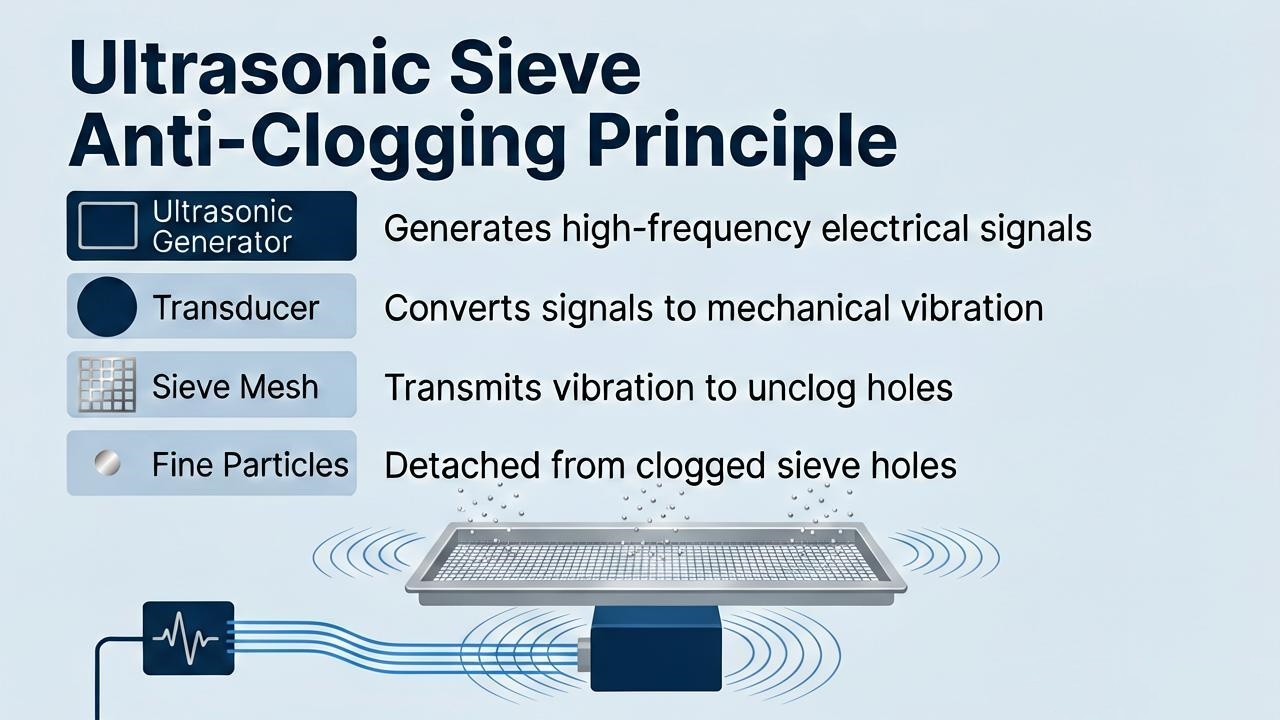
Ultrasonic Generator
Generates and controls the ultrasonic signal used by the system.
Ultrasonic Transducer
Converts electrical energy into mechanical vibration for the sieve assembly.
High-Frequency Cable
Connects the ultrasonic power supply with the sieve-side assembly.
Connector
Provides the connection between the ultrasonic components and compatible sieve assembly.
Test Sieve Assembly
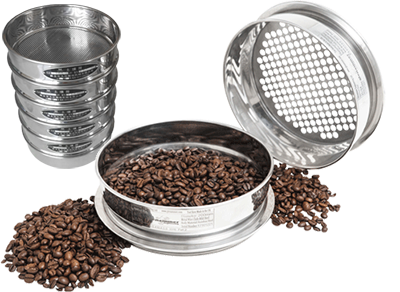
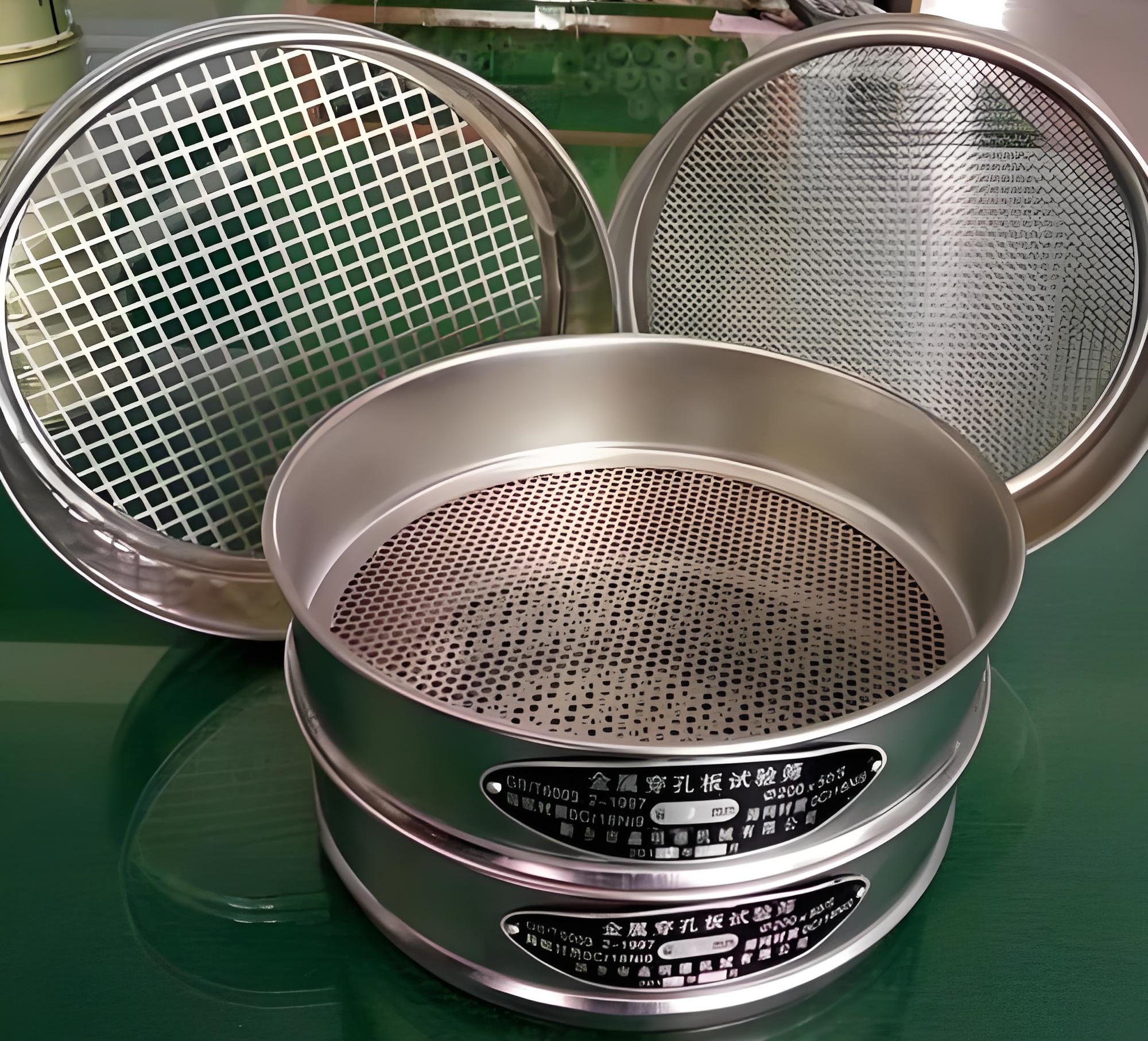
Works with compatible laboratory standard test sieves and test sieve configurations.
How Ultrasonic Deblinding Works?
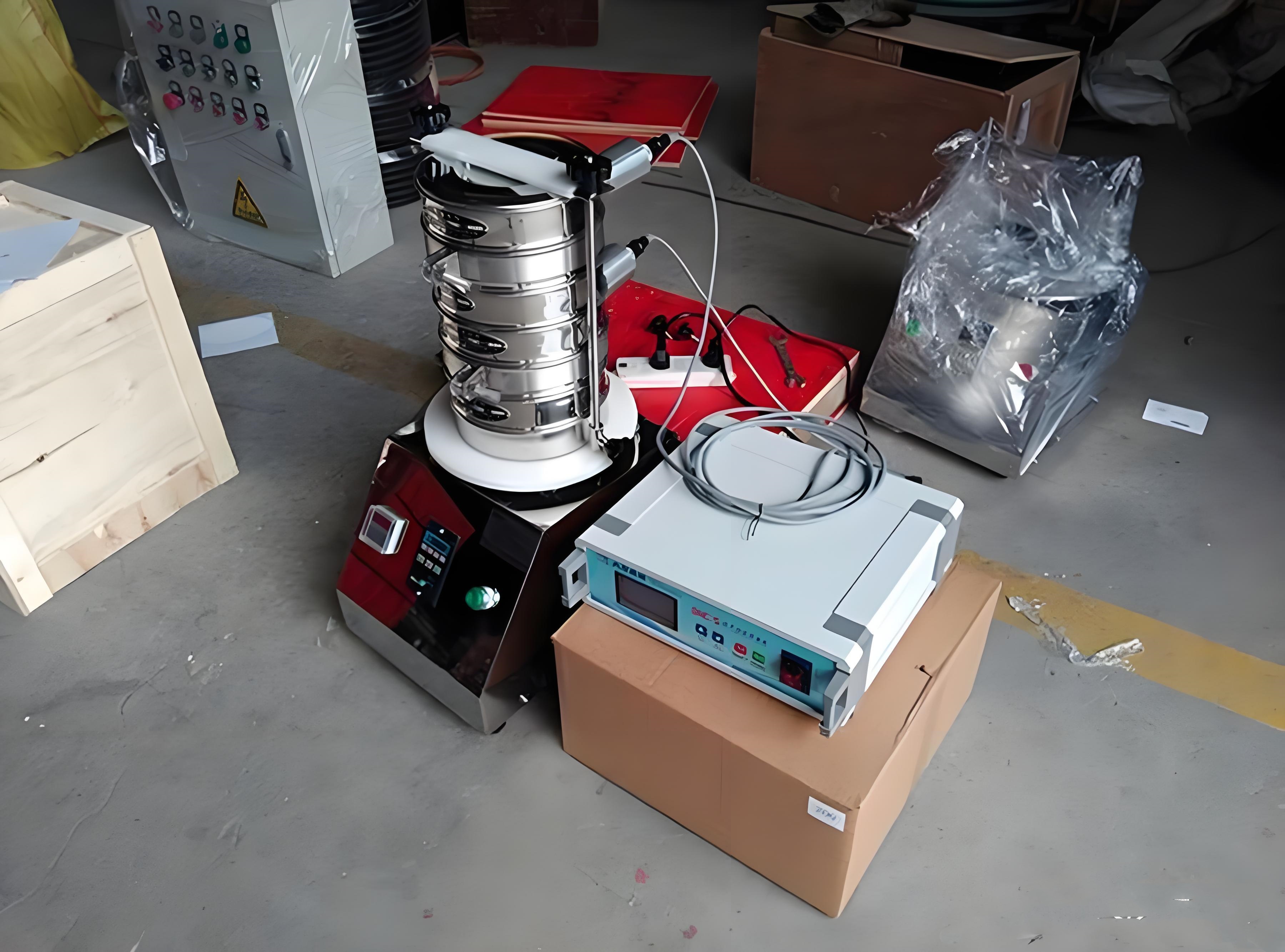
High-Frequency Mesh Vibration
When fine or cohesive particles become lodged in sieve apertures, conventional vibration may not be sufficient to keep the mesh open.
The ultrasonic system introduces high-frequency vibration into the sieve mesh. This vibration helps loosen trapped particles and reduce accumulation on the screen surface.
The additional ultrasonic vibration supports the existing mechanical screening process rather than replacing the basic function of the sieve shaker.
Retrofit Solution
Already Have a Sieve Shaker?
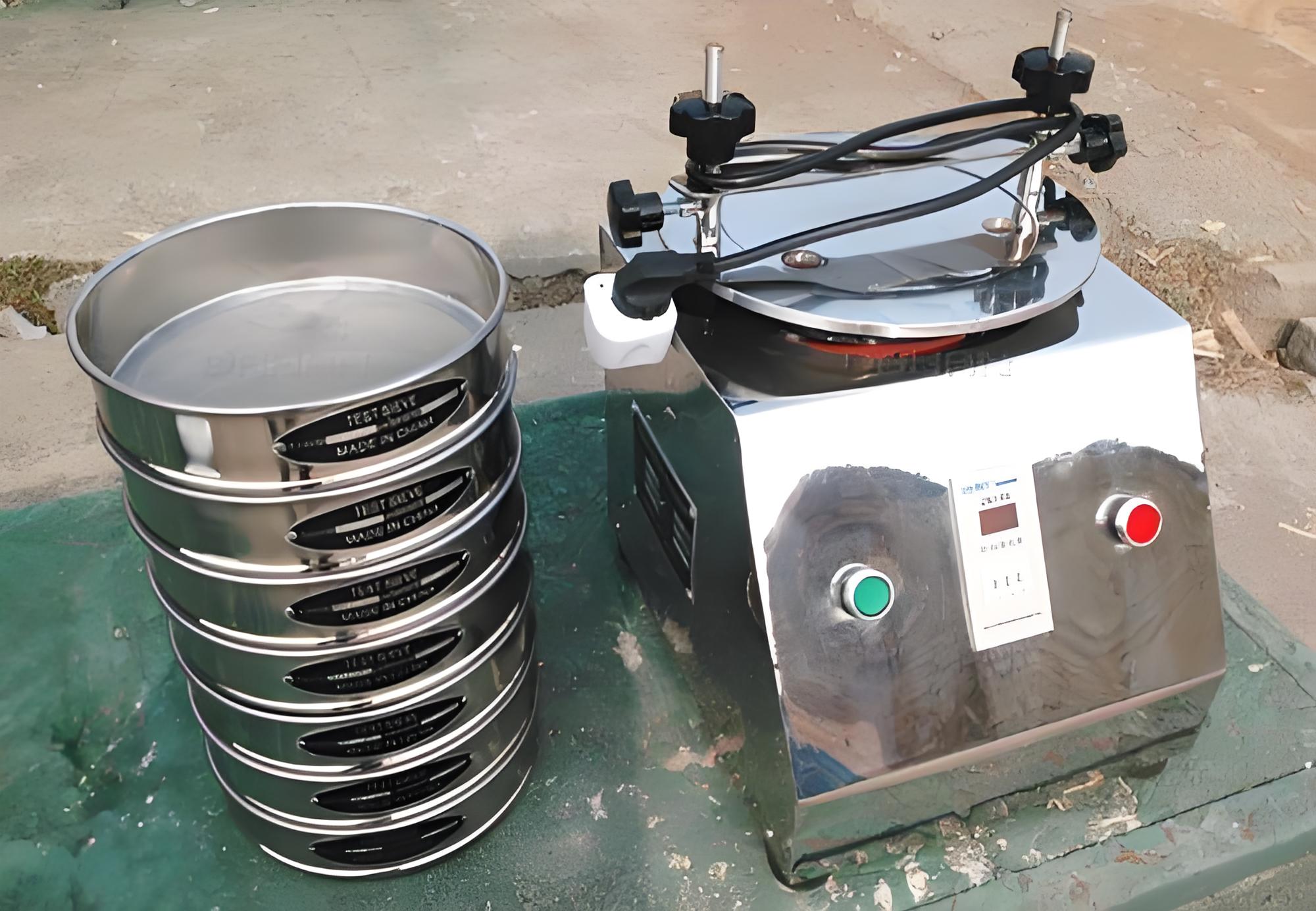
The ultrasonic deblinding system can be integrated with compatible existing screening equipment, allowing laboratories to improve fine-mesh screening without replacing the complete sieve shaker.
The final configuration should be selected according to the sieve diameter, mesh specification, shaker configuration and material being screened.
Ultrasonic Deblinding System in Operation
Recommended video content: ultrasonic generator, transducer connection, test sieve assembly and fine powder screening.
Applications for Fine Powder Screening
Ultrasonic deblinding is suitable for laboratory screening applications where fine, cohesive, adhesive or static-prone powders cause mesh blockage.
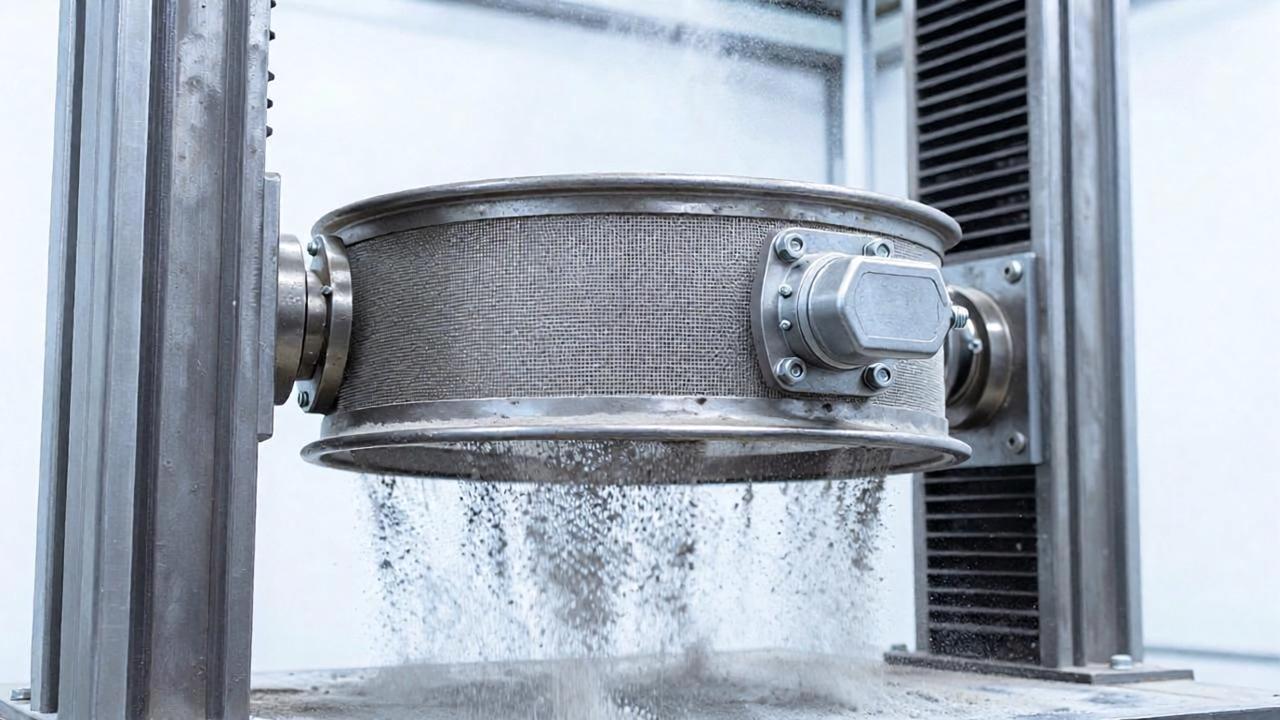
Battery Materials
Fine particulate materials that may present mesh blocking or adhesion problems.
Metal Powders
Fine powders requiring controlled particle size separation.
Pharmaceutical Powders
Fine powders where consistent laboratory sieve analysis is important.
Chemical Powders
Materials that are difficult to pass through fine mesh.
Ceramic Powders
Fine particulate materials requiring particle size classification.
Laboratory Powders
Materials where conventional screening produces frequent mesh blockage.
Published Application Test Results
View Published Test Results
Published application data demonstrates how ultrasonic screening can improve the handling of difficult powders under specific test conditions.
| Material | Sieve / Mesh | Published Result |
|---|---|---|
| Tungsten Powder | 600 Mesh | Ultrasonic screening: 30 kg/h |
| Cobalt Powder | 400 Mesh | Ultrasonic screening: 300 kg/h |
| NdFeB Powder | 300 Mesh | Published comparison: sieve residue reduced from 32.2% to 6.9% |
| 3D-Printing Titanium Alloy Powder | 300 Mesh / 48 μm | Published screening result increased from 42% to 95% |
Test data note: These are published application references, not guaranteed results for every material. Actual performance varies with material properties, mesh specification, feed conditions and ultrasonic configuration.
Maintenance
View Maintenance Information
Regular maintenance mainly involves checking transducer connections and high-frequency cables, cleaning contact surfaces and inspecting the sieve mesh for wear or localized damage.
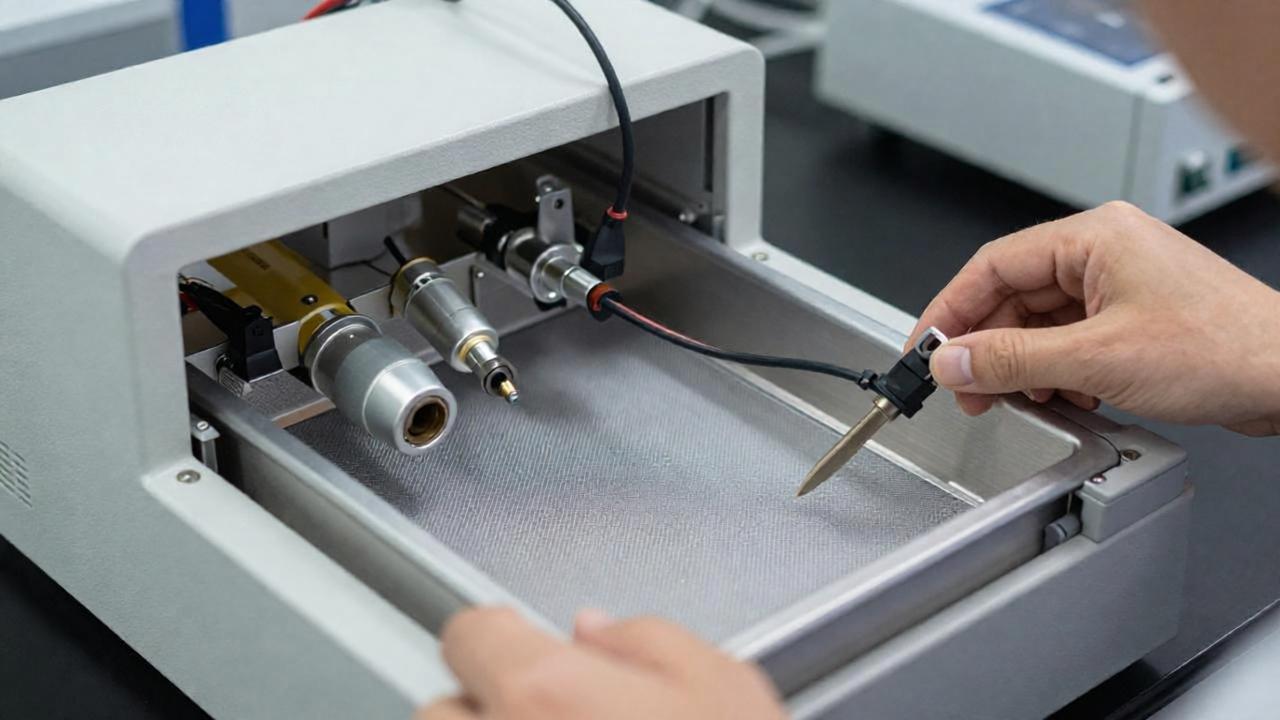
Proper installation and periodic inspection help maintain stable ultrasonic transmission and screening performance.
Frequently Asked Questions
Can the ultrasonic deblinding system be added to an existing sieve shaker?
Yes. Compatible existing sieve shakers can be evaluated for retrofit installation according to the sieve and equipment configuration.
What test sieve diameters are available?
The published laboratory configuration supports 200 mm and 300 mm sieve diameters. A 75 mm configuration is available for special requirements.
What mesh sizes can be used?
The published laboratory configuration lists 8 to 500 mesh. The suitable mesh should be confirmed according to the application and sieve construction.
Can ultrasonic deblinding be used for fine powders?
Yes. It is intended for difficult-to-screen powders affected by mesh blinding. Published applications describe fine screening down to approximately 20 μm under suitable conditions.
What information is needed for a retrofit evaluation?
Provide the sieve shaker model, sieve diameter, mesh size or aperture, material, approximate particle size and current screening problem.
Having Trouble with Sieve Mesh Blinding?
Tell us your sieve diameter, mesh size and material. Dahan can help evaluate a suitable ultrasonic deblinding configuration for your application.
REQUEST A QUOTESieve shaker model: ______________________________
Test sieve diameter: ______________________________
Mesh size / aperture: ______________________________
Material: ______________________________
Target particle size: ______________________________
Current screening problem: ______________________________
Required quantity: ______________________________