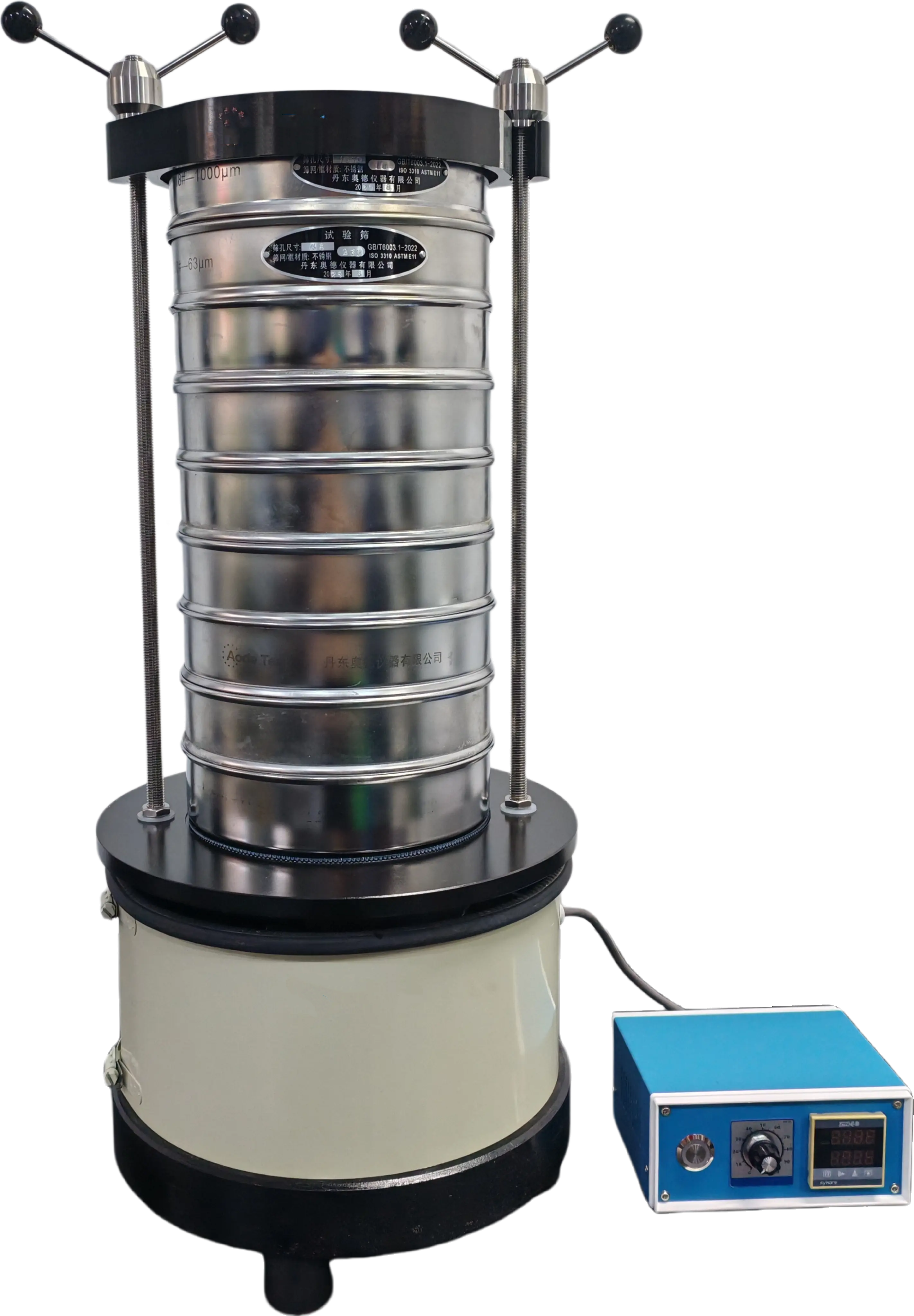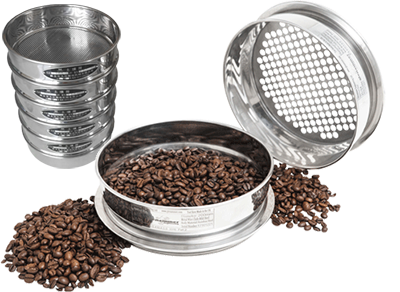
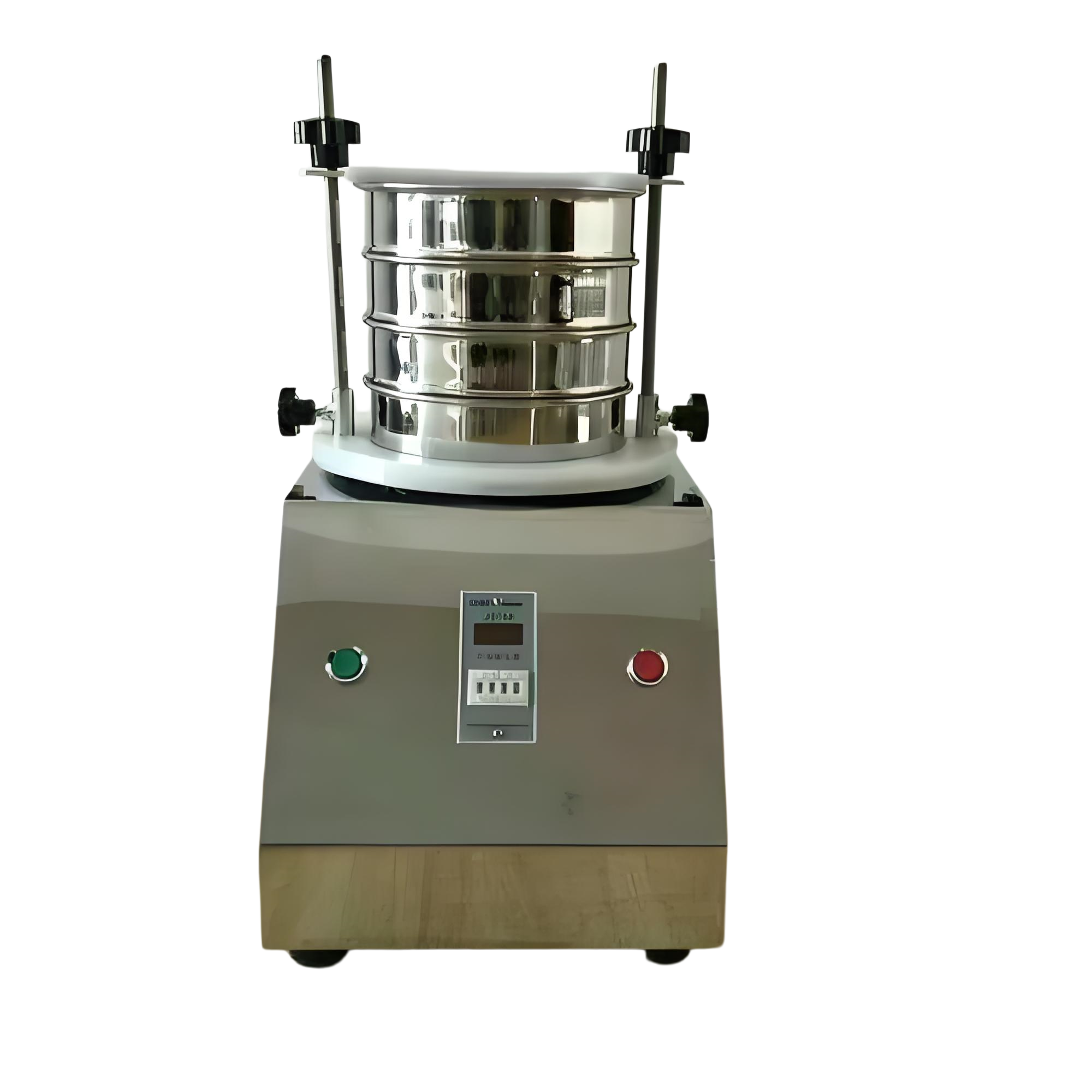
Stainless Steel Test Sieve
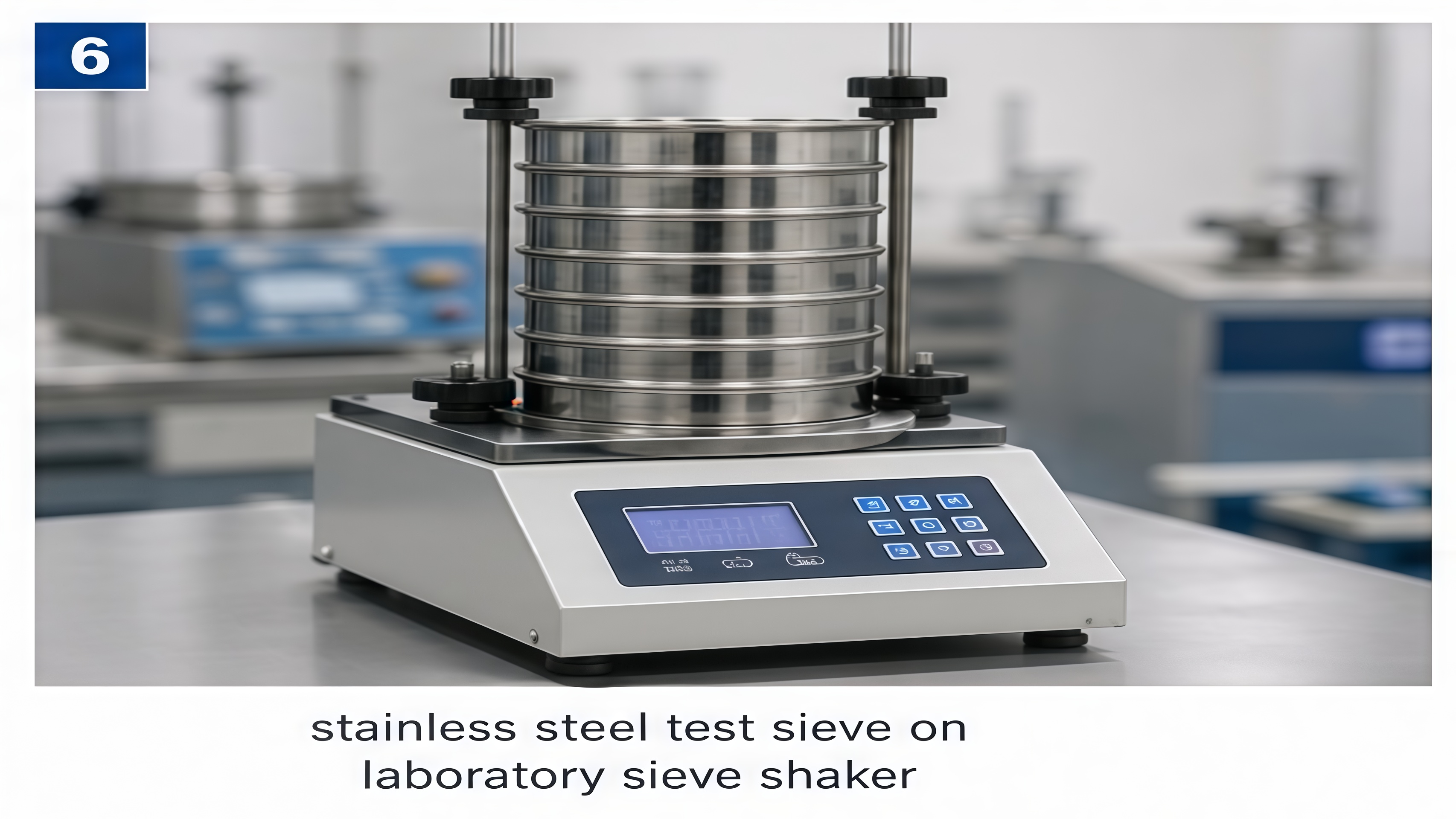
Our stainless steel test sieve is designed for laboratory particle size analysis, material classification, and quality control. It features an AISI 304 stainless steel frame with AISI 304 or AISI 316 stainless steel wire mesh.
Different diameters, mesh openings, frame heights, and verification options are available for dry or wet sieving according to the sample and test method.
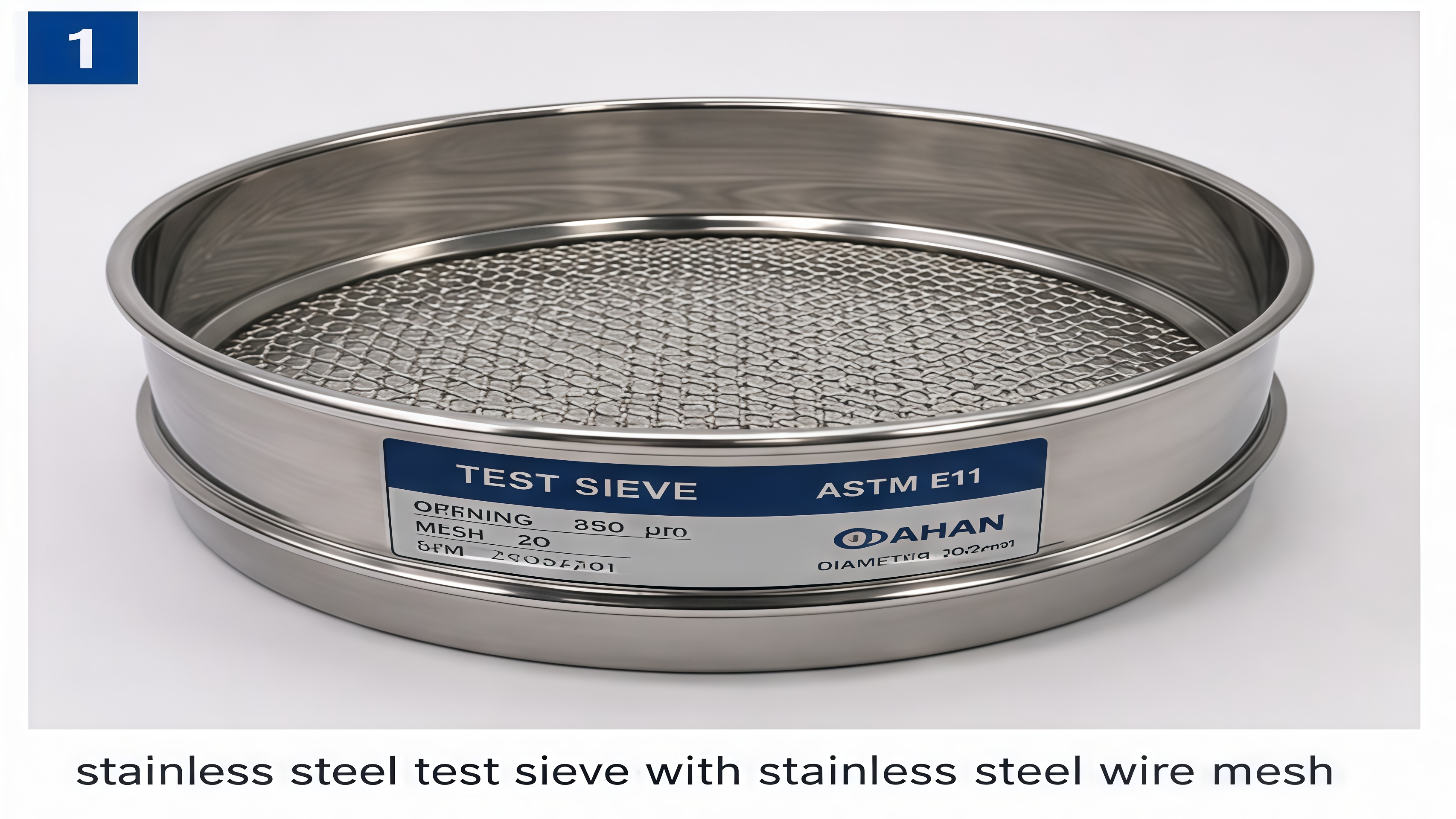
Stainless Steel Test Sieve Specifications
| Specification | Available Options |
|---|---|
| Frame Material | AISI 304 Stainless Steel |
| Mesh Material | AISI 304 / AISI 316 Stainless Steel |
| Available Diameter | 75–450 mm |
| Mesh Opening | 5 μm–125 mm |
| Frame Height | Full Height / Half Height |
| Mesh Fixing | Soldered to Frame |
| Sieving Method | Dry / Wet Sieving |
| Applicable Standards | ASTM E11 / ISO 3310-1 / AASHTO M 92, according to configuration |
| Documentation | Certificate of Compliance |
| Traceability | Serial Number |
| Verification Options | Compliance / Inspection / Calibration |
| Matching Options | Master-Matched / Batch Matching |
| Custom Options | Mesh Opening / Diameter |
ASTM E11 and ISO 3310-1 Stainless Steel Test Sieves
The stainless steel test sieve can be configured according to ASTM E11, ISO 3310-1, and other applicable requirements. The selected diameter, aperture, construction, and verification level should match the required test method.
For detailed information about ASTM sieve numbers and apertures, see our ASTM E11 Standard Test Sieve guide.
304 and 316 Stainless Steel Test Sieve Options
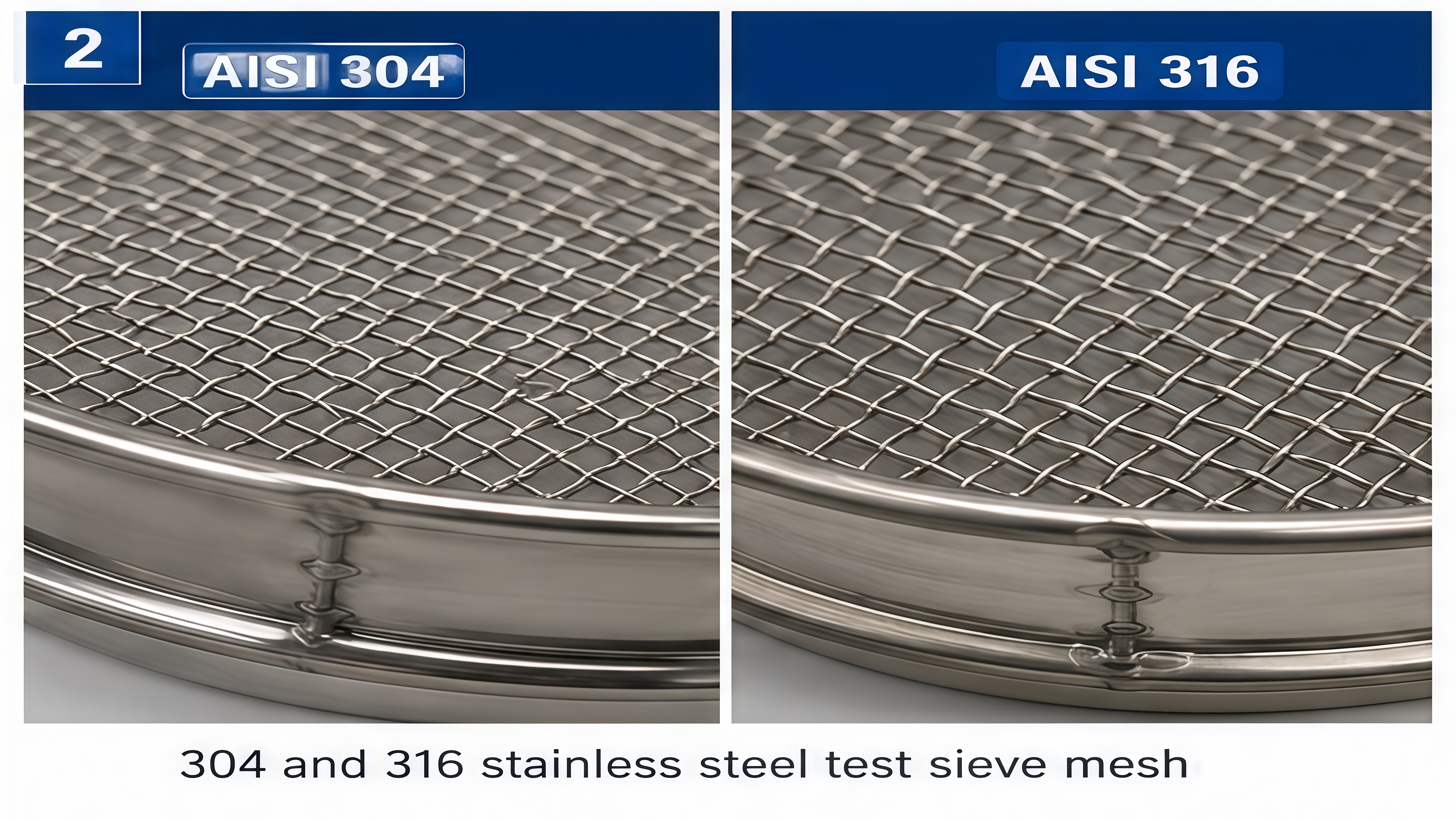
The frame is supplied in AISI 304 stainless steel, while the woven wire mesh is available in AISI 304 or AISI 316.
| Selection Factor | 304 Stainless Steel | 316 Stainless Steel |
|---|---|---|
| Routine Laboratory Testing | Suitable | Suitable |
| Corrosive Conditions | Application dependent | More suitable for demanding conditions |
| Wet Sieving | Suitable according to sample conditions | Suitable for demanding conditions |
| Typical Selection | General laboratory testing | Corrosive or chloride-containing samples |
Material selection should be based on sample composition, cleaning conditions, and corrosion exposure.
Stainless Steel Test Sieve Mesh Sizes and Apertures
Available mesh openings range from 5 μm to 125 mm. Select the nominal aperture according to the target particle-size range and applicable test method.
Common ASTM Sieve Numbers and Nominal Apertures
| ASTM Sieve No. | Nominal Aperture |
|---|---|
| No. 20 | 850 μm |
| No. 40 | 425 μm |
| No. 60 | 250 μm |
| No. 100 | 150 μm |
| No. 200 | 75 μm |
| No. 270 | 53 μm |
| No. 325 | 45 μm |
| No. 400 | 38 μm |
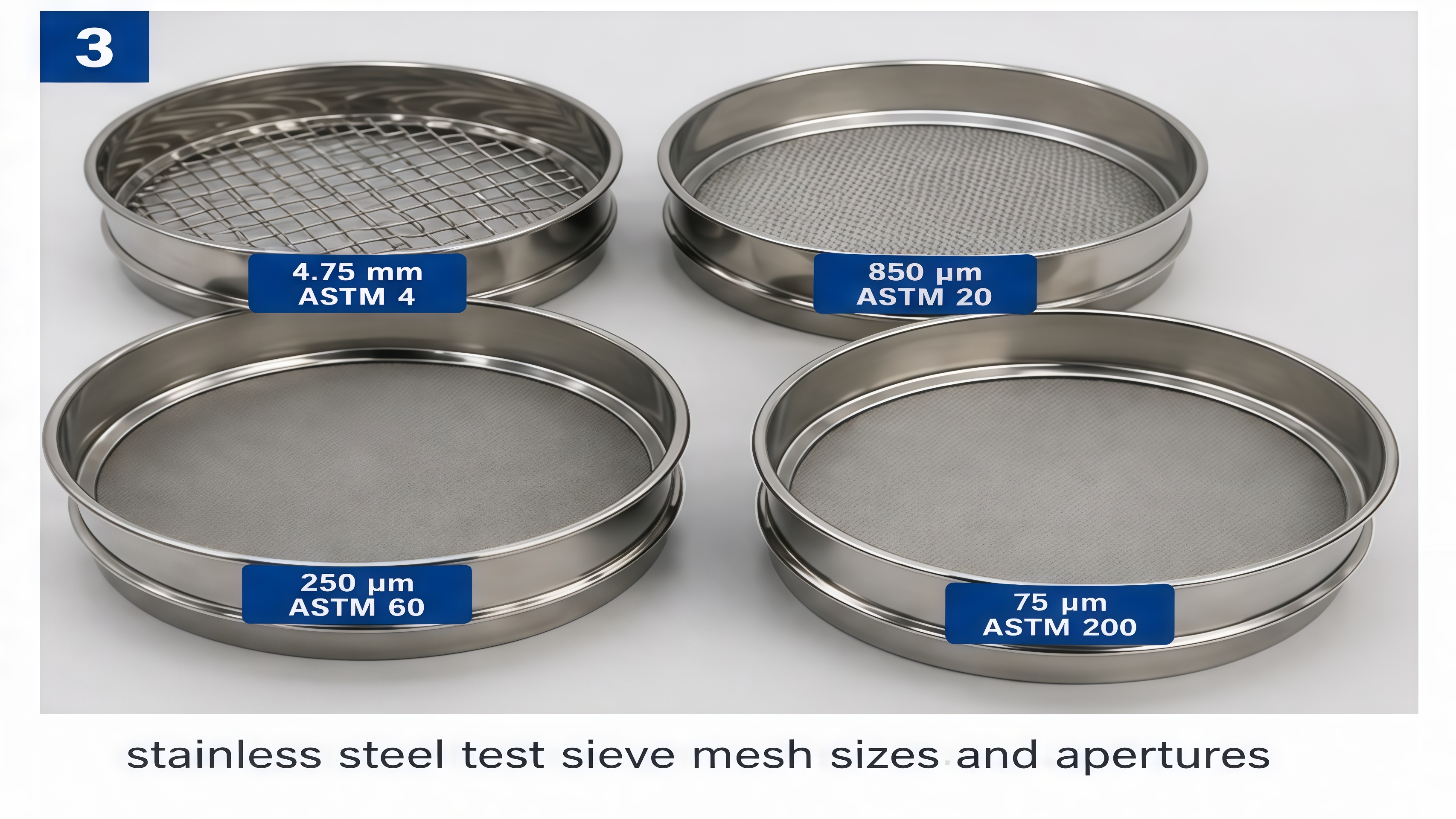
Custom mesh openings are available for specified apertures outside the standard configuration.
Test Sieve Diameter and Frame Height Options
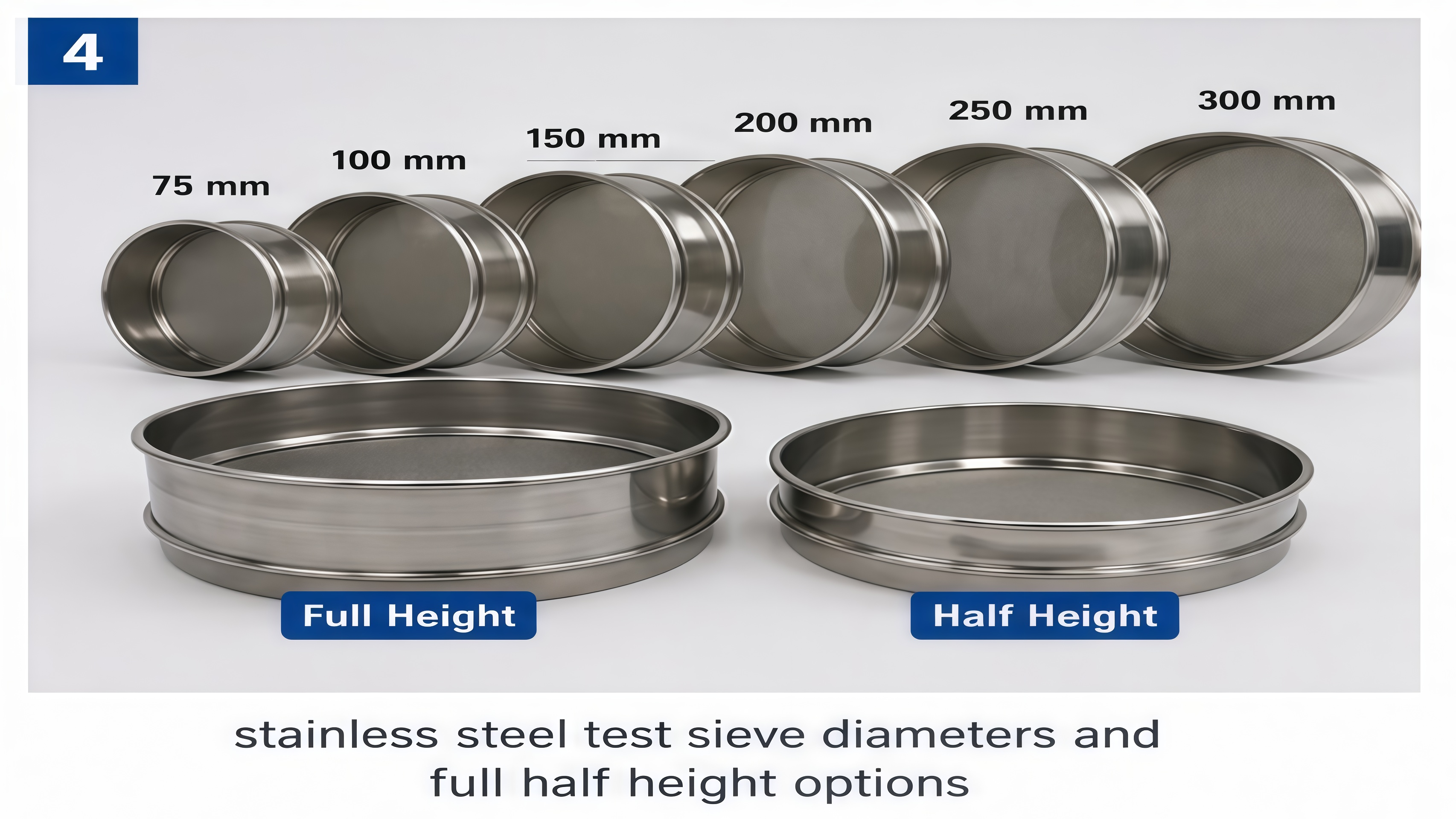
Available diameters range from 75 mm to 450 mm.
| Selection Factor | Full Height | Half Height |
|---|---|---|
| Sample Quantity | Larger samples | Smaller samples |
| Internal Space | Higher | Lower |
| Stack Configuration | Standard laboratory stacking | More compact stacking |
| Selection Basis | Sample volume and test setup | Sample volume and test setup |
How to Choose a Stainless Steel Test Sieve?
Select the sieve according to the required standard, aperture, diameter, frame height, mesh material, and verification level.
Recommended Configuration by Requirement
| Requirement | Configuration to Consider |
|---|---|
| Routine particle size analysis | 304 stainless steel configuration |
| More demanding corrosion conditions | Consider 316 stainless steel mesh |
| Smaller sample quantity | Half-height sieve |
| Larger sample quantity | Full-height sieve |
| ASTM-based testing | ASTM E11 configuration |
| Opening measurement required | Inspection option |
| Measurement documentation required | Calibration option |
| Consistent reference required | Master-Matched or Batch Matching |
Standard Selection
Confirm whether the test method specifies ASTM E11, ISO 3310-1, AASHTO M 92, or another requirement.
Mesh Opening and Diameter Selection
Choose the aperture according to the target particle-size range. Match the sieve diameter with the sample volume and the clamping or stacking dimensions of the sieve shaker.
Stainless Steel Test Sieves for Dry and Wet Sieving
Stainless steel test sieves can be configured for dry or wet sieving according to the sample and test method.
| Sieving Method | Typical Materials / Conditions |
|---|---|
| Dry Sieving | Powders, granules, aggregates, minerals, chemicals, food ingredients, plastics, ceramics |
| Wet Sieving | Samples requiring washing or liquid-assisted particle separation |
For related equipment, see Wet Sieving Sieve Shaker.
Stainless Steel Test Sieve Compatibility with Sieve Shakers
Sieve diameter should match the clamping and stacking configuration of the selected shaker.
| Sieve Shaker | Listed Sieve Diameter Options |
|---|---|
| Mechanical Sieve | 200 mm / 300 mm |
| Electromagnetic Sieve Shaker | 75 / 100 / 200 / 300 mm |
| Wet Sieving Sieve Shaker | 100 / 150 / 200 / 250 / 300 / 315 mm and selected inch sizes |
Confirm the sieve diameter against the specific shaker model before ordering.
Compliance, Inspection and Calibration Options
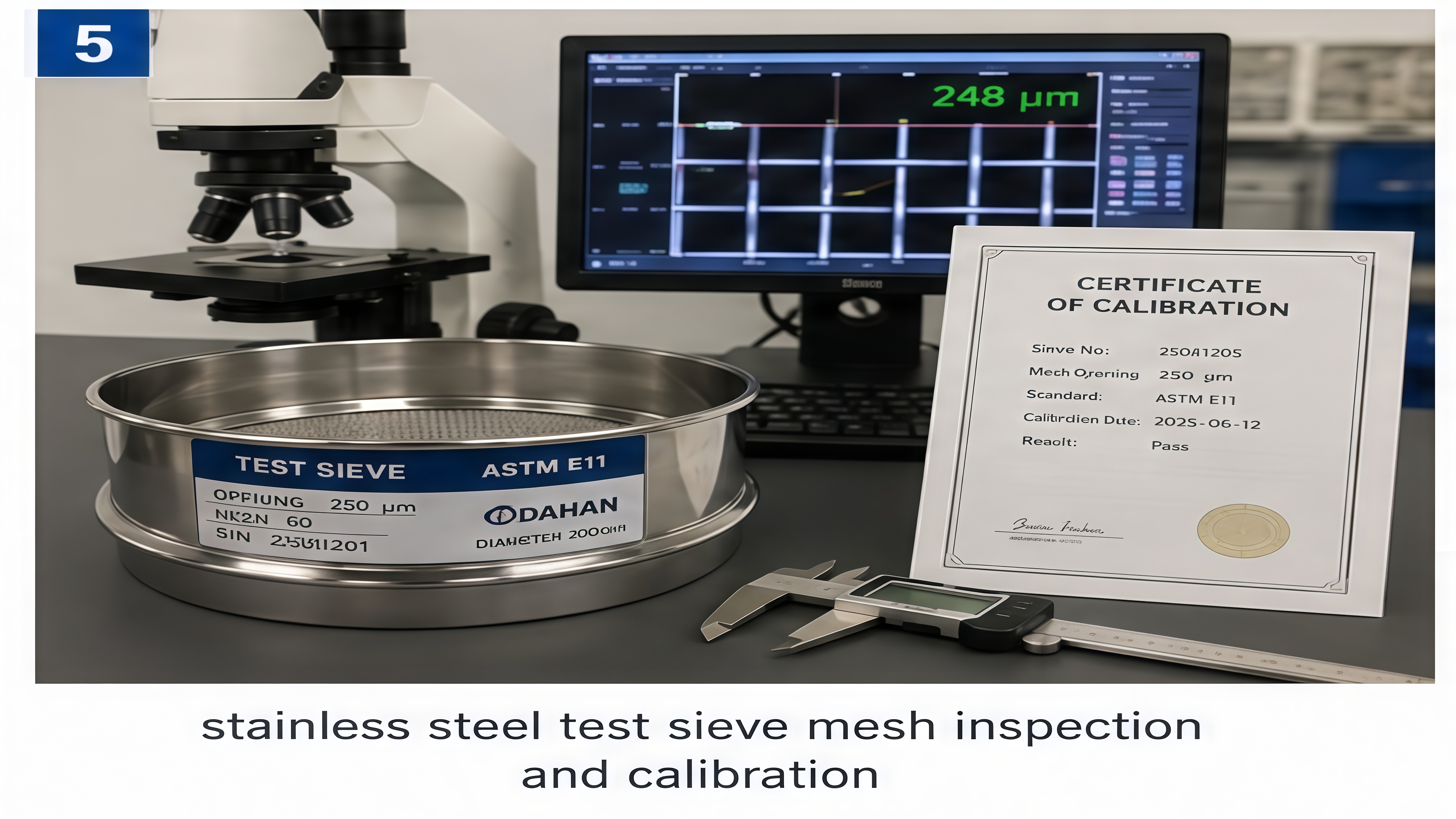
| Verification Type | Purpose | Documentation |
|---|---|---|
| Compliance | Confirms conformity with specified requirements | Certificate of Compliance |
| Inspection | Provides measured sieve-opening information | Inspection Documentation |
| Calibration | Provides documented measurement results | Calibration Documentation |
| Master-Matched | Matches sieves to a designated reference sieve | Matching Records |
| Batch Matching | Maintains consistency within a sieve set | Batch Records |
Serial numbers can be used to associate the sieve with its production and inspection records.
Stainless Steel vs Brass Test Sieves
Stainless steel and brass are both used for test sieve construction. Selection depends on the sample, cleaning conditions, sieve size, and applicable testing requirements.
| Factor | Stainless Steel | Brass |
|---|---|---|
| Material Options | 304 / 316 | Brass |
| Corrosion Resistance | Suitable for many laboratory conditions | Application dependent |
| Wet Sieving | Suitable according to test conditions | Application dependent |
| Selection Basis | Sample and test requirements | Sample and test requirements |
Stainless Steel Test Sieve Applications
| Industry / Material | Typical Testing |
|---|---|
| Pharmaceutical & Food | Powders, ingredients, particulate materials |
| Chemical | Powders, pigments, catalysts, granules |
| Mining & Construction | Aggregates, minerals, cement-related materials |
| Plastics & Ceramics | Polymer powders, resin particles, ceramic materials |
Manufacturing and Quality Inspection
The stainless steel frame is formed and finished for consistent dimensions, while the wire mesh is tensioned and soldered to the frame.
Quality inspection can include dimensional, roundness, and mesh-opening checks. Serial-number traceability is available for the relevant verification level, with inspection or calibration documentation provided according to the selected service.
Frequently Asked Questions
What is a stainless steel test sieve used for?
A stainless steel test sieve is used to separate and classify particles by size during laboratory particle size analysis and quality control testing.
Can stainless steel test sieves meet ASTM E11 requirements?
The sieve can be configured according to ASTM E11 requirements. The required diameter, aperture, construction, and verification level should match the intended test method.
What is the difference between 304 and 316 stainless steel test sieves?
The frame is AISI 304 stainless steel, while the mesh is available in AISI 304 or AISI 316. Selection depends on the sample and operating conditions.
How do I choose the right mesh opening?
Select the nominal aperture according to the target particle-size range and applicable testing standard.
Are stainless steel test sieves suitable for wet sieving?
Yes. They can be configured for wet sieving when the sieve, mesh, and shaker are suitable for the sample and test conditions.
What is the difference between full-height and half-height test sieves?
Full-height sieves provide more internal space for the sample, while half-height sieves provide a more compact configuration.
Can inspection or calibration documentation be provided?
Yes. Compliance, inspection, calibration, master-matched, and batch-matching options are available according to the required verification conditions.
Request a Stainless Steel Test Sieve Quote
Please provide the required sieve diameter, mesh opening or sieve number, frame height, mesh material, applicable standard, sieve shaker model, and verification requirement when requesting a quotation.
We can recommend a stainless steel test sieve configuration according to your particle-size analysis and laboratory testing requirements.
Request a Stainless Steel Test Sieve Quote