Wire Mesh Test Sieve
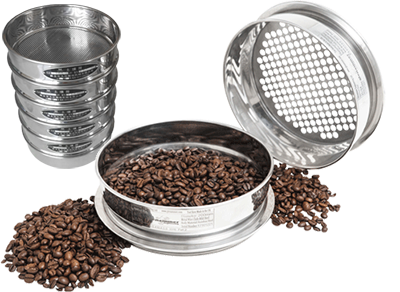
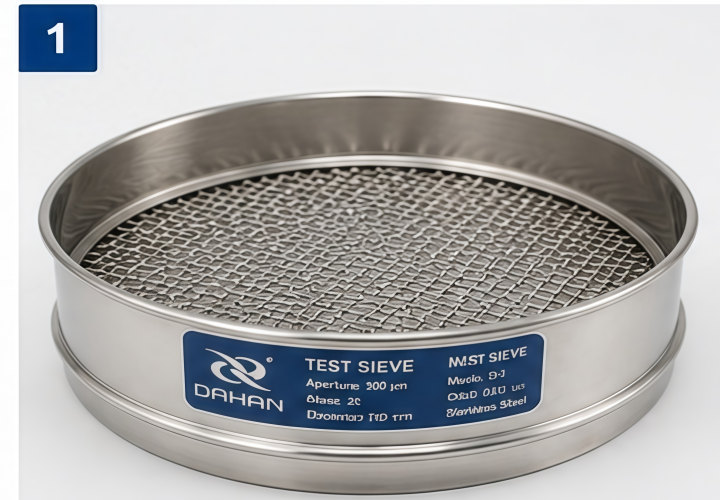
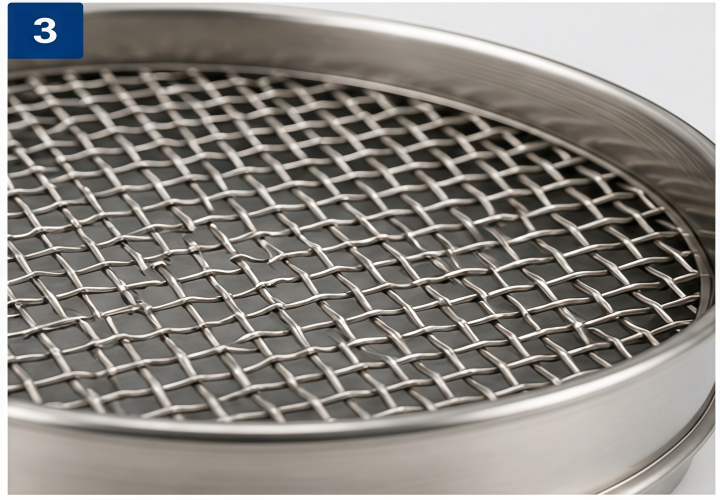
A Wire Mesh Test Sieve is a laboratory screening device used to separate and analyze particles by size. It consists of a rigid frame and woven wire mesh with defined square apertures.
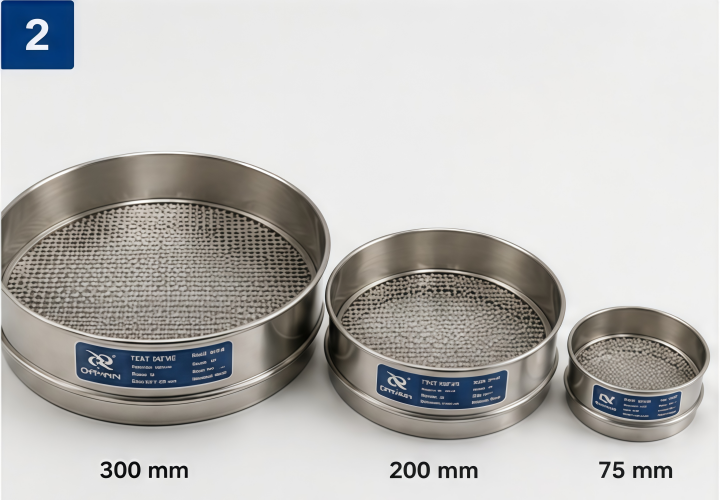
Dahan supplies woven wire mesh test sieves with stainless steel or brass frame options. The published aperture range is 20 μm to 2.36 mm, with common laboratory diameters of 75 mm, 200 mm, and 300 mm.
Wire Mesh Test Sieve Specifications
| Parameter | Specification |
|---|---|
| Product Type | Wire Mesh Test Sieve |
| Screening Surface | Woven wire mesh |
| Aperture Shape | Square |
| Published Aperture Range | 20 μm–2.36 mm |
| Common Frame Diameters | 75 mm, 200 mm, 300 mm |
| Frame Material | Stainless steel or brass |
| Mesh Material | Stainless steel and other suitable wire materials |
| Standard Reference | GB/T 6003.1 / ISO 3310-1 |
| Typical Application | Particle size analysis and classification |
What Is a Wire Mesh Test Sieve?
A Wire Mesh Test Sieve uses woven metal wires to form defined openings. During sieving, smaller particles pass through the mesh while larger particles remain on the sieve surface. Multiple sieves can be stacked with progressively smaller apertures to separate a sample into different particle-size fractions.
For standardized testing, the nominal aperture should be used as the primary specification because wire diameter also affects the effective opening.
Mesh and Frame Materials
Stainless Steel Mesh
Stainless steel woven mesh provides good mechanical strength, corrosion resistance, and dimensional stability for many laboratory applications.
Stainless Steel Frame
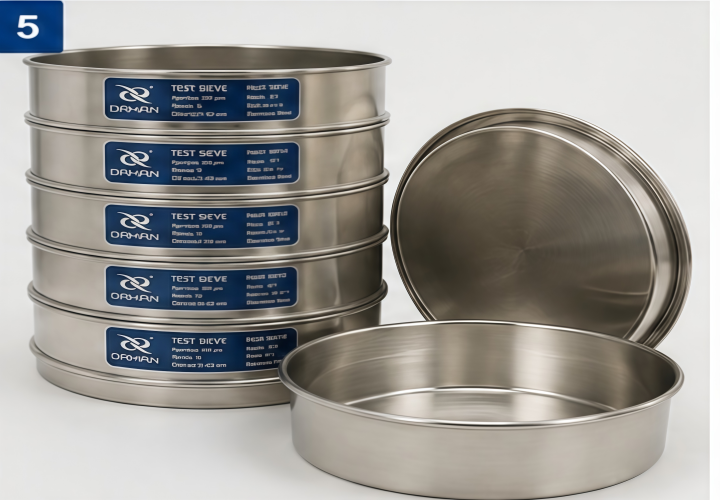
A stainless steel frame is suitable for repeated laboratory use where durability, cleaning, and corrosion resistance are required.
Brass Frame
A brass frame can be selected when brass is preferred by the laboratory procedure or purchasing specification.
Aperture Size and Mesh Selection
Select the aperture according to the expected particle-size range. Smaller apertures are used for finer separation, while larger apertures are used for coarser materials.
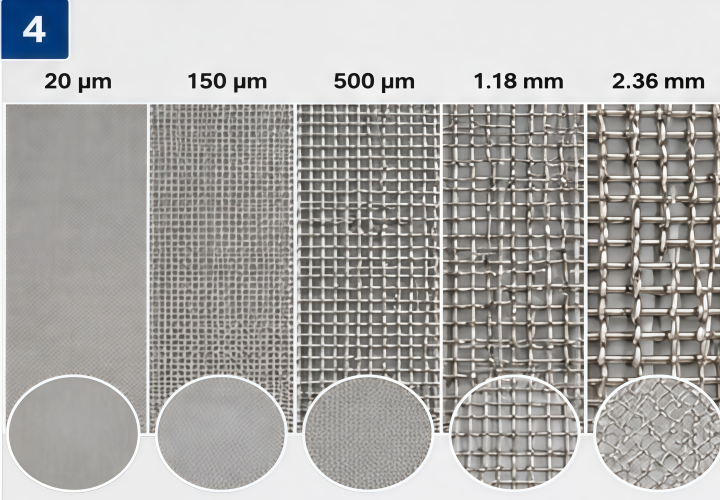
For standardized particle-size testing, specify the nominal aperture rather than relying only on mesh number. This provides a clearer purchasing specification and helps maintain consistency with the test method.
Standards and Quality Requirements
The published laboratory sieve range references GB/T 6003.1 and ISO 3310-1 for woven wire mesh sieves.
ASTM E11-24 specifies requirements for woven wire test sieve cloth and test sieves, including sieve cloth, sieve construction, frame sizes, and inspection procedures. When ASTM requirements apply, the required aperture, frame diameter, mesh material, frame material, and inspection or calibration requirements should be confirmed before ordering.
Applications
Wire mesh test sieves are commonly used for particle-size analysis and classification of powders, granules, minerals, aggregates, chemicals, food materials, pharmaceutical materials, ceramics, and abrasive materials.
How to Choose a Wire Mesh Test Sieve?
1. Determine the particle-size range.
Identify the expected largest and smallest particles in the sample.
2. Select the aperture and sieve diameter.
Choose the nominal aperture according to the required separation and match the sieve diameter to the shaker, sample volume, and test procedure.
3. Choose the materials.
Select the mesh and frame materials according to the sample, cleaning conditions, and test requirements.
4. Confirm the applicable standard.
Specify the required standard and any inspection or calibration requirements before ordering.
If you are unsure about the required specification, provide the sample type and expected particle-size range so that a suitable configuration can be discussed.
Sieve Covers, Receiving Pans and Sieve Shakers?
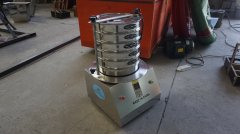
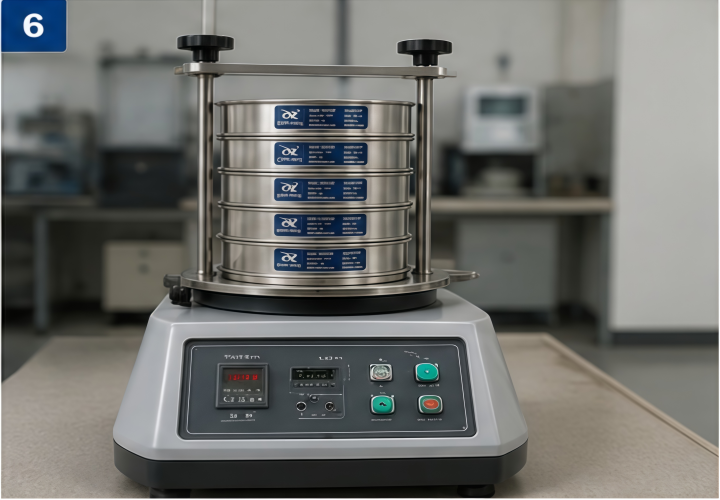
Wire mesh test sieves can be used with sieve covers, receiving pans, and compatible laboratory sieve shakers. When ordering a complete setup, specify the sieve diameter, aperture sequence, number of sieve layers, and sample characteristics.
Why Choose Dahan?
Dahan supplies woven wire mesh test sieves for laboratory particle-size analysis and classification, with stainless steel and brass frame options.
Frequently Asked Questions
What is a Wire Mesh Test Sieve used for?
It is used to separate and analyze particles according to size for particle-size analysis, classification, and laboratory quality control.
What aperture sizes are available?
The published woven wire mesh range is 20 μm to 2.36 mm. Other specifications can be discussed according to the application.
What is the difference between aperture size and mesh number?
Aperture is the nominal opening of the sieve, while mesh number refers approximately to the number of openings per linear inch. Because wire diameter affects opening size, aperture should be used as the primary specification for standardized testing.
Can the sieve be supplied according to international standards?
The published range references GB/T 6003.1 and ISO 3310-1. Requirements based on ASTM E11-24 can also be discussed according to the required sieve configuration and testing procedure.
Request a Wire Mesh Test Sieve Quote
For a quotation, provide the aperture, sieve diameter, mesh material, frame material, applicable standard, sample type, and quantity.
If you are unsure about the appropriate aperture or sieve diameter, provide your sample type and required particle-size range so that a suitable sieve configuration can be discussed.