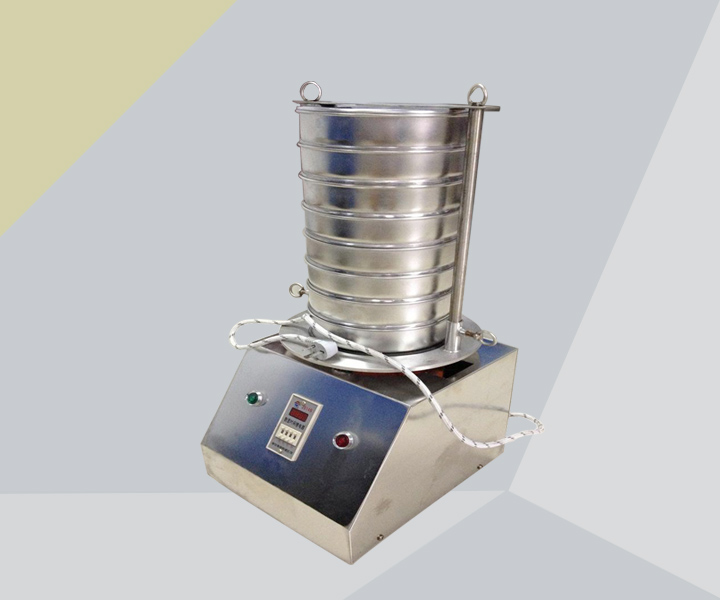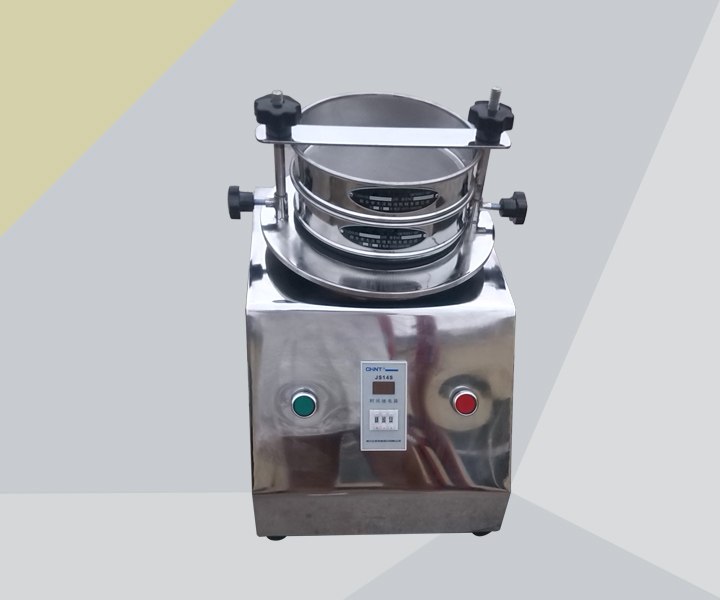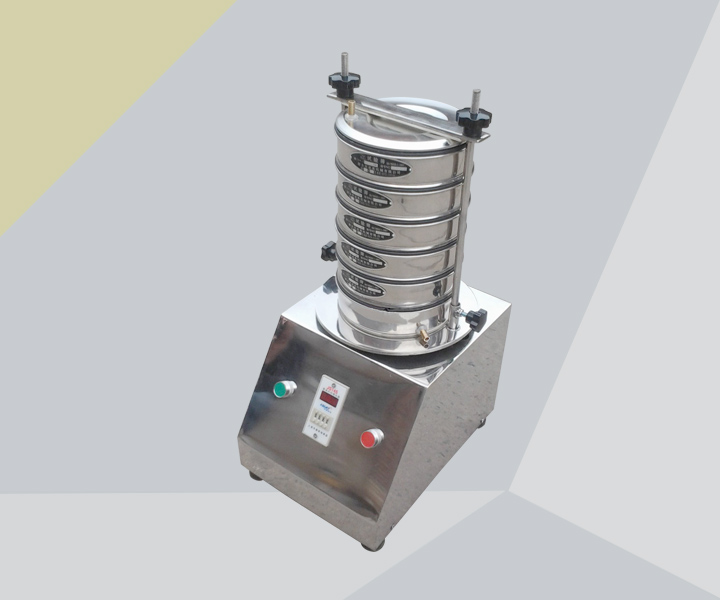
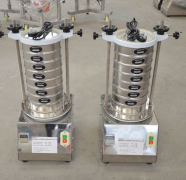
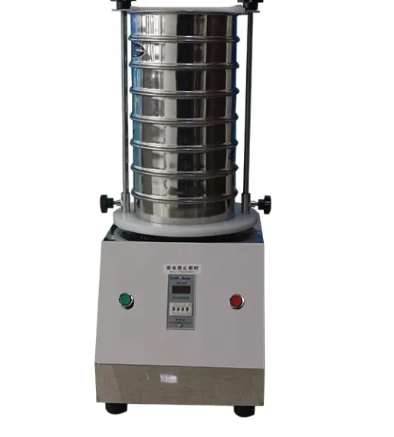
Starch vibrating sieve is a device for particle size classification and impurity removal of starch materials during experiments and small-scale processing. Its design and function are directly adjusted according to the physical properties of starch particles, hygroscopicity, fluidity and dispersibility. Through a specific form of vibrating screening, the equipment can achieve high screening accuracy and stability without destroying the material morphology.
Working Principle
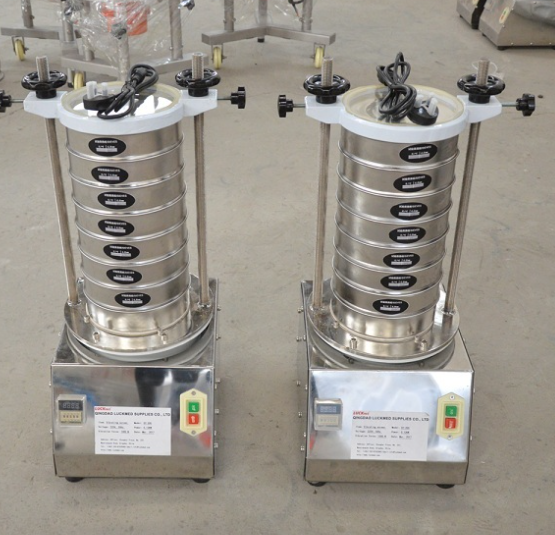
Starch vibrating sieve mainly uses mechanical vibration to drive the material to move on the sieve, so that the material can be separated by layer according to the particle size. The equipment is usually equipped with a vertical vibration motor or an electromagnetic vibrator as the excitation source. The device controls the frequency and amplitude of the vibration by adjusting the angle of the eccentric block or the magnetic strength. During the vibration process, the sieve body produces a three-dimensional composite motion (horizontal, vertical, and inclined), pushing the material to do spiral jumps or circular motion on the sieve surface.
Starch is more likely to be retained or agglomerated during the vibration screening process due to its small particle size and light specific gravity. Some test sieves are designed with automatic knocking devices or ultrasonic systems, which use high-frequency micro-oscillations to break up the starch particles attached to the sieve, thereby maintaining the permeability of the sieve and improving the screening accuracy. The vibration frequency is generally controlled at 1500~3000 times/minute, and the amplitude is small to reduce interference with the particle morphology. During the screening process, fine particles pass through the sieve with vibration and fall into the lower receiving tray, while large particles or agglomerates are retained on the sieve surface and can be further processed or removed. The entire screening process is completed in a closed structure, avoiding dust pollution and sample loss.
Structural composition
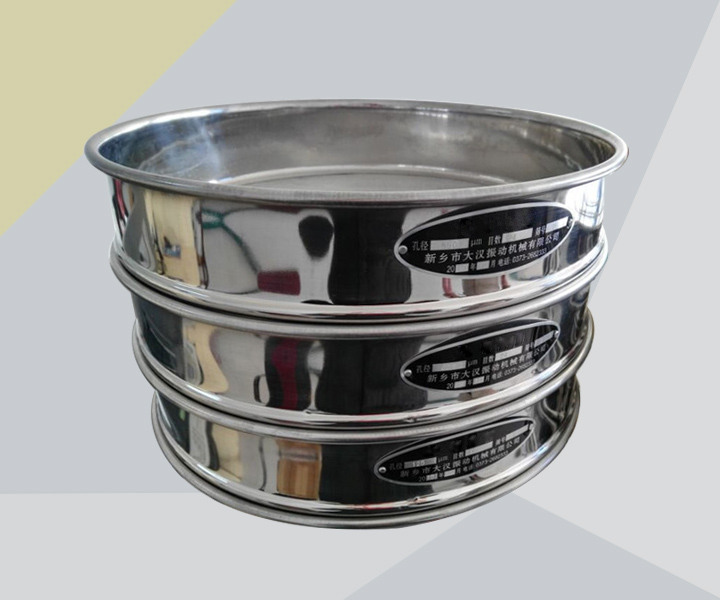
Screen and screen frame
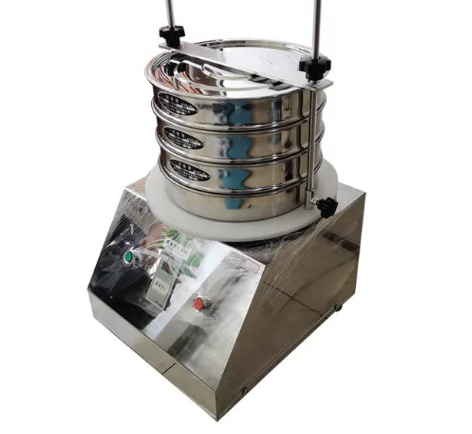
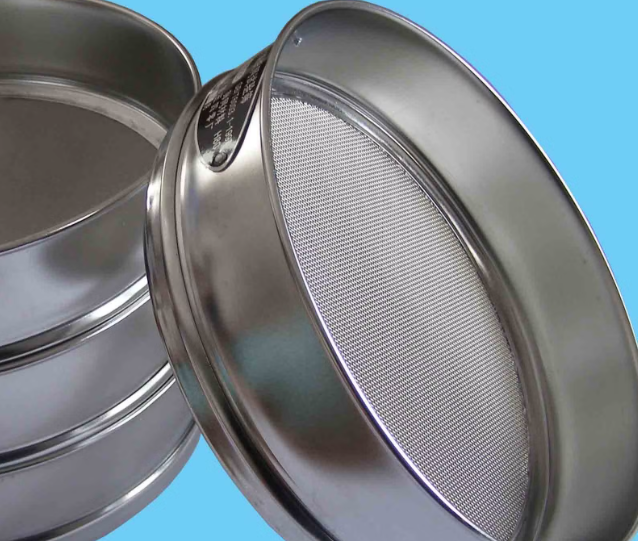
The screen is the core component of starch screening, and the material is mostly stainless steel wire woven mesh or electroformed mesh. To meet the classification requirements of different starch particle sizes, the screen specifications range from 20 mesh (about 850μm) to 500 mesh (about 25μm). The screen frame is mostly a stackable structure, and each layer of the frame is fixed by a buckle or sealing ring to prevent material from layering or leakage.
Vibration source
The equipment is usually equipped with a vertical vibration motor or electromagnetic drive, which is installed at the bottom of the screen body. The high-frequency vibration output of the screen body is achieved through the rotation of the eccentric weight or the action of the electromagnetic pulse. The vibration source has a simple structure, a short maintenance cycle, and high stability during operation.
Screen body sealing structure
In order to prevent dust and moisture absorption and agglomeration during starch screening, the equipment adopts a closed design, and a rubber sealing ring is provided at the connection part to ensure cleanliness and stability during operation. The closed design can also effectively prevent the entry of environmental moisture and prevent starch agglomeration.
Control system
Equipped with a timer and frequency control device, the screening time and vibration intensity can be set to ensure the repeatability and comparability of the screening results. Some equipment integrates a digital display module for easy reading of operating status and data.
Catching tray and base
The catch tray is used to collect fine particles or residues that pass through the screen for subsequent weighing or analysis. The base is equipped with non-slip pads and shock-absorbing structure, which can be stably placed on a laboratory table or operating table.
Uses and functions
Particle size classification
Due to the large differences in the particle size distribution of different starch particles, it is necessary to control their distribution range through classification and screening. Particle size uniformity has a direct impact on product structure, taste, and disintegration. Starch vibrating sieve can separate starch particles of multiple particle size segments for analyzing raw material characteristics or optimizing production parameters.
Impurity removal
During the production and packaging of starch, fibrous, agglomerated or other large particle impurities are often mixed in. By configuring a coarse mesh sieve, these large particles can be effectively removed, the product purity can be improved, and subsequent process abnormalities can be reduced.
Particle size analysis
In scientific research and quality inspection, it is often necessary to quantitatively analyze the particle size distribution of starch samples. Using a test sieve with an electronic balance, the mass of particles in different sieve layers can be statistically calculated to obtain a particle size distribution curve. This is of reference value for analyzing the source of starch and controlling the production process.
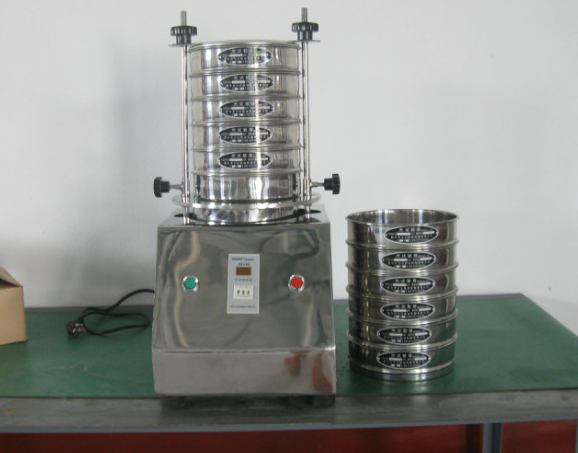
Starch vibrating sieve is an experimental screening equipment designed for starch powder materials. Its working principle is based on the particle separation process generated by mechanical vibration. It has a compact structure and controllable screening accuracy. It is suitable for detection and small batch processing operations in various industries. According to different application purposes, the sieve specifications, vibration frequency and number of sieve layers can be flexibly selected to meet different detection and screening needs. The operation of the equipment depends on the accurate grasp of starch characteristics. Reasonable use and maintenance will help improve the reliability and repeatability of screening results.