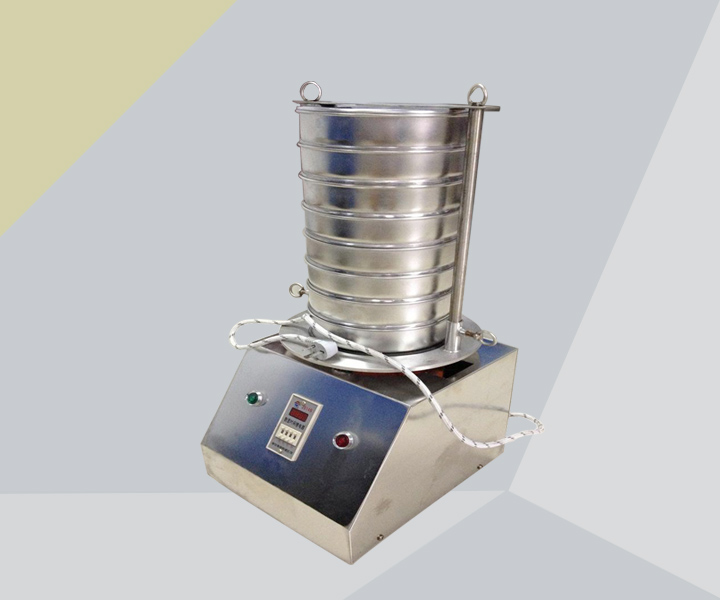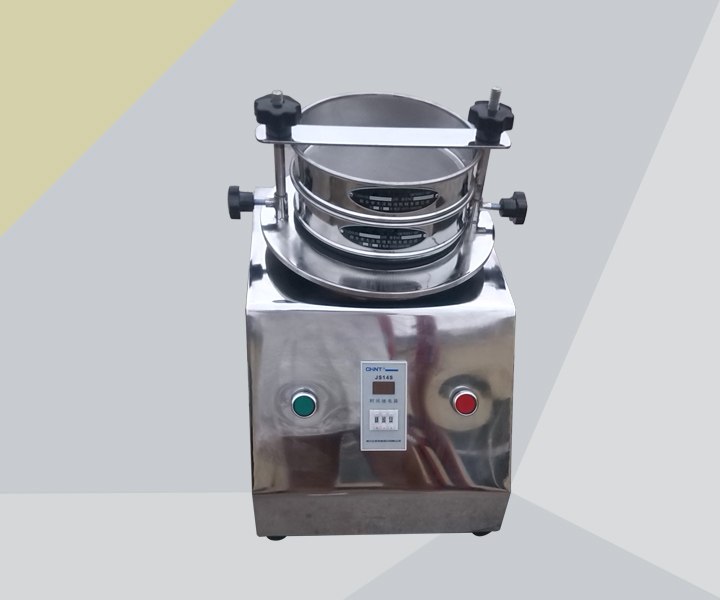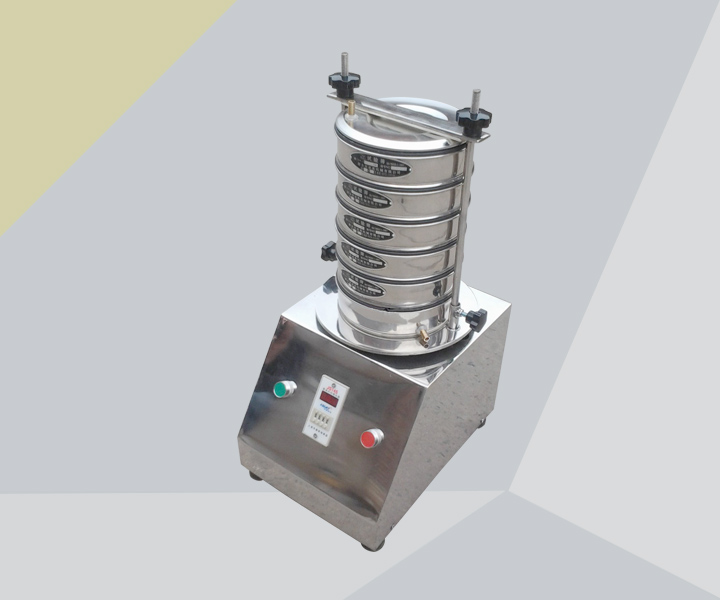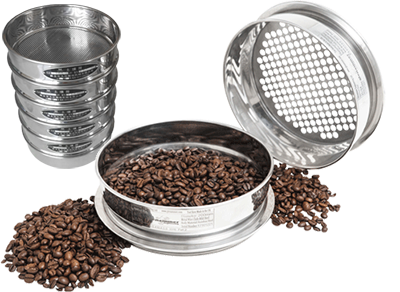
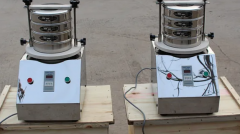
Salt sieving machine is a commonly used equipment for particle size detection and classification of salt in laboratories or small batch production. In the process of salt screening, materials often adhere to the screen due to high hygroscopicity; cubic or flaky crystals are easy to agglomerate, which affects the screening efficiency; and salt is corrosive to ordinary carbon steel, requiring the equipment to be made of corrosion-resistant materials. These characteristics determine that the Salt sieving machine must have adjustable amplitude and frequency, corrosion-resistant structure and anti-blocking design, and cooperate with dust and anti-corrosion treatment to meet the detection and classification needs.
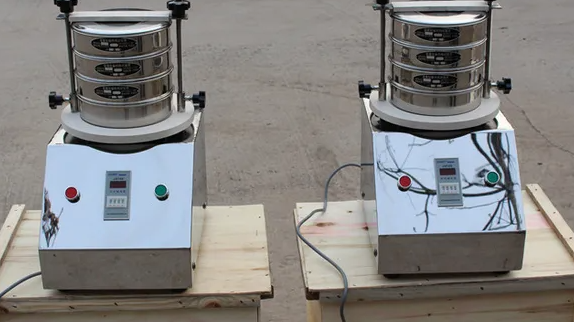
Working principle
Excitation mode
Electromagnetic exciter: drives the screen box to vibrate linearly and reciprocatingly through alternating electromagnetic force, with low frequency and large amplitude and strong controllability, which is suitable for screening and testing of fine salt powder.
Mechanical eccentric wheel: The rotation of the eccentric block generates centrifugal force, which makes the screen box vibrate in an elliptical or circular trajectory. The frequency and amplitude can be adjusted by the eccentric distance and the speed, which is suitable for medium and coarse salt materials.
Pneumatic pulse vibration: uses compressed air pulses to drive the vibration plate to oscillate, which is often used for screening salt powder with strong corrosiveness or easy adhesion, and can reduce screen blockage.
Material movement and classification
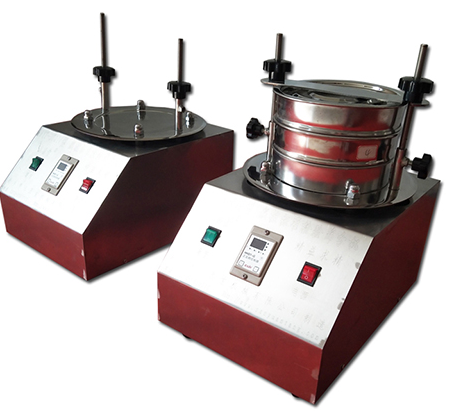
Salt materials enter from the top screen and move along the screen surface with the help of vibration force. When the crystals encounter the screen holes, those smaller than the aperture pass through the screen and fall to the lower layer; those larger than the aperture continue to advance until the discharge port.
Multi-layer screens can achieve three or more classification tests, and salt materials are circulated and screened on each layer of the screen surface until they fall to the finest screen layer.
The shear force during the vibration process helps to break up the agglomerates caused by moisture absorption or static electricity, so that the agglomerated salt particles regain the state of free particles, thereby improving the screening accuracy.
Optimization for salt characteristics
The surface of the screen can be coated with non-stick coatings such as polytetrafluoroethylene (PTFE) to effectively reduce the adhesion and clogging of salt crystals on the wire mesh.
The vibration frequency and amplitude are adjustable to adapt to salt materials with different moisture contents and crystal forms to maintain stable screening efficiency.
The contact parts of the equipment are made of stainless steel (316L) or anti-corrosion treated alloy materials to prevent salt from corroding and damaging the metal structure.
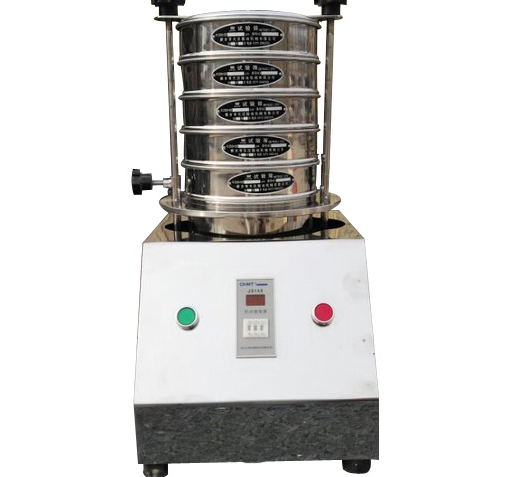
Structural composition
Screen box and screen
Screen box material: commonly used stainless steel or aluminum alloy, polished to reduce salt crystal adhesion.
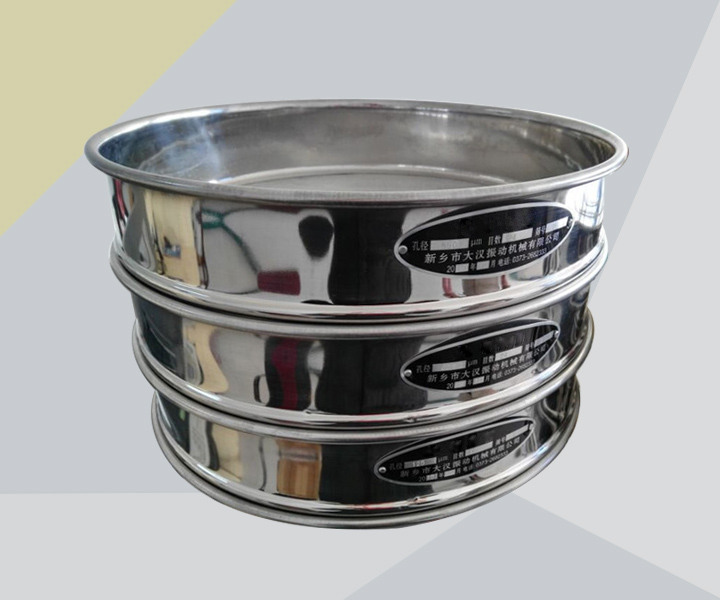
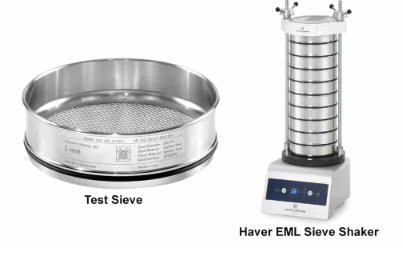
Screen type: stainless steel woven mesh, punched plate or laser cut mesh, aperture from 10 μm to 5 mm optional; can be stacked in multiple layers to achieve graded screening.
Replacement method: quick clamp or bolt fastening design, convenient for the laboratory to replace different aperture screens according to the formula or standard specifications.
Excitation and support system
Exciter installation: electromagnetic exciter is usually located in the center of the bottom of the screen box, and eccentric wheel exciter is located on both sides; isolated from the frame by spring or rubber shock absorber.
Vibration-damping foot pad: The base is equipped with rubber or spring vibration-damping elements to prevent vibration from being transmitted to the experimental platform or workshop floor.
Control and safety protection
Frequency conversion and amplitude adjustment: The vibration frequency and amplitude are fine-tuned by the frequency converter or electronic amplitude regulator to adapt to different salt materials.
Timing and overload protection: The integrated timer sets the screening time, and the machine automatically stops and alarms when overloaded, ensuring the safety of equipment and operation.
Dust cover and dust collection device: Equipped with a transparent protective cover to prevent dust from flying; connected to a dust collection pipe or a negative pressure dust collection system to protect the environment and the health of operators.
Application scenarios
Salt industry and chemical production
Inspection of raw materials and finished products: particle size detection of sea salt, rock salt or synthetic salt.
Pilot and small batch production: formula screening of additive complex salt or functional salt in the pilot stage to determine the solubility and fluidity corresponding to different crystal forms.
Agriculture and fertilizer preparation
Grading of potassium chloride and potassium sulfate in fertilizers: ensure particle uniformity, improve fertilization uniformity and controllability of nutrient release.
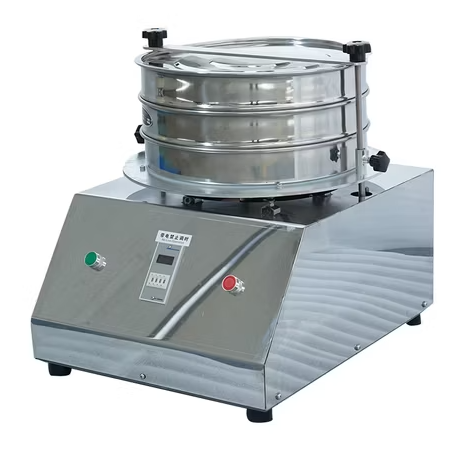
Salt sieving machine is a kind of experimental equipment commonly used for particle size analysis and classification. This kind of equipment has a relatively compact structure, is easy to operate and maintain, and can perform targeted screening according to the crystal morphology and particle size requirements of different salt materials. By reasonably selecting the screen specifications, vibration mode and material configuration, users can obtain more accurate screening results during experiments or quality control.