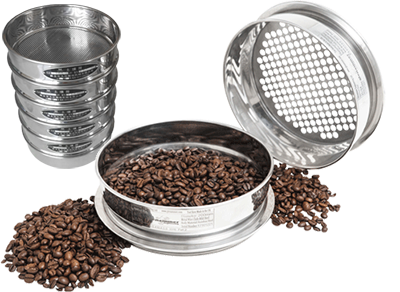
Quartz sand is a granular non-metallic mineral with high hardness, strong wear resistance and stable chemical properties. Its physical properties determine that when performing particle size detection or grading, the screening equipment must have strong structural strength and wear resistance. Quartz sand has various particle sizes, and the particle morphology is mostly irregular polyhedrons, some of which have certain edges and corners, which poses a greater risk of wear to the screen surface and frame. Therefore, the structural composition of the Quartz sand sieve must not only meet the basic screening function, but also take into account the design requirements of impact resistance, corrosion resistance, and easy cleaning.
Working principle of Quartz sand sieve
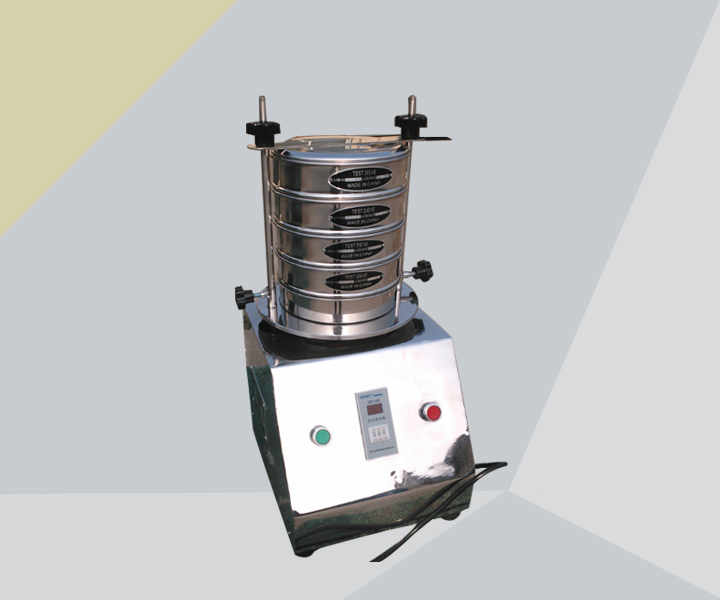
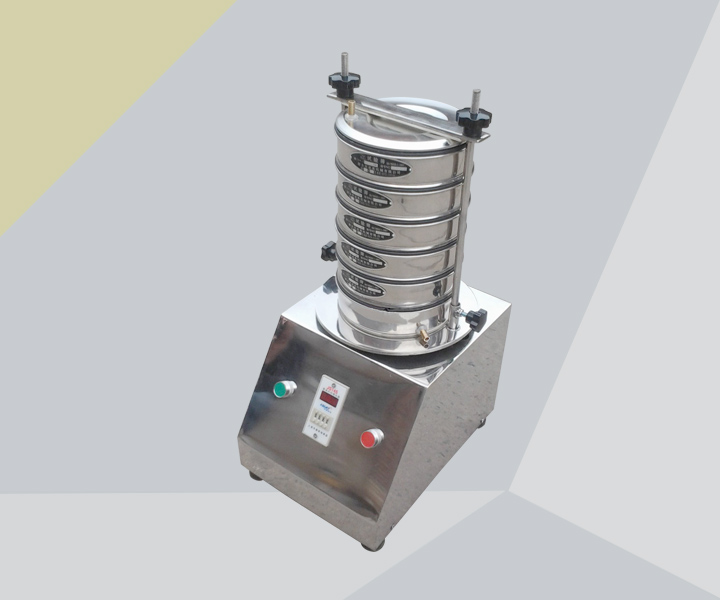
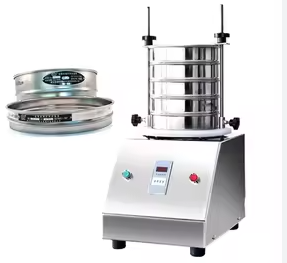
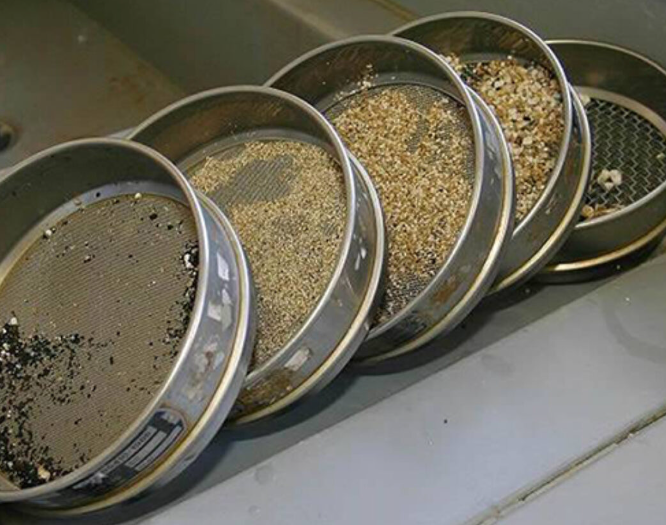
Quartz sand sieve mainly uses mechanical vibration to make particles jump and roll on the sieve, thereby achieving the classification of particles of different particle sizes. Its working principle is based on particle mechanics and vibration screening principles, that is, at a certain frequency and amplitude, the sample is moved on the sieve layer through the excitation device, and particles with a particle size smaller than the sieve hole pass through the sieve, while particles larger than the sieve hole are retained on the surface of the sieve layer.
The commonly used vibration modes are vertical vibration or three-dimensional composite vibration. Vertical vibration is mainly used for particle size analysis to facilitate particles to pass through the sieve hole; three-dimensional vibration includes vertical, horizontal and rotational movements, which helps to improve screening accuracy and prevent particle accumulation.
Structure of Quartz sand sieve
Standard sieve (screen surface)
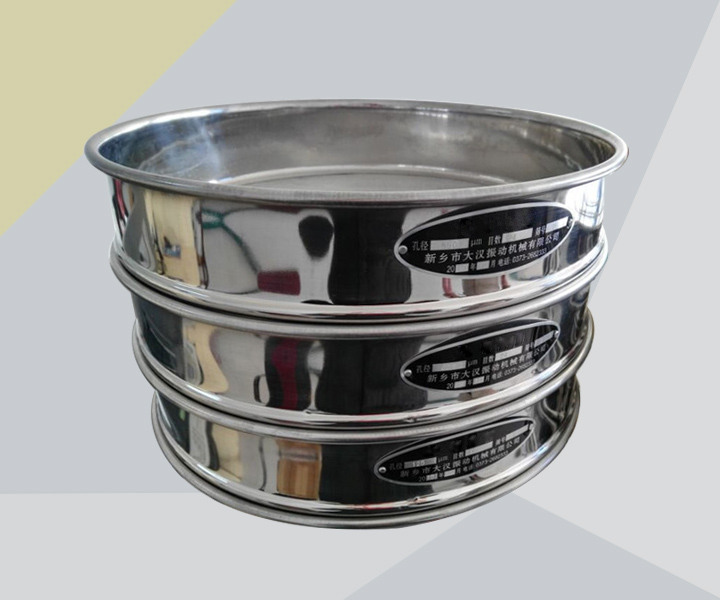
The standard sieve is the core component of Quartz sand sieve and undertakes the actual screening task. Its structure and material directly affect the screening accuracy and equipment service life.
Sieve material
Commonly made of stainless steel wire mesh (such as 304 or 316 stainless steel), it has good wear resistance and corrosion resistance, can withstand repeated impacts of high-hardness particles of quartz sand, and extend service life. Stainless steel punching plates are also used in some wet screening applications to avoid clogging of fine mesh.
Mesh type and specification
The common range of sieve apertures ranges from 0.02 mm (20 μm) to 10 mm, which can cover the multi-level classification requirements of quartz sand from fine powder to coarse sand. The mesh shape is mostly square holes, and a small part is round holes.
Sieve frame (sieve)
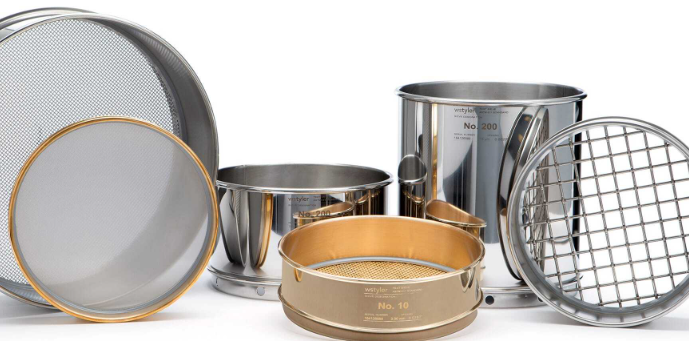
The sieve frame is used to support and fix the sieve, and is the part that bears the mechanical strength of the entire test sieve.
Structural form
The sieve frame is mostly a standard circular design, with a common inner diameter of 200 mm or 300 mm. The edges of the screen frames can be stacked and assembled, usually arranged and stacked from large to small according to the aperture to achieve multi-level classification.
Material selection
Common materials are stainless steel (304/316) or brass. Among them, stainless steel has high strength and good corrosion resistance, which is suitable for hard-grained materials such as quartz sand. Brass screen frames are mostly used in precision detection scenarios where no contamination of samples is required.
Sealing design
The screen frames are connected to each other by means of annular pressing edges, sealing rings or bolt fastening to ensure that there is no leakage between the screen layers and avoid errors in the screening results.
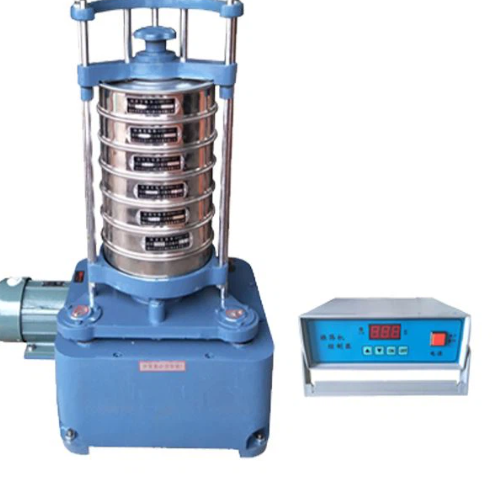
Vibration drive mechanism (screening host)
Vibration mode
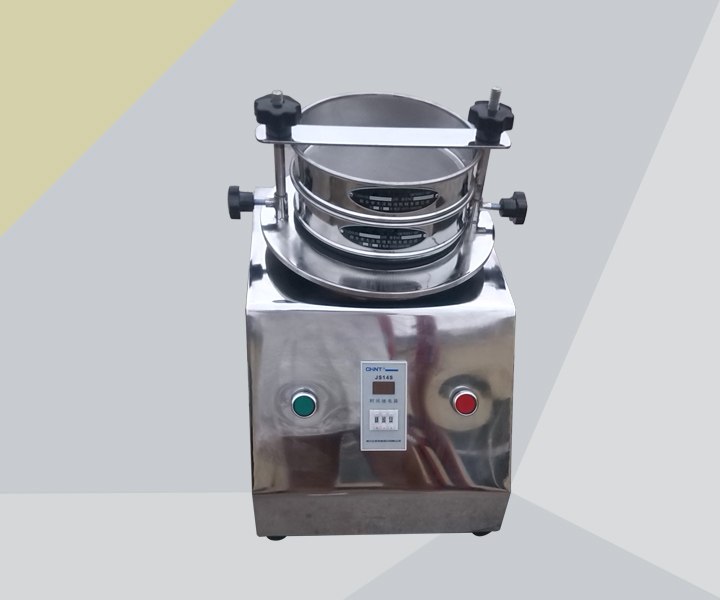
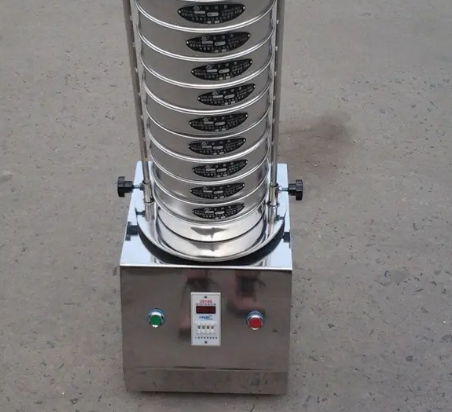
Commonly used are electromagnetic vibration or eccentric wheel mechanical vibration. Some high-precision test sieves support three-dimensional composite vibration (vertical + horizontal + rotation), which helps to improve screening efficiency, especially when processing quartz sand fine powder, it can reduce blockage and accumulation.
Frequency and amplitude adjustment
Quartz sand of different particle sizes and shapes is sensitive to vibration parameters. Some equipment is equipped with a frequency modulation device, which can adjust the vibration frequency (such as 3000-6000 times/minute) and amplitude according to the characteristics of the sample to improve the accuracy of particle classification.
Drive components
Include motor, vibration base, spring shock absorption system, etc. The entire system is required to be stable and reliable, able to withstand long-term vibration loads, while avoiding excessive impact on the sieve.
Application scenarios of Quartz sand sieve
Glass manufacturing and optical materials industry
Quartz sand is the main raw material of glass melting furnaces, and its particle size distribution directly affects the melting rate, bubble content and light transmittance of finished products. In the glass factory laboratory, test sieves are used to grade and test the quartz sand entering the furnace to ensure that the fineness and uniformity entering the furnace meet the process specifications. Too coarse particles are prone to cause uneven melts, and too fine particles may cause bubble aggregation and abnormal viscosity.
Casting and refractory material supply
Casting sand requires concentrated particle grading and narrow particle size distribution to ensure the air permeability and surface finish of the molding sand. In the quality inspection link of the foundry, the quartz sand test sieve uses a multi-layer sieve to quickly determine the fineness modulus and the content of each particle group to avoid surface defects and sand holes on the sand core.
Ceramic and refractory material research and development
In the formulation design of ceramics and refractory materials, quartz sand is used as an aggregate or filler, and its particle size has an impact on the density and thermal stability of the material. Colleges and research institutions use test sieves to grade samples and study the effects of different grading on green body strength, ash shrinkage and other performance indicators.
As a basic but important screening tool, Quartz sand sieve plays an important role in the particle size analysis and quality control of quartz sand. It has a simple structure and is easy to operate, and can adapt to the characteristics of quartz sand such as high hardness and complex particle size distribution. Reasonable configuration of the number of sieve layers and sieve hole size, and adjustment of screening parameters according to the characteristics of quartz sand samples can achieve rapid and accurate classification and quality assessment of quartz sand.