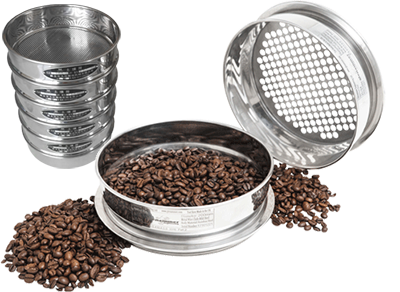
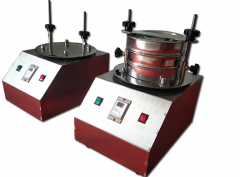
Mineral powder inspection sieve is a laboratory equipment used for particle size analysis of fine particles, and is commonly used for screening and particle size detection of mineral powder samples. Mineral powder is a fine particle material after ore crushing and grinding, with a particle size of less than 0.075mm, fine texture, and large particle surface area. Its particle size distribution is wide, the proportion of fine powder is high, and it is easy to agglomerate, especially in a humid environment, it is easy to absorb moisture and stick together. These physical properties have a direct impact on the design, operation method and application scenarios of the inspection sieve.
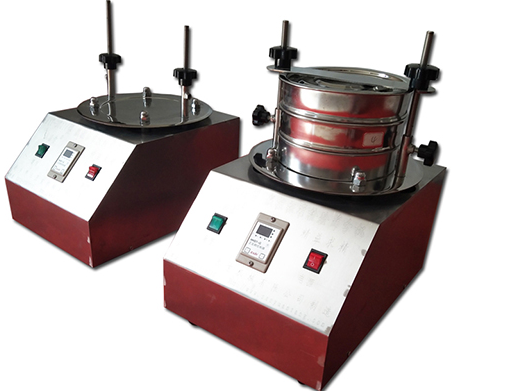
Working principle of mineral powder inspection sieve
The basic principle of mineral powder inspection sieve is to make the material move and jump on the surface of the sieve through mechanical vibration, so as to achieve graded screening of particle size. According to the characteristics of mineral powder particles with high specific gravity, high fineness and easy adhesion, the test sieve should have a higher vibration frequency and appropriate amplitude during the screening process to promote the full diffusion of materials on the sieve surface and reduce the blockage caused by static electricity or agglomeration.
Fine-grained mineral powder is easy to be blocked in the sieve, especially the part with a particle size close to the sieve hole, which will be stuck on the edge of the mesh. Therefore, some inspection sieves will be equipped with a net cleaning device, such as a brush or a bouncing ball, to clean the sieve holes and keep the sieve surface unobstructed. The electromagnetic vibration sieve machine has a certain adaptability in screening fine-grained mineral powder due to its small amplitude and high frequency, which helps to maintain the fluidity of the material.
At the same time, in order to control the dust during the screening process, the sieve structure is usually equipped with a sealing cover, and the sieve body adopts a closed design to reduce the dispersion of mineral powder. In some test occasions, dust removal devices or electrostatic adsorption components are also used to improve operational safety and cleanliness.
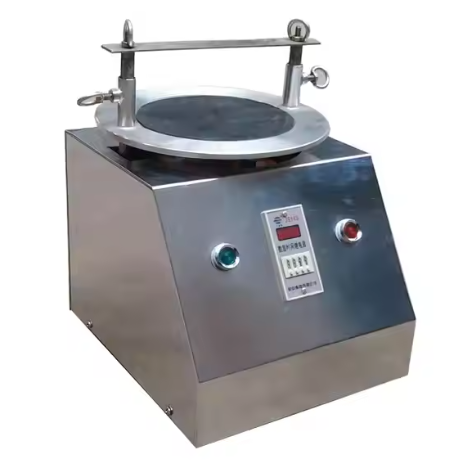
Mineral powder inspection sieve structure composition
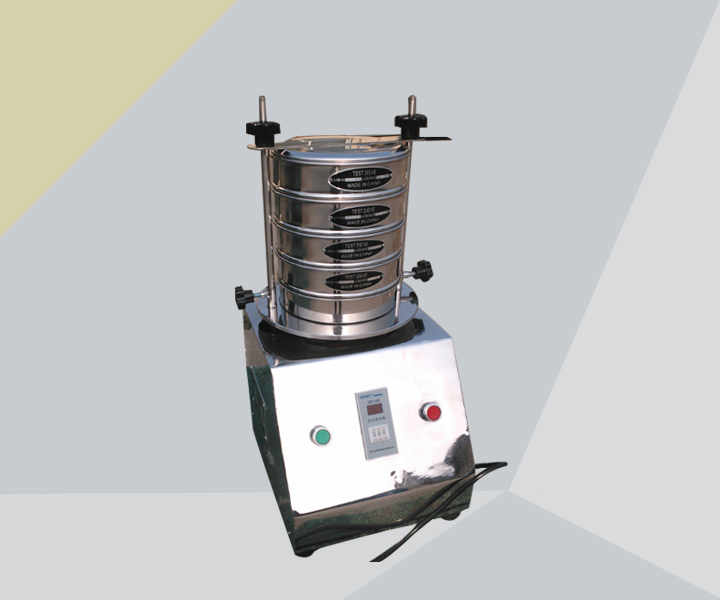
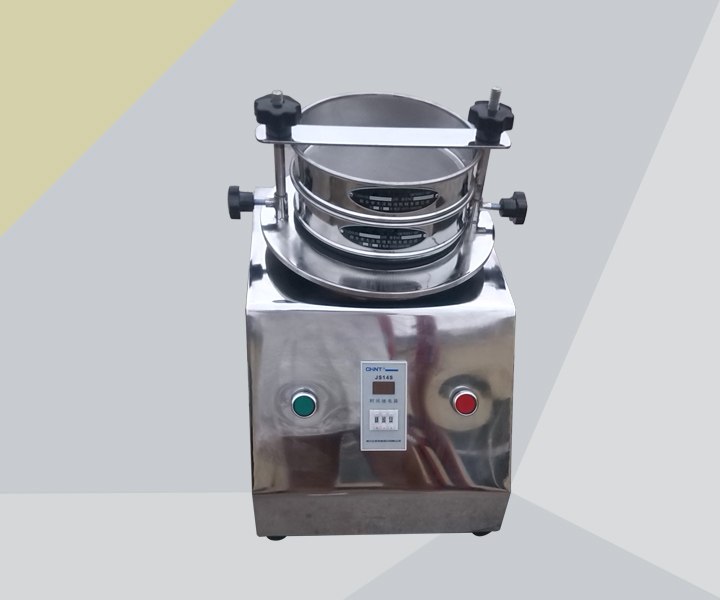
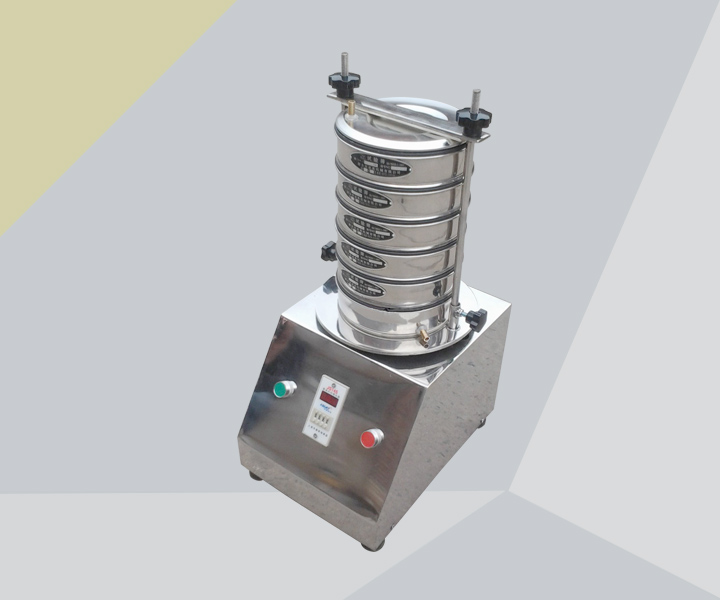
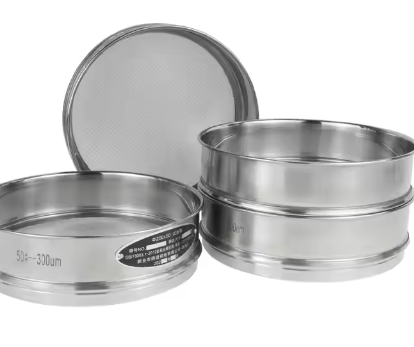
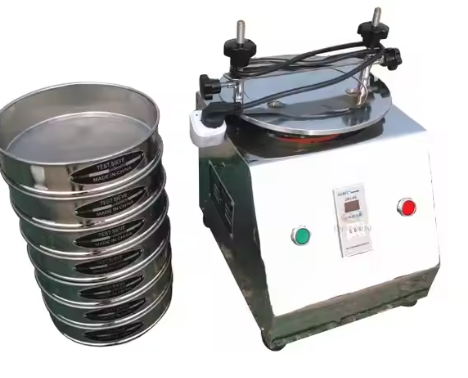
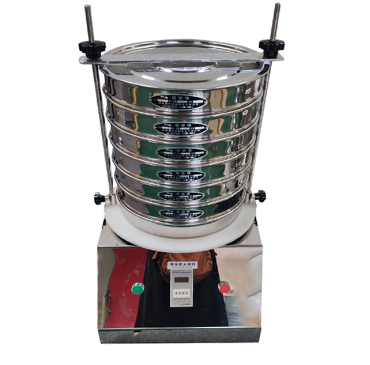
The structure of the mineral powder inspection sieve consists of a sieve, a vibration mechanism, a fixed clamping device, a base, an electronic control system, etc. The sieve and the vibration method must be specially matched to the particle size and physical properties of the mineral powder.
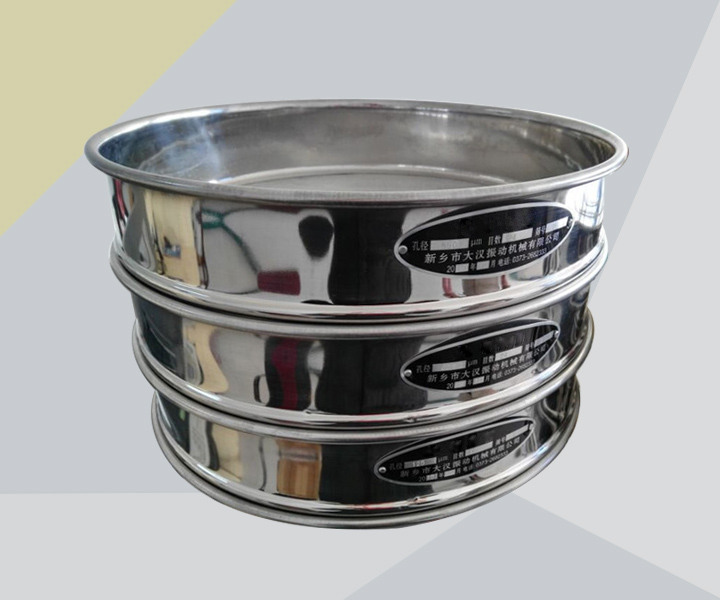
Sieve system: The sieve consists of a group of metal sieves with different apertures, usually made of stainless steel, with good corrosion resistance and strength. For the fine particle size range of mineral powder, the sieve aperture is generally between 0.075mm and 1mm. In order to prevent fine powder from leaking out or remaining, the edge of the sieve must be tightly sealed, and sealing gaskets are used between the sieve frames to prevent mixing between sieves.
Vibration device: According to the fluidity and specific gravity of the material, choose electromagnetic or motor vibration. Electromagnetic vibration screen is suitable for fine-particle mineral powder, such as iron ore powder and titanium ore powder, providing a higher vibration frequency to promote the rapid passage of materials through the sieve; motor eccentric vibration is suitable for coarse and fine mixed mineral powder with a slightly larger specific gravity, with a relatively large amplitude to prevent particle accumulation.
Sealing and clamping mechanism: In view of the problem that mineral powder is easy to raise dust and has strong adhesion, the test screen is generally equipped with a top sealing cover and a bottom collecting plate to form a closed screening environment. The clamping device is used to ensure that the screen does not move or loosen during the vibration process to maintain the stability of the screening process.
Control part: including time setter, amplitude adjustment knob, power switch, etc., to facilitate the adjustment of parameters according to the screening requirements of different mineral powders. Some models have digital display for precise control of screening time and enhanced data comparability.
Uses and application scenarios
Cement and concrete admixture testing
In the cement production process, when mineral powder is used as a mixed material, its fineness has clear requirements. The screening test can be used to determine the 0.045mm or 0.08mm screen residue rate, which is an important basis for evaluating whether the mineral powder can participate in the hydration reaction or improve the microstructure. The test sieve assists technicians in controlling the amount of mineral powder and the scope of application through graded analysis.
Metal ore dressing process control
In metal ore processing, such as iron ore, lead-zinc ore, copper ore, etc., the particle size of mineral powder affects the selection of mineral processing methods. Flotation, magnetic separation and other processes have certain requirements for particle size. The test sieve is used to detect the particle size of the original ore or concentrate powder to determine whether the grinding effect meets the separation conditions, and provide data support for adjusting the grinding time and equipment parameters.
Pellet ore batching and molding
In the iron and steel metallurgical industry, pellet production requires the mineral powder to be made into spherical materials with a certain particle size range. Too fine or too coarse mineral powder particles will affect the ball strength and sintering performance. Using a test sieve to analyze the particle size of pellet raw material powder is helpful to improve pelletizing ingredients and pelletizing process.
Scientific research and material analysis experiments
In scientific research activities such as material experiments, mineral analysis, and powder physics research, the test sieve is an important tool for particle size classification. For mineral powder samples from different sources, the screening results are used to study their composition distribution, agglomeration characteristics, specific surface area and other parameters, which is one of the basic testing methods.
The main purpose of the mineral powder inspection sieve is to quantitatively analyze the particle size distribution of fine particles to ensure that the particle size parameters of mineral powder in different applications meet the technical requirements. Mineral powder has various application scenarios, different particle size control standards, and different applicability of screening equipment. By reasonably selecting the sieve structure, vibration mode and sealing measures, the particle size of mineral powder can be more accurately determined under conventional experimental conditions, providing a reference data basis for process control and raw material management.