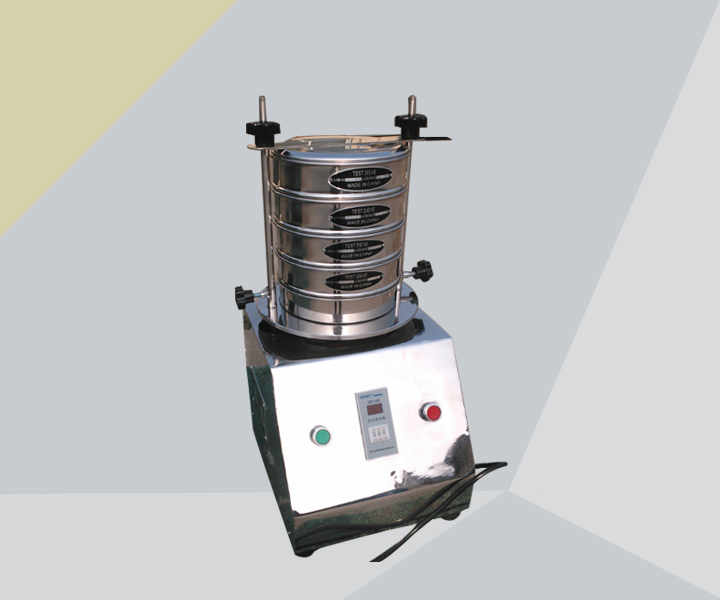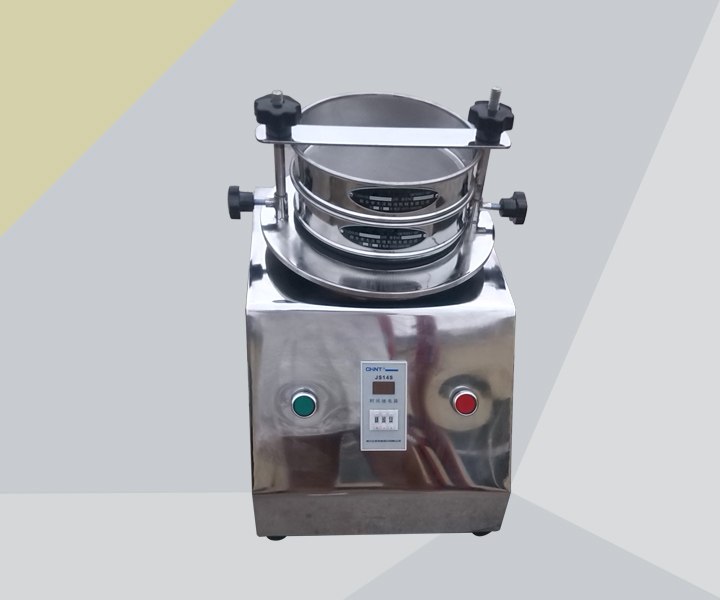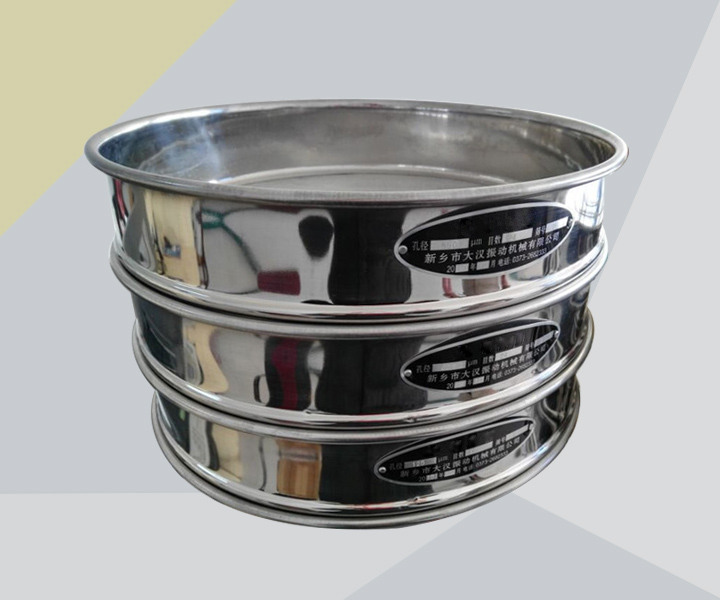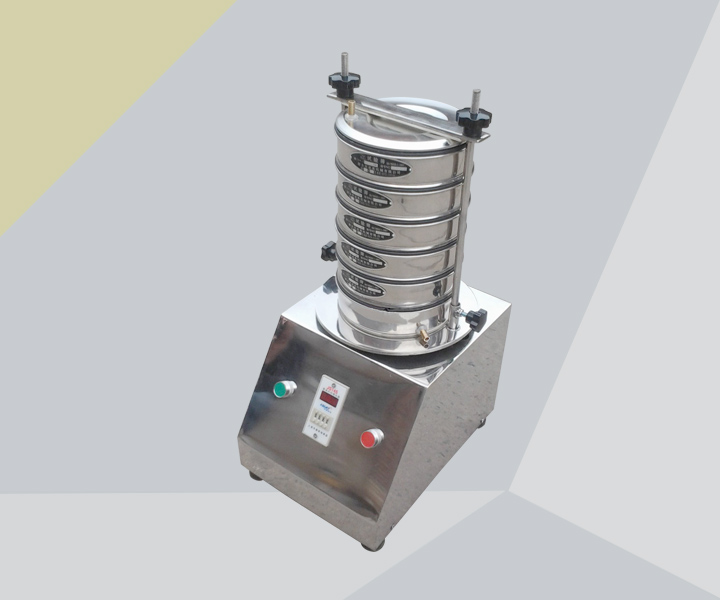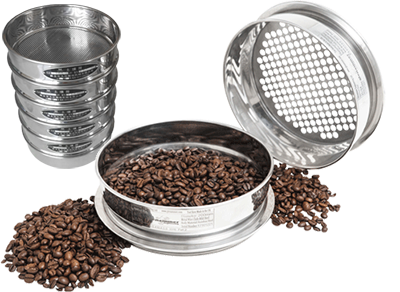
Metal powder sieve is an experimental device for particle classification and impurity removal, suitable for particle size detection and separation of various metal powders. Its working process relies on the mechanical separation of powder by the sieve, and the particles are layered and passed through the sieve holes by size through vibration or other excitation methods. The device has a relatively simple structure, mainly composed of sieve frame, sieve, vibration source and shock absorber, and can achieve particle size classification and impurity removal without changing the chemical properties of the powder.
Working principle of Metal Powder Sieve
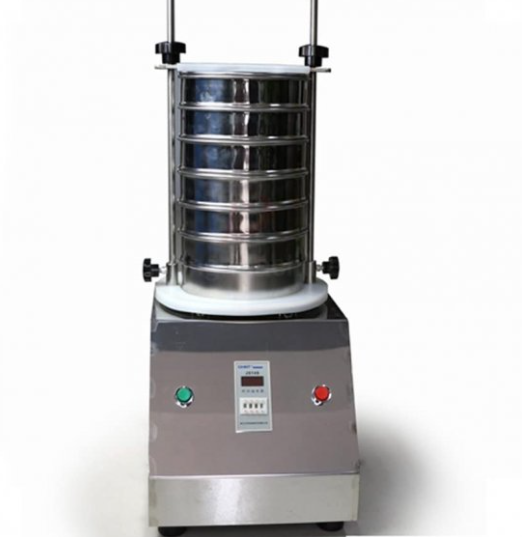
Metal powder sieve is based on the sieve separation mechanism of particles under the action of vibration or shear force.
First, the powder enters the sieve surface through the feed port. Since the sieve surface is usually horizontal or slightly inclined, the powder is distributed in a thin layer on the sieve surface under its own gravity and vibration energy.
When the vibration source is started, the vibration plate transmits the vibration force to the sieve frame, and the sieve frame drives the sieve to produce high-frequency micro-vibration, so that the powder is thrown and flowed on the sieve surface to enhance the contact opportunity between the particles and the sieve holes.
Small particles fall and gather because they are easy to pass through the sieve holes, while larger particles move toward the outlet direction on the sieve surface with vibration and are discharged, realizing classification and screening.
In the ultrasonic or airflow assisted type, the exciter or jet airflow can break the powder agglomeration, improve the screening resolution and the cleaning effect, but will not change the chemical composition or specific surface properties of the powder.
Structural composition of Metal powder sieve
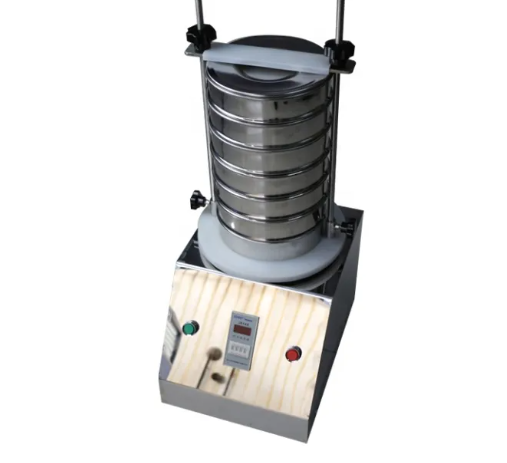
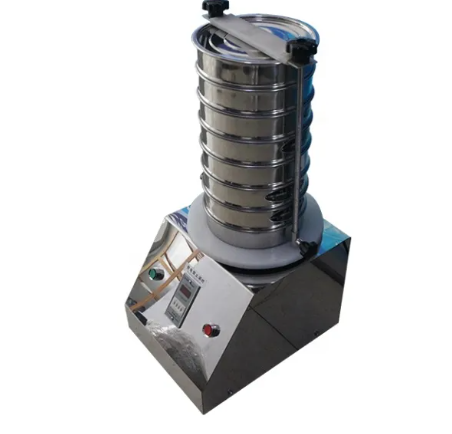
The main components of Metal powder sieve include sieve frame, sieve mesh, vibration source and shock absorber.
The sieve frame is generally made of stainless steel to ensure strength and corrosion resistance, such as 200mm or 300mm in diameter.
The sieve mesh is the grading core, and its aperture is set according to the required particle size classification. The material is mostly stainless steel wire mesh or polyurethane to take into account wear resistance and anti-blocking performance.
The vibration source can be divided into two categories: electromagnetic vibrator and vibration motor. The former generates an alternating magnetic field through an electromagnetic coil to drive the excitation plate, and the latter consists of a vibration disk and an eccentric block. Both methods can provide stable vibration force for the sieve.
The shock absorber is usually composed of a spring or a rubber block, which is used to isolate the vibration of the sieve machine from the ground transmission to ensure safe operation and stable equipment.

Uses of Metal Powder Sieve
Metal powder sieve is used for particle size classification and impurity removal in powder metallurgy, spray coating, additive manufacturing and other fields.
In the powder metallurgy preparation process, metal powder of the required particle size can be obtained by sieving, which is convenient for the uniformity of subsequent pressing and sintering processes.
In spraying and powder coating, the powder particle size directly affects the spray deposition quality. Sieving can remove coarse or agglomerated particles and improve the coating density and surface finish.
In additive manufacturing (3D printing), the powder needs to meet a specific particle size distribution to ensure the uniformity of the powder layer. The flow and curing properties of the powder during the printing process can be guaranteed by sieving the test sieve.
In addition, in research and quality control experiments, small test sieves are also used to evaluate the particle size distribution and agglomeration state of the powder, providing a basis for process optimization.
Application of Metal Powder Sieve
Powder Metallurgy
Powder metallurgy process requires strict control of powder particle size to obtain dense and uniform sintered parts. The sieved powder is easy to fill the mold during the pressing stage, reducing pores and ensuring the consistency of mechanical properties after sintering.
Additive Manufacturing
For metal additive manufacturing, the powder is required to flow well and be able to deposit evenly during the layering process. The test sieve can divide the powder into several grades according to the specified particle size to ensure the thickness and consistency of the powder layer, thereby affecting the forming quality and surface roughness.
Coating and Spraying
In coating preparation, metal powder sieving can remove oversized particles, reduce problems such as uneven particle size of coating particles and clogging of spray guns, and ultimately improve the adhesion and consistency of the coating.
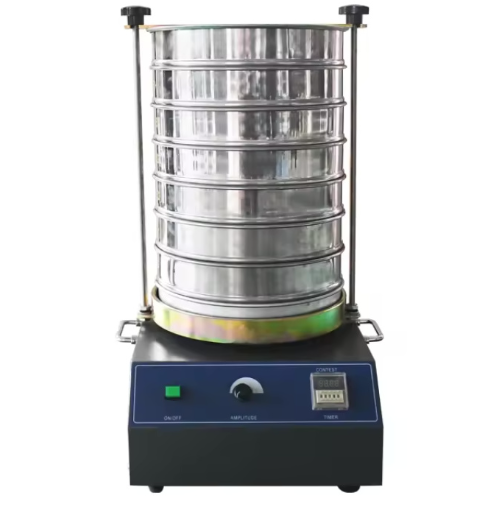
Metal powder sieve plays a fundamental role in grading, removing impurities and maintaining the original properties of powder through its closed design and vibration excitation. The closed sieve bin can reduce the contact between powder and air, reducing the risk of oxidation and contamination. Adjustable vibration parameters and a variety of mesh specifications facilitate flexible setting of grading schemes according to powder particle size distribution. Wear-resistant, stainless steel screen and standardized sieve frame design ensure the stability and repeatability of the sieving process. Overall, Metal powder sieve has the characteristics of simple structure, accurate grading and wide application scenarios, providing a stable basic guarantee for the subsequent processing and quality inspection of metal powder.