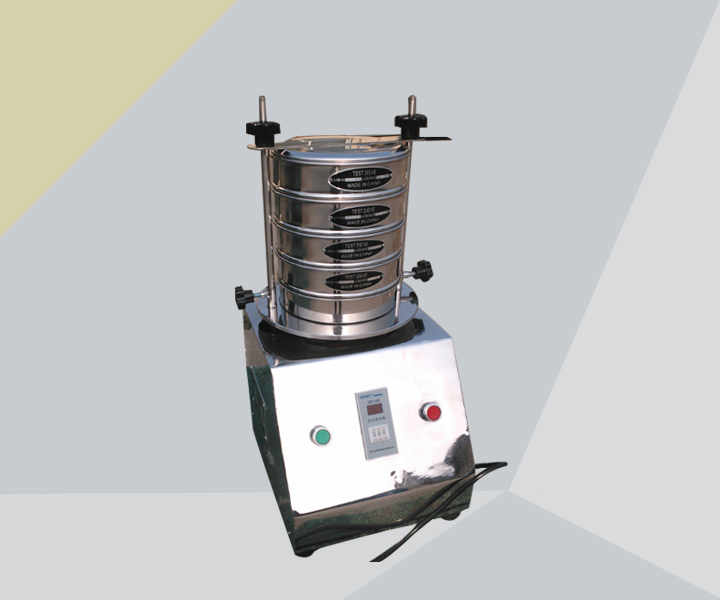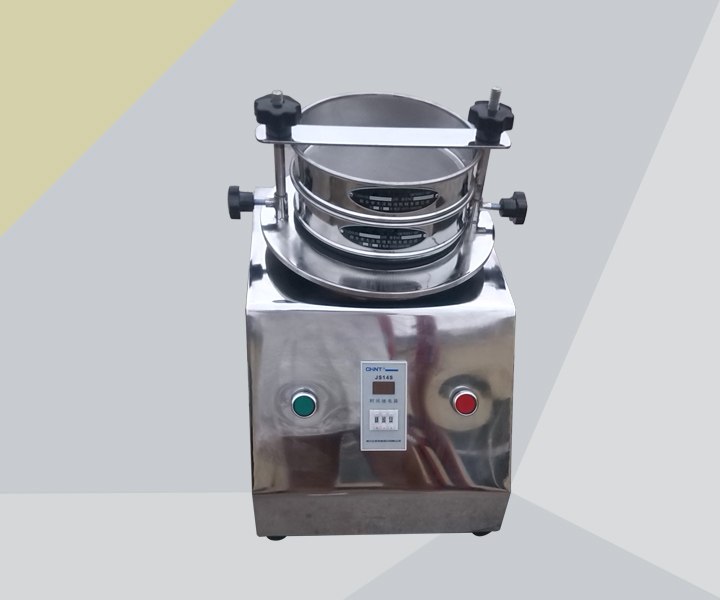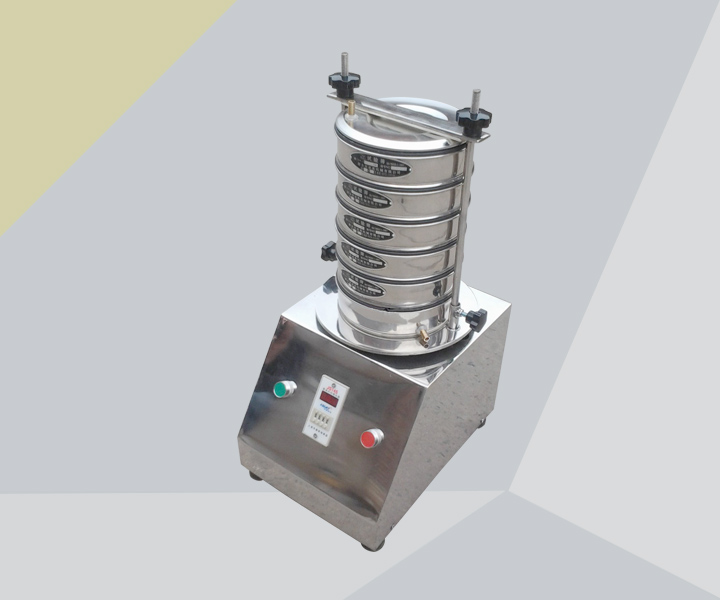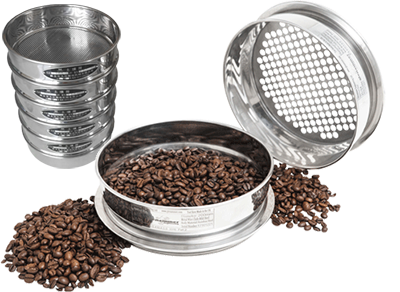
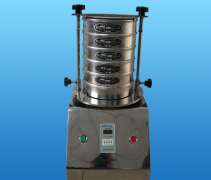
Soil is a natural complex covering the earth's surface, and its particle composition directly affects the pore structure, water holding capacity and nutrient retention characteristics. Laboratory sieves for soil testing , as a key device for particle analysis, achieves physical separation of particles of different sizes through mechanical vibration, providing basic data support for soil research, environmental monitoring and agricultural production. The equipment can be adapted to various types of soils such as sandy soil, clay soil and loam, and obtains particle grading information through standardized sieving processes, providing a scientific basis for practical needs such as soil improvement, pollution investigation and geological engineering.
Working principle: physical separation mechanism based on particle classification
The core function of Laboratory sieves for soil testing is to achieve particle size classification of soil particles through mechanical vibration. Its working process includes three key links:
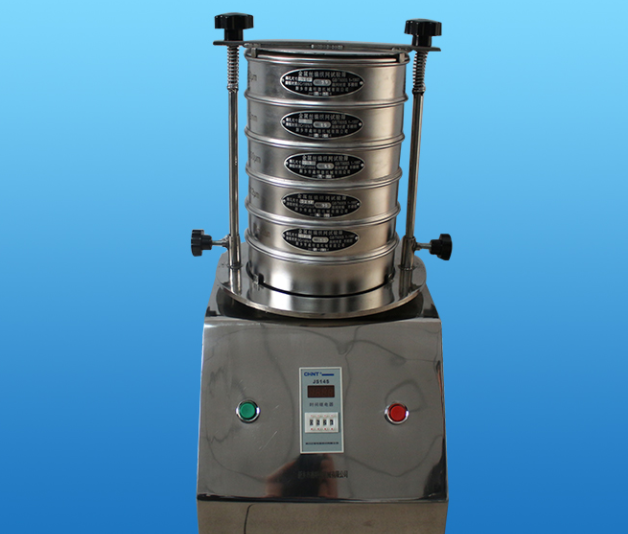
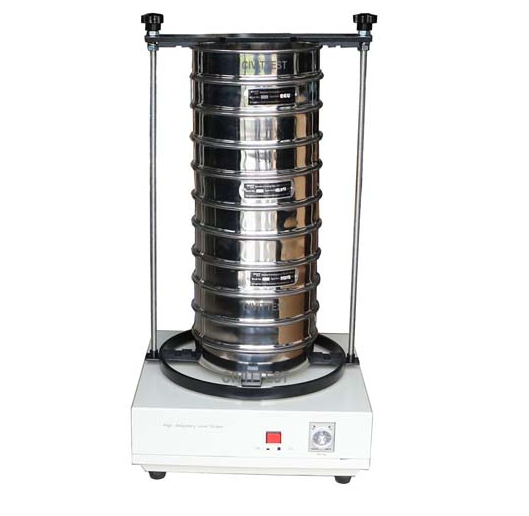
Vibration screening technology: The equipment drives the eccentric wheel or electromagnetic vibrator through the motor to make the screen frame produce composite vibration in the horizontal and vertical directions. This vibration mode causes the soil particles to show jumping movement on the screen, small particles fall through the screen holes, and large particles are retained on the screen surface.
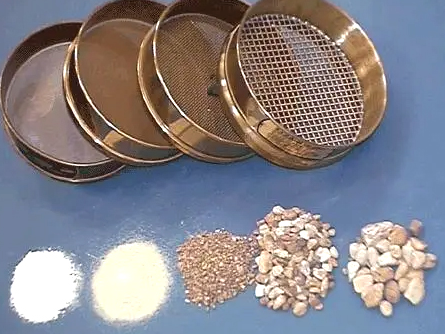
Multi-stage screen combination: The standard configuration includes 8-11 layers of screens with different apertures, which are arranged from top to bottom in descending order of aperture. For example, the coarse screen series adopts a round hole design with an aperture range of 100mm to 2mm; the fine screen adopts a square hole structure with an equivalent aperture decreasing from 2.0mm to 0.075mm. This design ensures that 2-7 particle size segments can be separated simultaneously in a single experiment.
Automatic control: Modern equipment is equipped with timed shutdown and amplitude adjustment functions. Experimenters can preset a working cycle of 15-30 minutes. The vibration frequency is usually controlled at a composite parameter of 100-200 times/minute horizontal shaking and 50-70 times/minute vertical slapping to ensure a balance between screening efficiency and accuracy.
Structural features: precision manufacturing and material adaptability
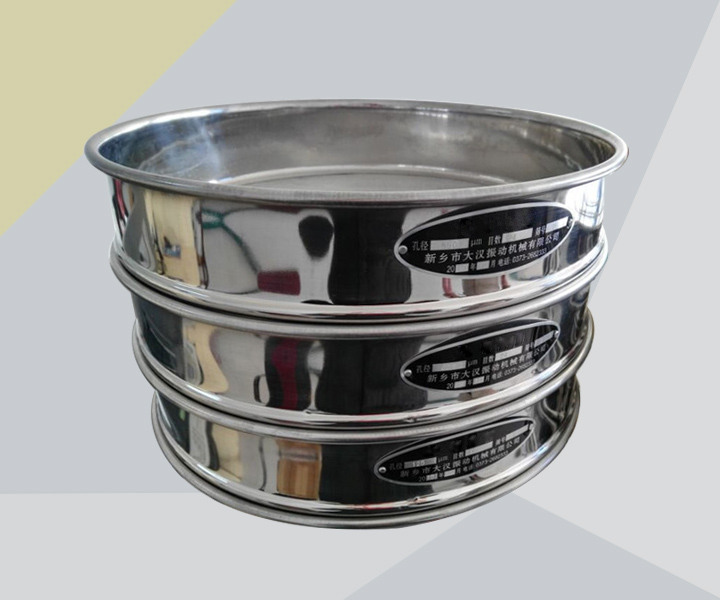
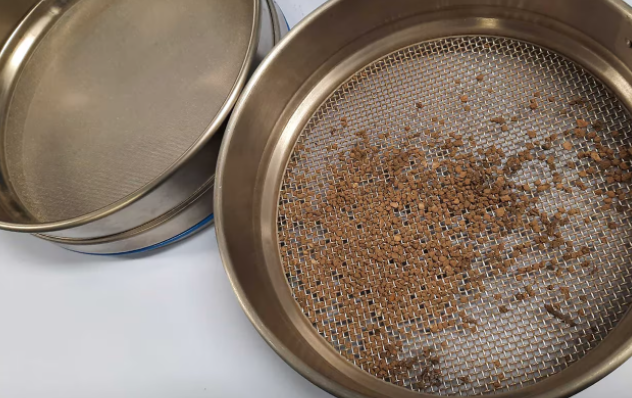
Screen frame system: The main frame adopts a standardized design with a diameter of 200mm, and the materials include 304 stainless steel, brass and cold-rolled iron sheets. Among them, the stainless steel frame has become the mainstream choice due to its corrosion resistance, and is particularly suitable for the detection of coastal soils or acidic red soils with high salt content. The screen frame is ensured to be flat through a one-time stamping process, and the interchangeability error of the screen assembly is controlled within ±0.02mm.
Screen assembly: Configure wire mesh, punching plate or electroformed screen according to the detection requirements. The aperture range of the wire mesh covers 0.02mm to 2.36mm, and the square hole design can reduce particle jamming; the punching plate is used for separation of particles larger than 2mm, and the round hole structure improves the pass rate of large particles.
Auxiliary device: includes a fully automatic shaker and an ultrasonic cleaning device. The shaker achieves multi-angle vibration through program control to avoid operational errors of manual screening; the ultrasonic device can effectively remove blockages in the screen, especially for the detection of clay soils with a clay content of more than 35%.
Functional use: Multivariate analysis of soil particle characteristics
Particle size distribution analysis: Calculate the content of different particle size components through the residual amount of each level of sieves, and draw the particle grading curve. This data can quantitatively characterize the three-phase ratio of sand, silt and clay, and provide a basis for soil classification.
Sample pretreatment: In the detection of chemical indicators such as soil organic matter and total nitrogen, the sample needs to be sieved to less than 0.25mm to eliminate the influence of particle heterogeneity on the analysis results.
Engineering property evaluation: In the field of construction engineering, the coefficient of uniformity (Cu) and curvature coefficient (Cc) are obtained by screening to evaluate soil permeability, compressibility and bearing capacity.
Environmental monitoring: In the investigation of contaminated sites, screening can separate the adsorption carrier particles of heavy metal pollutants, and combined with chemical testing, the migration path of pollutants can be traced.
Agricultural application: In soil improvement practice, gravel with a diameter of more than 5mm is removed by screening to optimize soil tillage performance; in seed selection, the 2mm sieve can separate weed seeds and crop particles.
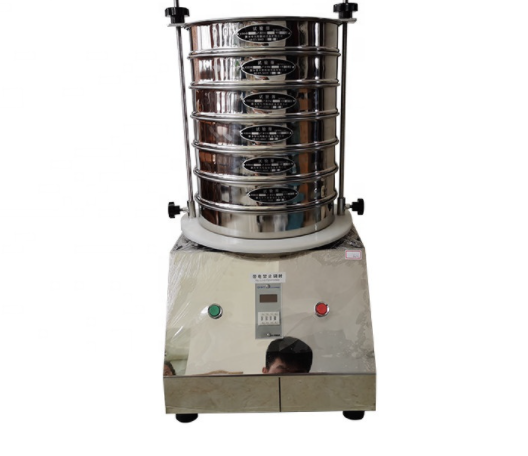
Laboratory sieves for soil testing adopts a multi-layer sieve combination design, with an aperture range covering coarse particles to fine clay particles, and can simultaneously complete multi-level particle size separation. The equipment shows stable separation efficiency in soil particle feature analysis, and can meet the testing needs of soils of different textures. Its data results can be directly used in real-world fields such as soil classification, agricultural tillage layer optimization, and environmental remediation projects.