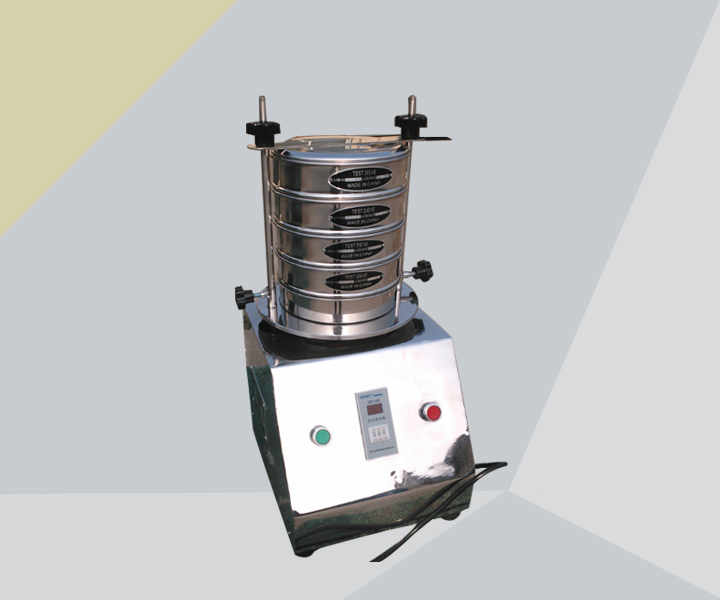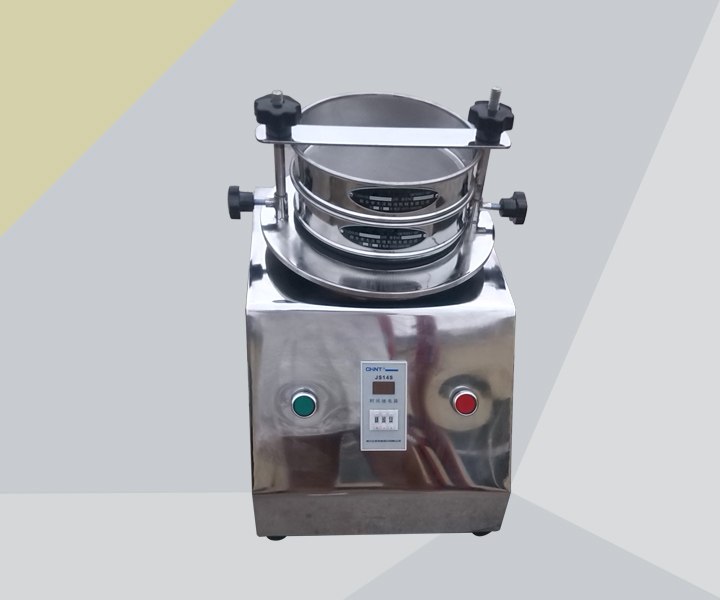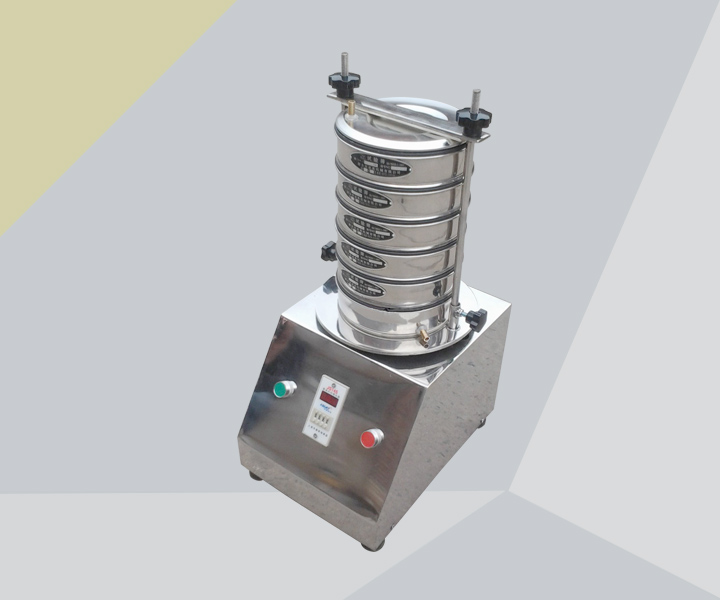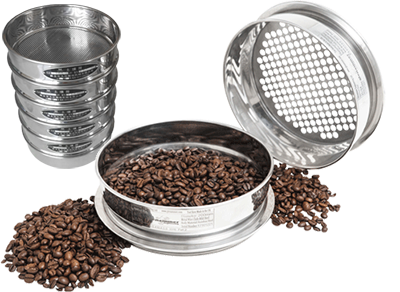
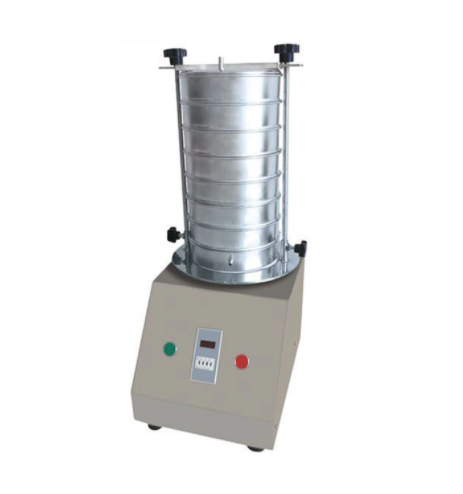
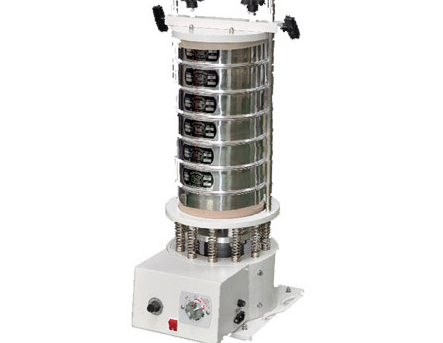
Laboratory sieves for particle size analysis is a device used for particle size distribution detection of particulate matter. Its core function is to generate a throwing motion of the material on the screen surface through mechanical vibration, thereby achieving separation and classification of particles of different sizes. The device consists of a screen frame, a screen mesh, a vibration device and a control system, covering a particle size range from micrometers to millimeters. As a basic tool for particle characterization, the technical parameters and operating procedures of Laboratory sieves for particle size analysis comply with the requirements, and its test results are objective and repeatable.
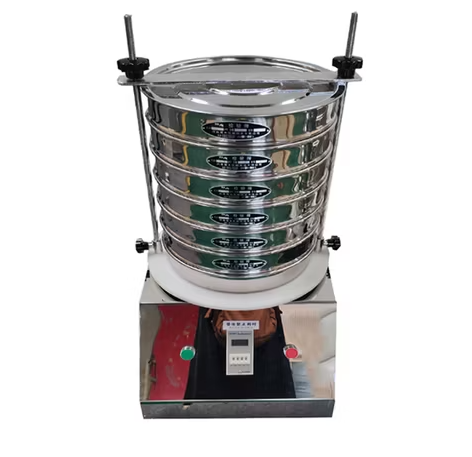
Working principle of Laboratory sieves for particle size analysis
The device drives the screen box through the excitation device to generate a multi-dimensional vibration trajectory, so that the material forms a throwing motion on the screen surface. The process includes three key stages: material loosening, layered screening and particle vibration. Under the action of the vibration field, the particle group overcomes the internal friction to form a dynamic loose state, fine particles pass through the sieve holes to form undersize, and coarse particles migrate along the sieve surface to the discharge end.
Laboratory sieves for particle size analysis uses electromagnetic vibration or eccentric block drive system, which can achieve 0-5mm adjustable amplitude and 1400r/min stable speed. The vibration parameters are adjusted by digital display controller to ensure the best separation efficiency of materials of different particle sizes. For fine particles below 300 mesh (0.05mm), the ultrasonic auxiliary system transmits 20-40kHz high-frequency vibration to the screen surface, effectively eliminating electrostatic adsorption and particle agglomeration.
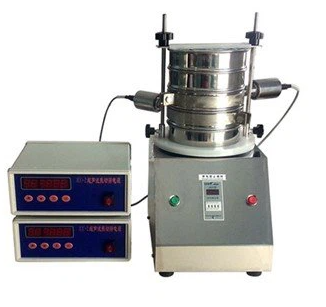
Structural composition of Laboratory sieves for particle size analysis
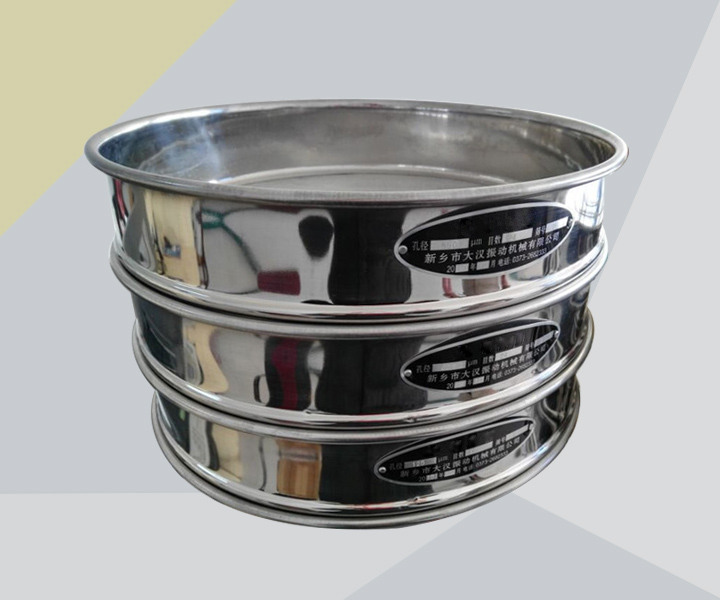
Laboratory sieves for particle size analysis consists of screen frame, screen surface, fastening device and drive system. The screen frame is made of SUS304 stainless steel and mechanically polished. The wall thickness is 0.6mm to ensure structural strength, and the surface roughness Ra≤0.8μm prevents material adhesion. The screen surface and the screen frame are connected by argon arc welding. The weld strength reaches 400MPa and can withstand high temperature treatment of 400℃.
Wire mesh: woven from stainless steel wire with a diameter of 0.025-1.6mm, with a mesh size ranging from 0.038-3mm.
Metal perforated plate: square holes (0.5-10mm) or round holes (Φ0.8-Φ12mm) are processed by CNC punching machines, suitable for coarse particle analysis above 3mm.
Electroformed sheet: 0.02-0.5mm micropores are formed by electroforming process, with a hole diameter tolerance of ±1μm, which meets the needs of fine powder analysis.
The equipment is equipped with a multi-layer screen frame stacking system, which can simultaneously install 1-8 layers of screens of different specifications. The φ200mm standard screen frame is equipped with an equidistant adjustment rod to achieve 0-50mm layer spacing adjustment to adapt to materials with different particle size distribution characteristics.
Application of Laboratory sieves for particle size analysis
Application in the field of materials science
In the metal powder metallurgy industry, the combination of sieves with different apertures (such as 200 mesh and 325 mesh) can separate powders that meet the specific particle size distribution, which directly affects the compacting density and the mechanical properties of sintered products. In the preparation of ceramic raw materials, Laboratory sieves for particle size analysis is used to control the particle size composition of raw materials such as clay and quartz to ensure the density of the green body and the bending strength after sintering.
Application in the field of geology and minerals
In geological exploration, it is used for particle size analysis of rock cuttings. In the mineral processing process, after the ore sample is graded by Laboratory sieves for particle size analysis, the dissociation degree and monomer separation degree of minerals in each particle size can be determined, providing data support for grinding and grading operations. In soil mechanics research, it is used to analyze the grading composition of particles of different particle sizes and evaluate engineering property indicators such as soil permeability coefficient and compression modulus.
Application in the field of energy and chemical industry
During the coal washing process, the particle size classification system constructed by Laboratory sieves for particle size analysis (such as 13mm, 6mm, and 3mm classification) directly affects the sorting efficiency of the jig and heavy medium cyclone. In the field of catalyst preparation, the particle size distribution of the carrier particles is controlled by a 300-mesh electroforming screen to ensure the uniform loading of the active components of the catalyst. In petrochemicals, polyethylene and polypropylene resin powders need to be graded in multiple layers to meet the melt index requirements of different grades of products.
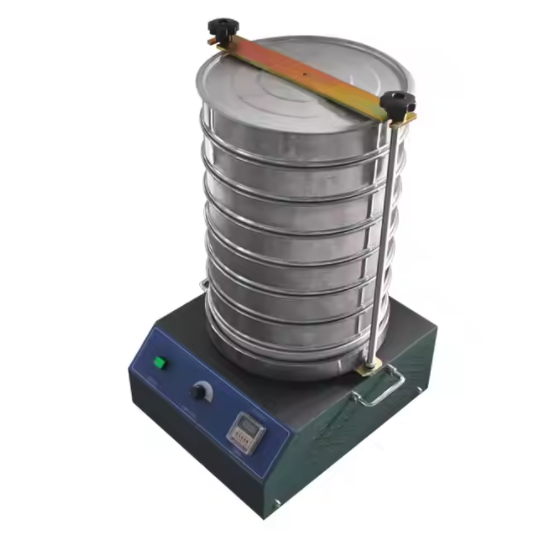
Laboratory sieves for particle size analysis uses precision-machined sieves with aperture tolerances strictly controlled at the micron level to ensure the accuracy of particle size classification; the vibration parameters are adjusted through a digital control system to meet the screening needs of different materials. At the application level, Laboratory sieves for particle size analysis has penetrated into multiple fields such as material preparation, process optimization, and environmental monitoring. In materials science, its analysis data guides the setting of process parameters such as powder metallurgy and ceramic molding; in geological exploration, Laboratory sieves for particle size analysis provide a basis for particle size distribution for the study of stratigraphic sedimentary characteristics.