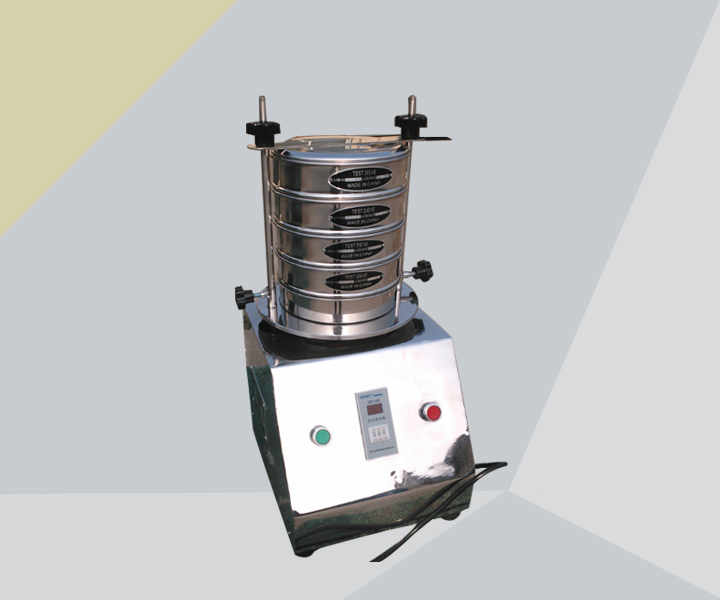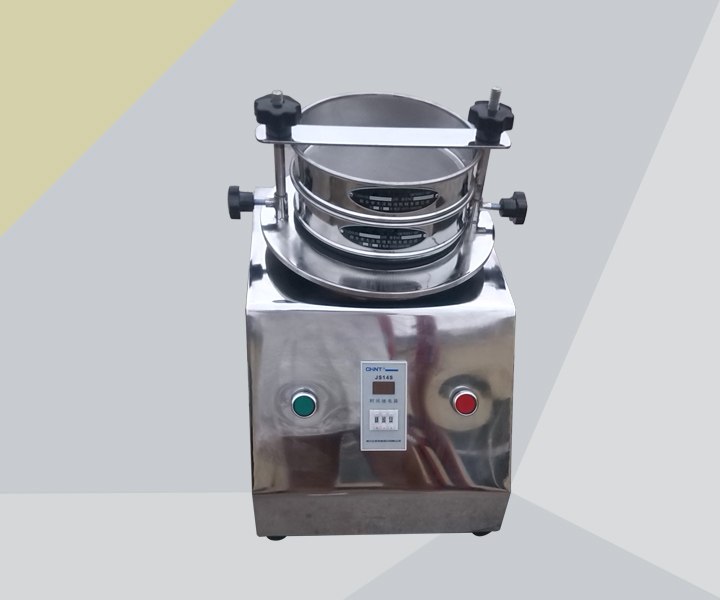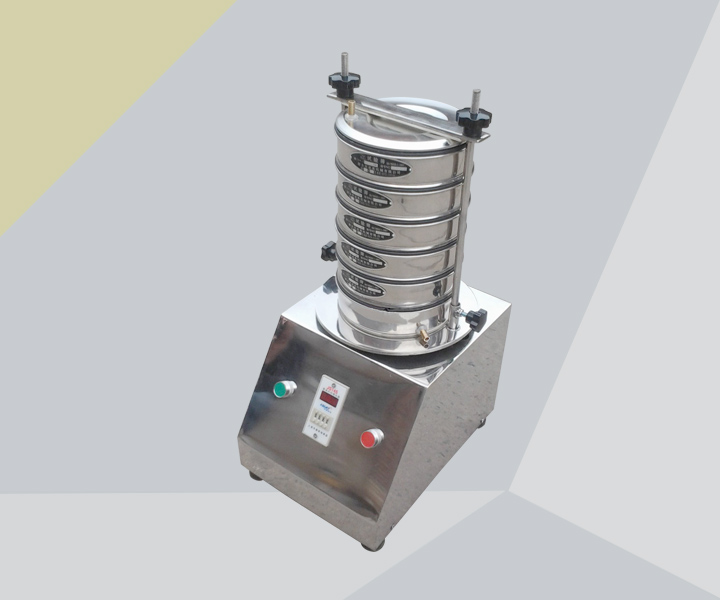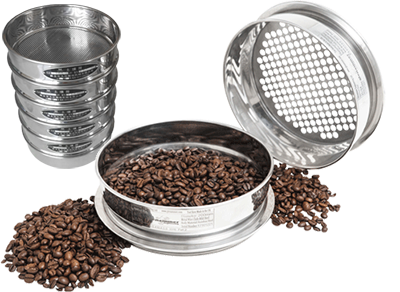
As a key particle size detection device, Laboratory sieves for flour provide an objective basis for flour quality determination by simulating the actual sieving process. Based on the principle of particle stratification, the device uses mechanical vibration or rotational motion to effectively separate flour particles between multiple layers of sieves, thereby achieving the determination of coarseness and fineness indexes. Its structural design fully considers the adhesion, agglomeration and other characteristics of flour.
Working Principle
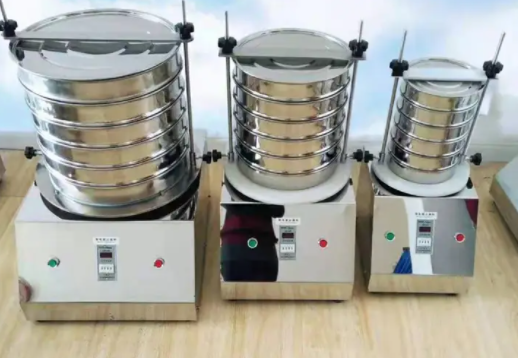
Laboratory sieves for flour are key equipment in the field of grain testing. Their core function is to achieve accurate grading of flour particles through mechanical vibration or rotational motion. Its power system adopts a worm gear speed transmission mechanism, which drives the sieve body to perform planar rotational motion through an eccentric connecting rod mechanism. When the equipment is started, the motor drives the compacting rod seat of the tray to rotate, causing the multi-layer sieve fixed in the sieve grid to produce periodic displacement. This motion mode, combined with the centrifugal force, causes the flour particles to form a regular motion trajectory on the sieve surface.
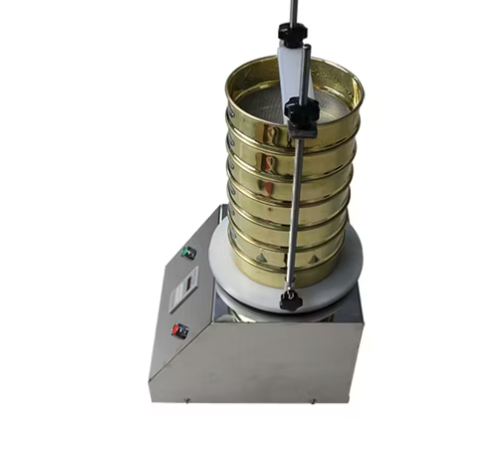
In terms of kinematic characteristics, the equipment realizes a variety of motion modes by adjusting the phase angle of the eccentric block: when the angle between the upper and lower eccentric blocks is 0°, the material is radially dispersed, which is suitable for screening coarse-grained materials; when the angle is adjusted to 15°, eddy current motion is formed to meet the needs of conventional flour testing; when the angle is 45°, a high-frequency vortex effect is generated to meet the requirements of fine powder classification; when the angle is 90°, it is converted to wet filtration mode. This design enables a single device to cover the full process testing needs from coarse bran separation to fine powder classification.
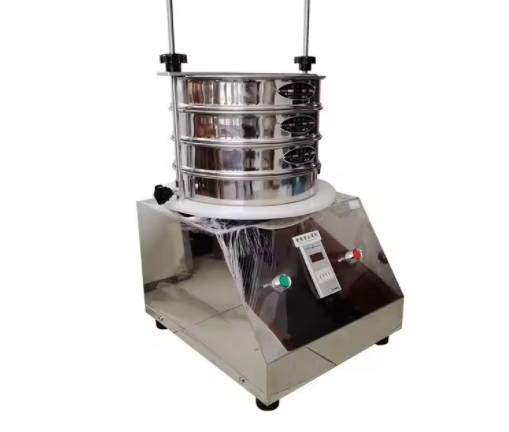
Equipment structure
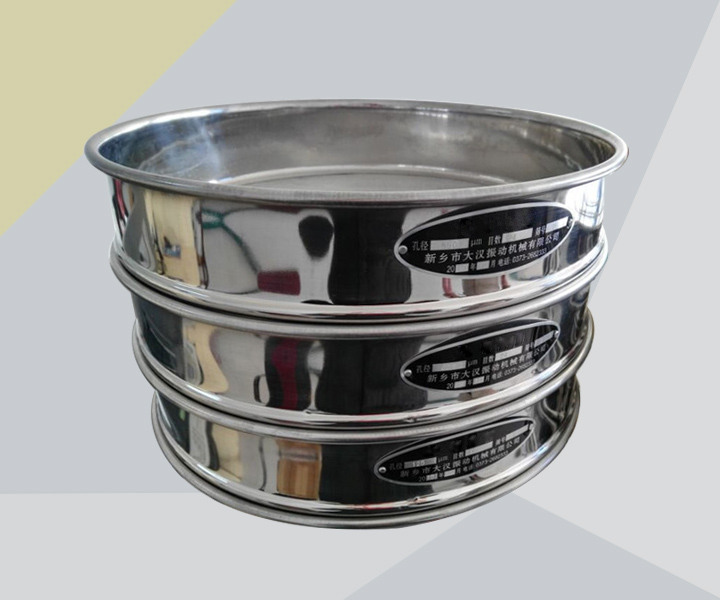
The equipment structure presents modular design features: the sieve body is made of 304 stainless steel, and the inner wall surface roughness is controlled below Ra0.8μm, which effectively prevents flour from sticking; the sieve grid assembly is composed of an aluminum alloy frame with a standard diameter of 300mm, and each layer of sieve grid is 30mm high, and can be configured with 7 specifications of sieves from 25 mesh to 107 mesh; the power system is equipped with a 60W single-phase motor, and the operating noise is controlled within 65dB(A).
The parameter matching of the power system reflects the concept of precise control. The equipped 60W single-phase motor can achieve stepless speed regulation of 50-1400rpm through the worm gear speed transmission mechanism. When testing flour with a wet gluten content of 30%, the speed must be controlled below 800rpm to avoid rupture of the gluten network due to excessive centrifugal force.
The quick replacement device of the sieve grid assembly realizes quick switching in 3 minutes. In response to the production needs of special flour, CB30 (76μm) and CB36 (91μm) double-layer screens can be configured; in the detection of premixed flour, CQ27 (69μm) screen is used to control the maximum particle size. This design enables the equipment to adapt to the detection needs of multiple varieties from bread flour to cake flour.
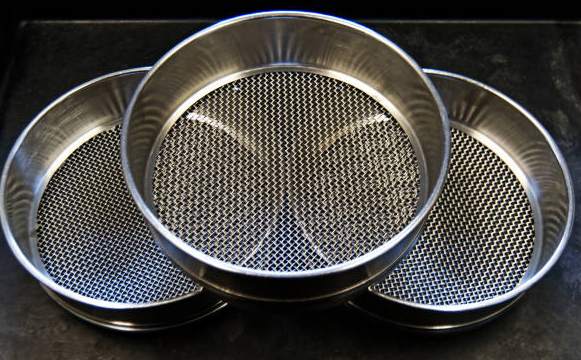
Typical application scenarios
In the grain quality monitoring system, the laboratory sieve assumes the core function of flour coarseness index detection. The detection process requires sampling 50g and setting a standard sieving cycle of 10 minutes. The intelligent timing module equipped with the equipment can automatically record the sieving time. When the residual amount exceeds 0.5g, the system automatically extends the sieving time to 15 minutes to ensure the detection accuracy.
The application in the field of food processing presents a deep customization feature. In the production of special flour, the double-layer sieve can be configured to achieve accurate grading of bread flour and cake flour. The standard sieve grid quick replacement device of the equipment can complete the sieve switching within 3 minutes, which meets the needs of multi-variety small batch production.
Scientific research and education institutions focus on its teaching function. The transparent observation window equipped with the equipment can display the sieving process in real time, and can be used with a laser particle size analyzer to establish a flour particle size distribution curve. In the food engineering experimental teaching, students intuitively understand the quantitative relationship between sieving efficiency and process parameters by adjusting the motor speed and the angle of the eccentric block.
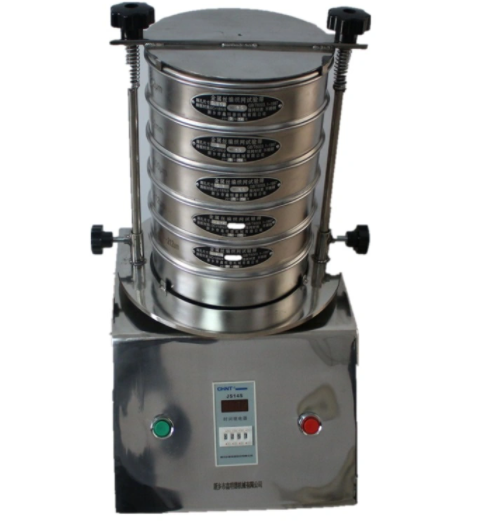
The technical application of Laboratory sieves for flour always revolves around the physical properties and testing requirements of flour. The equipment is designed with standardized operating procedures and adjustable parameters to meet the testing requirements of different types of flour, from general wheat flour to special premixed flour, and can achieve grading. In daily use, the cleanliness, tension control and sealing performance of the sieve should be checked regularly.