Automatic Powder Testing Sieve Equipment
Automatic Powder Testing Sieve Equipment is a laboratory solution for particle size analysis of dry powders, granular materials, and other particulate substances.
Automatic Powder Testing Sieve Equipment is a laboratory solution for particle size analysis of dry powders, granular materials, and other particulate substances. Compared with manual sieving, automatic operation provides controlled test timing and screening conditions, helping laboratories obtain consistent and repeatable particle size results with less operator intervention.
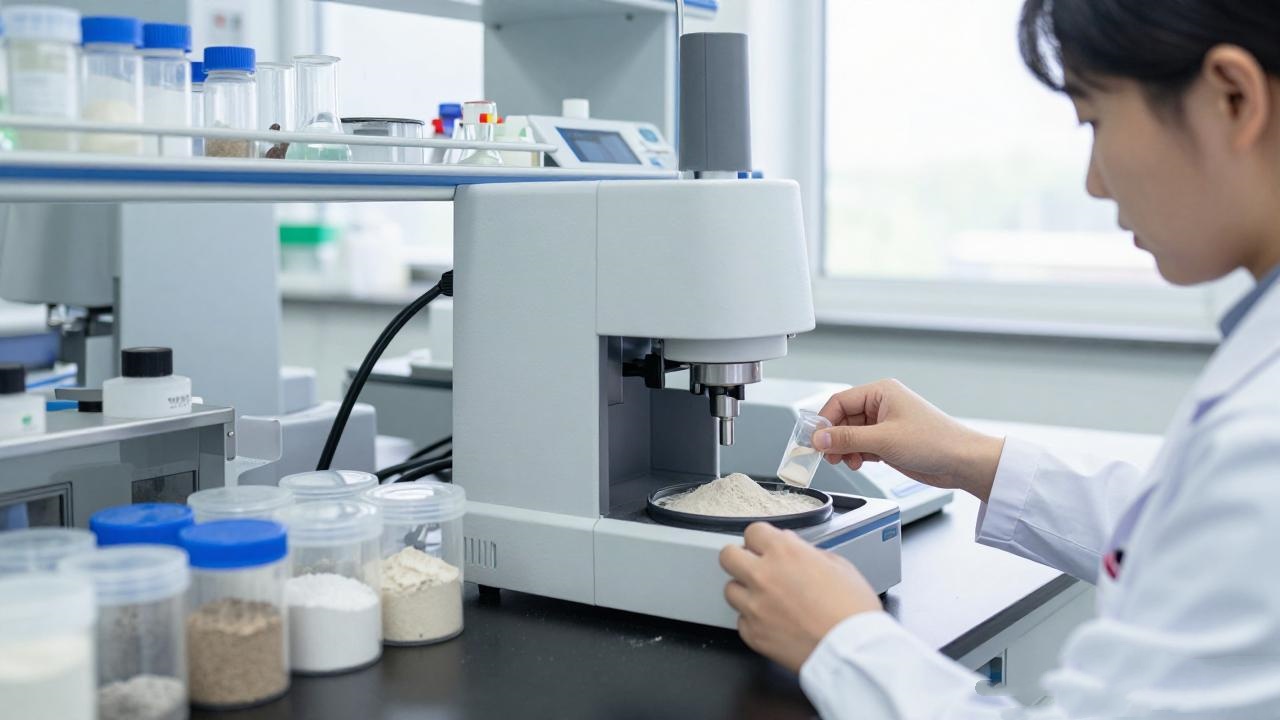
The equipment is designed for quality control laboratories, research and development, and production environments where powder particle size testing is required.
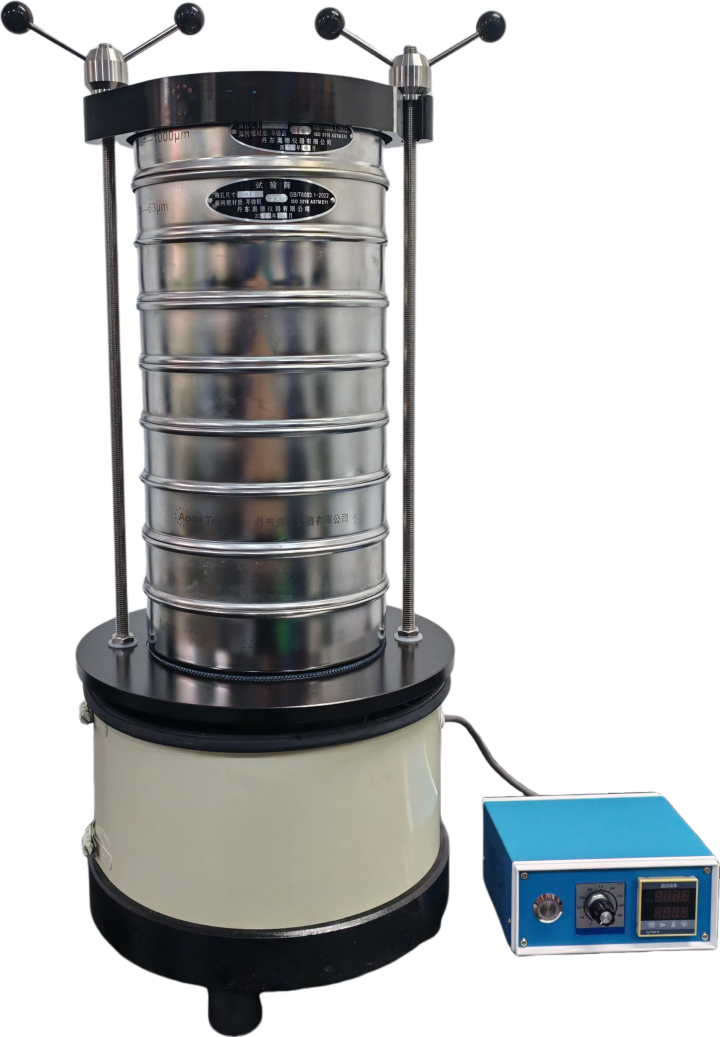
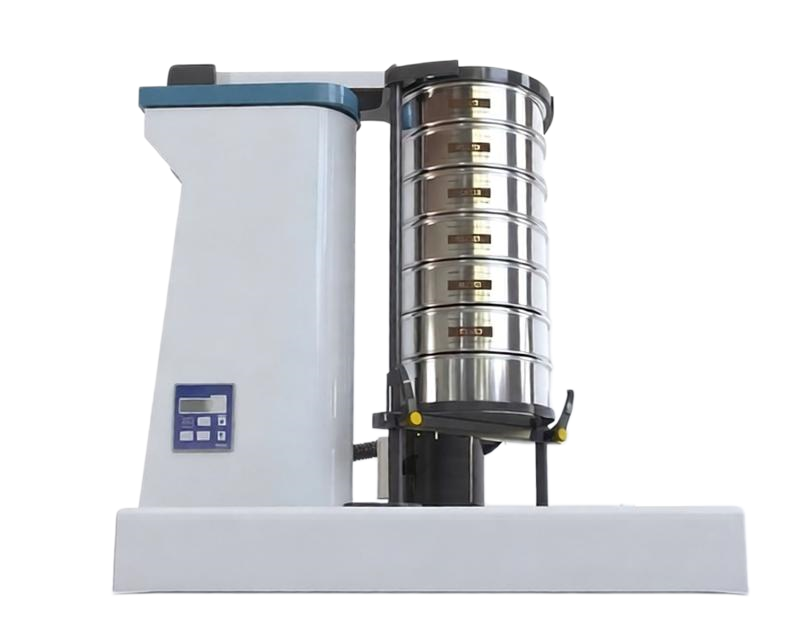
A typical configuration uses multiple test sieves in one stack to separate a sample into several particle size fractions during a single screening cycle. Typical test time is about 5 minutes, while some suitable samples may be screened in approximately 30 seconds. Typical sample capacity is 1–20 g.
01 What Does Automatic Powder Testing Measure?
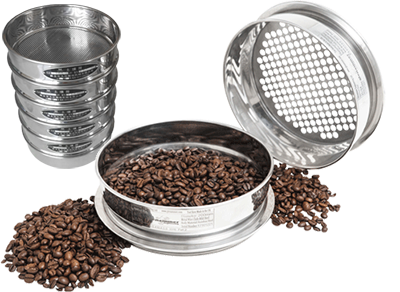
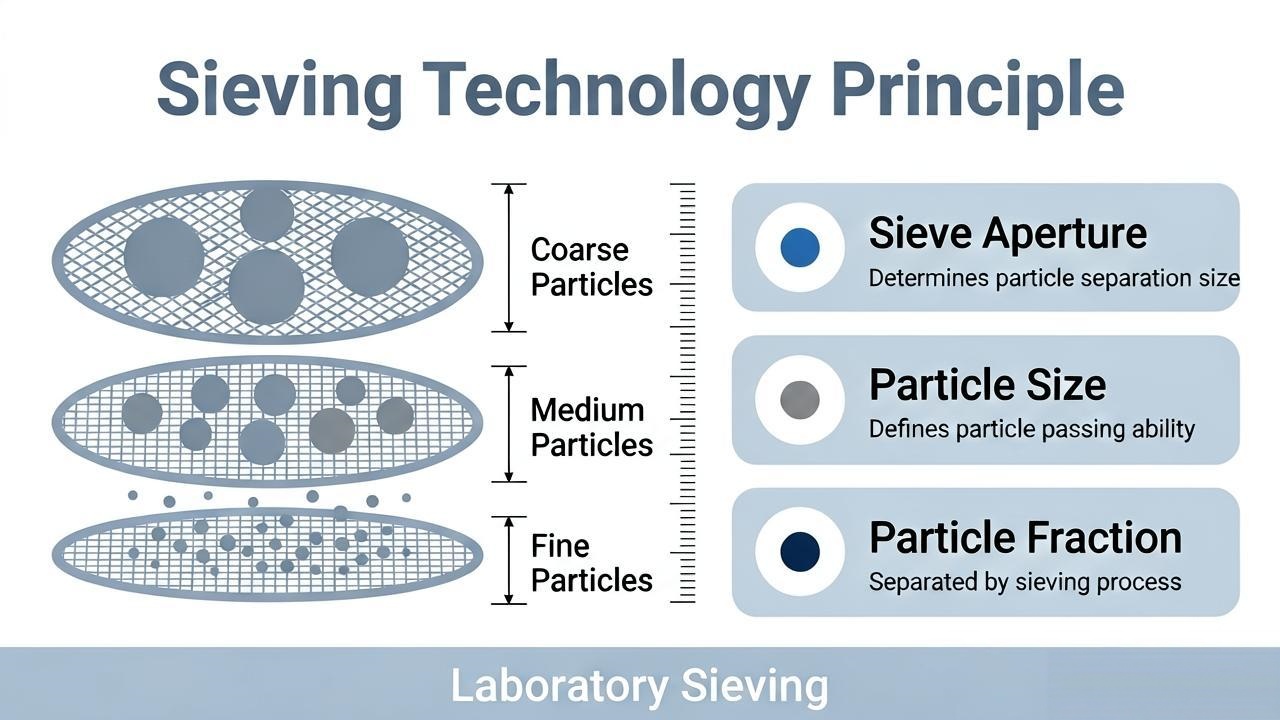
Automatic Powder Testing Sieve Equipment primarily evaluates the particle size distribution of dry powders and granular materials through sieve analysis. Test sieves with defined apertures separate the sample into different size fractions, allowing retained material to be measured and compared.
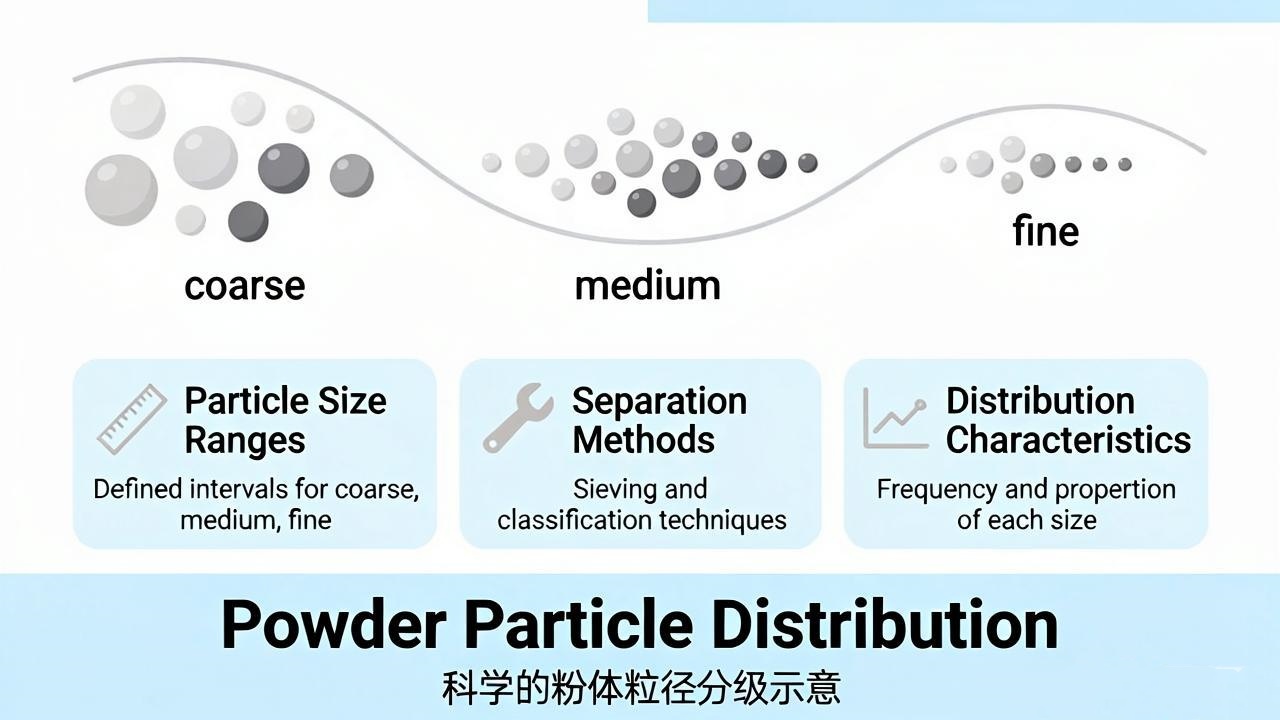
Unlike powder testers designed primarily for flowability or bulk density, this equipment focuses on sieve-based particle size testing and fraction separation. It is suitable for routine laboratory sieve analysis, quality control, and material comparison.
02 How Automatic Powder Testing Works
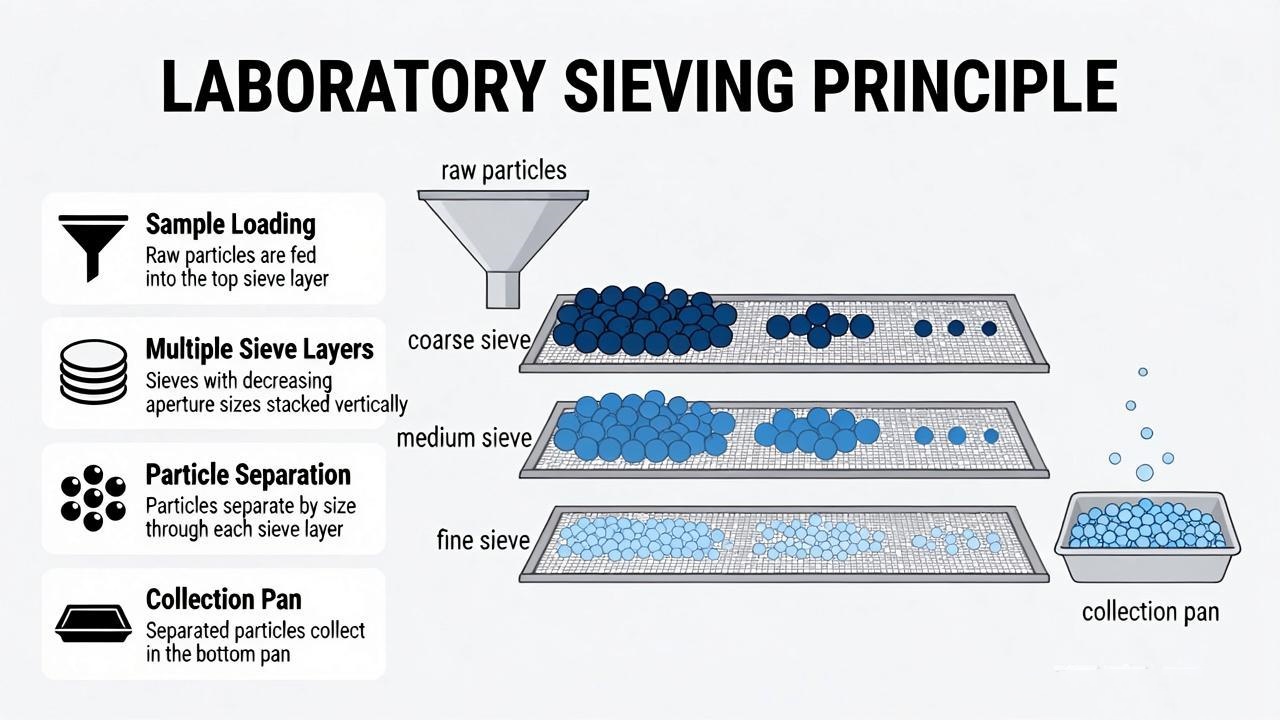
Sample Loading
The prepared powder or granular sample is placed into the feed hopper or onto the uppermost test sieve according to the selected configuration.
Programmable Sieving
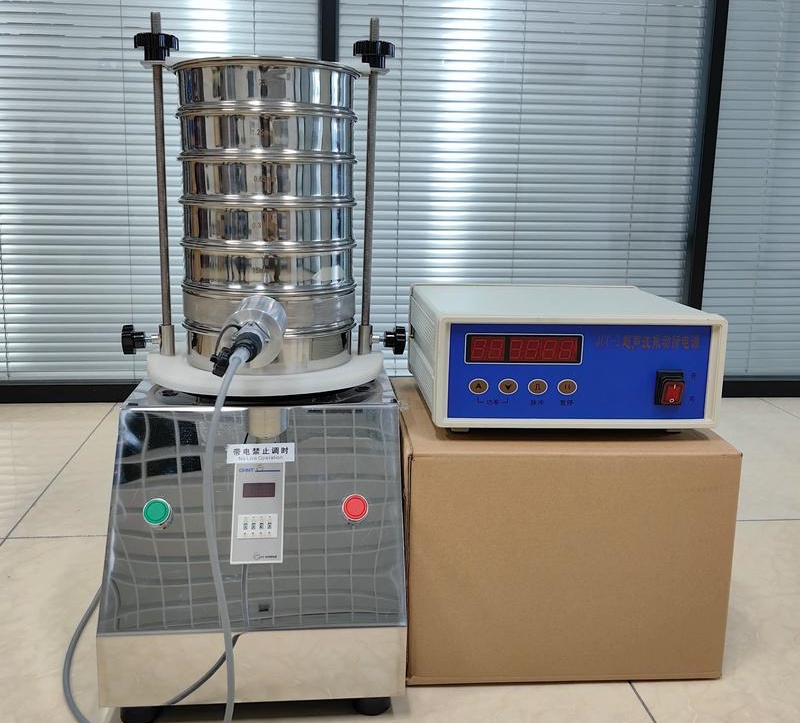
The sieve stack is subjected to controlled screening motion. Depending on the configuration, electromagnetic vibration, sonic excitation, mechanical motion, or rotary vibration can be used to promote particle movement across the sieve surfaces.
Particle Separation and Measurement
Particles smaller than the sieve aperture pass through to the next layer, while larger particles remain on the corresponding sieve. Multiple sieve layers can separate one sample into several particle size fractions.
Each fraction can be collected and weighed after screening. Where an electronic weighing system is integrated, measurement data can be transferred for further processing.
Cleaning
Compressed air, vacuum cleaning, vibration, knocking balls, or optional ultrasonic cleaning can help remove residual particles from the sieve system.
03 Key Features
Automated and Repeatable Testing
Programmable operation provides controlled test duration and screening conditions to improve consistency between repeated tests.
Programmable Test Profiles
Test duration, vibration intensity, ramping, dwell time, and other available parameters can be configured for different materials and testing procedures.
Multi-Layer Sieving
Accommodates 1–8 sieve layers, allowing one sample to be separated into multiple particle size fractions in a single operation.
Stainless Steel Construction
Stainless steel contact components provide durability and are suitable for applications where material cleanliness is important.
Automatic Shutdown
The built-in timer stops the screening cycle after the preset test duration.
Dust Containment
The enclosed configuration helps limit the release of fine powder during screening and supports cleaner laboratory operation.
04 Technical Specifications
| Parameter | Specification |
|---|---|
| Sieve Diameter | 76 mm, 100 mm, 200 mm, 203 mm, 300 mm, 400 mm |
| Sieve Layers | 1–8 layers, up to 9 fractions including pan |
| Applicable Particle Size Range | Up to 5 µm–100 mm, depending on sieve configuration and material |
| Test Sieve Aperture | Selected according to the required particle size range |
| Timer Range | 1 second–99 minutes |
| Typical Test Time | About 5 minutes; some suitable samples may require approximately 30 seconds |
| Sample Capacity | 1–20 g |
| Amplitude | 3 mm or 14 mm, depending on configuration |
| Vibration Frequency | 50–300 times/min, continuously adjustable |
| Power Supply | 110V / 220V, 50/60 Hz |
| Contact Material | Stainless steel, SUS304 |
The applicable particle size range depends on the selected sieve aperture, sieve diameter, number of sieve layers, and material characteristics.
05 Sieve Standards and Testing Requirements
Automatic powder testing can be configured around applicable laboratory sieve standards and test methods. Depending on the application, selected test sieves may need to comply with ASTM, ISO, USP, EP, or other applicable specifications.
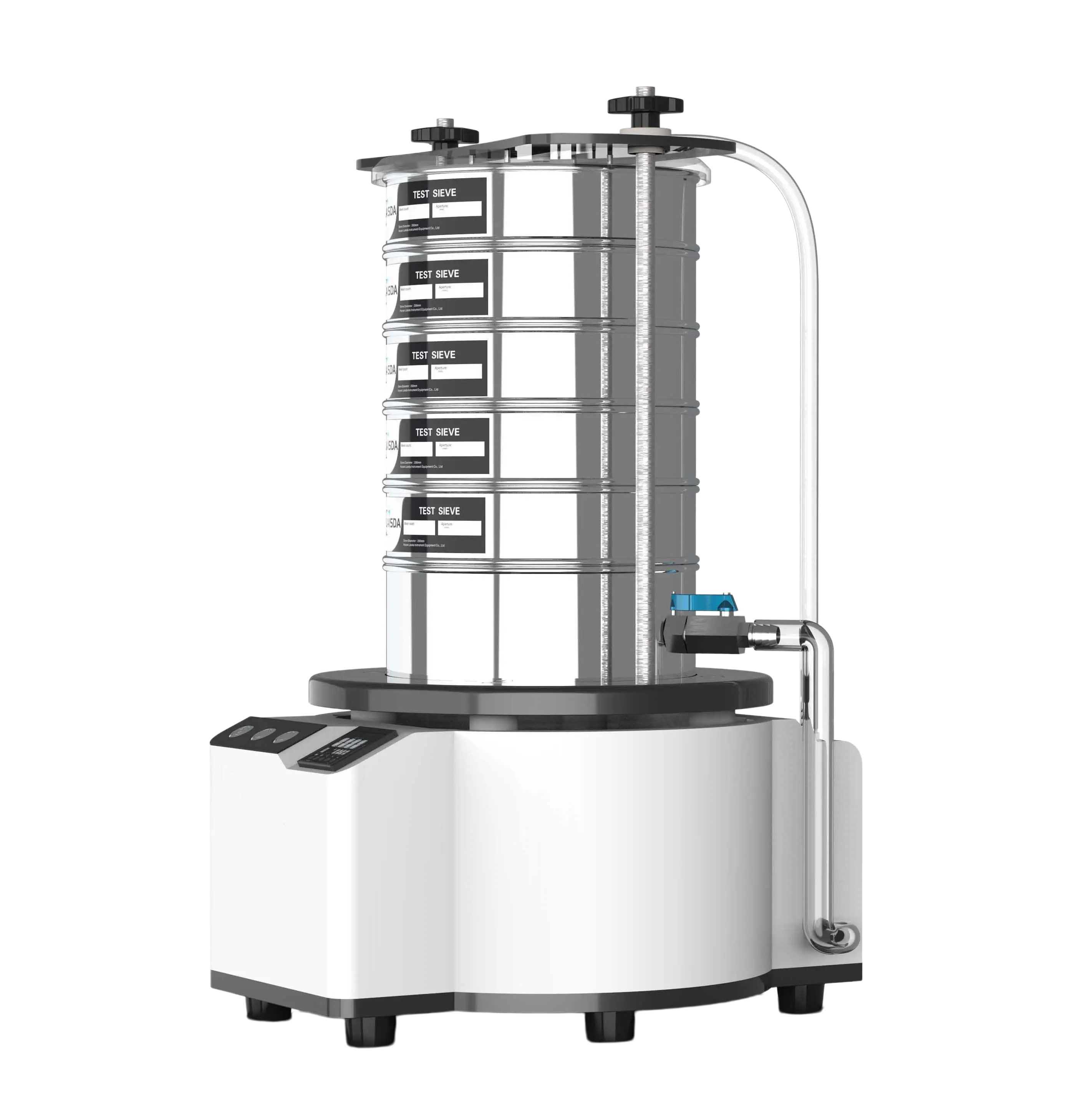
ASTM E11 specifies requirements for test sieves used for particle size analysis. Sieve aperture and construction should be selected according to the applicable testing method.
06 Powder Testing Applications
Pharmaceuticals
Particle size testing of APIs, excipients, and powdered formulations for quality control.
Food and Ingredients
Screening flour, spices, sugar, cocoa powder, and other powdered ingredients.
Chemical and Materials
Testing catalyst powders, pigments, resins, dyes, and other particulate materials.
Metallurgy and Minerals
Particle size classification of metal powders, minerals, ores, sand, and other granular materials.
Research and Quality Control
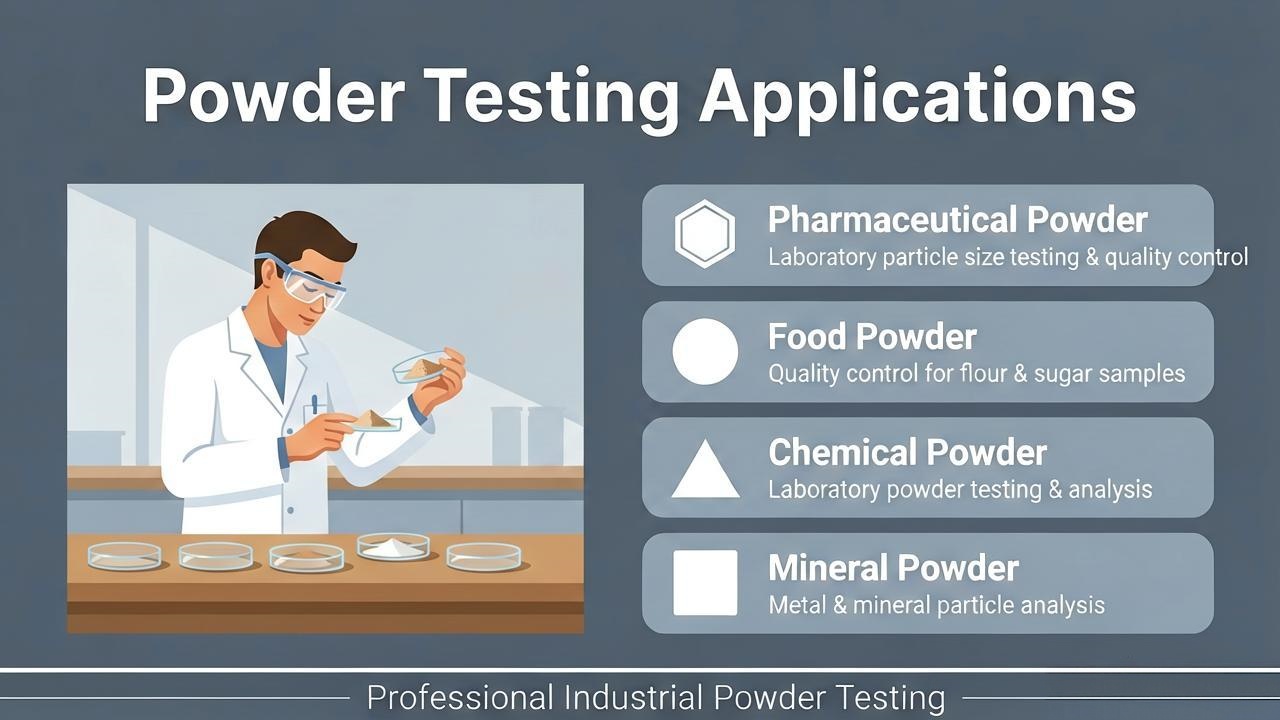
Laboratory particle size characterization, incoming material inspection, and process control.
07 Cleaning, Maintenance and Safety
Cleaning and Residue Removal
Cleaning functions such as compressed air, vacuum cleaning, vibration, knocking balls, and optional ultrasonic cleaning help remove residual material from the feed system and sieve mesh.
Routine Maintenance
Routine maintenance includes inspecting sieve mesh condition, checking clamps and connections, removing accumulated material, and replacing damaged components when necessary.
Work Safety
When fine powders are processed, appropriate dust extraction and laboratory safety procedures should be followed according to the material being tested.
08 How to Choose Automatic Powder Testing Equipment?
Sample and Sieve Configuration
Determine material characteristics, target particle size, sieve apertures, sieve diameter, and required number of fractions.
Testing Standards
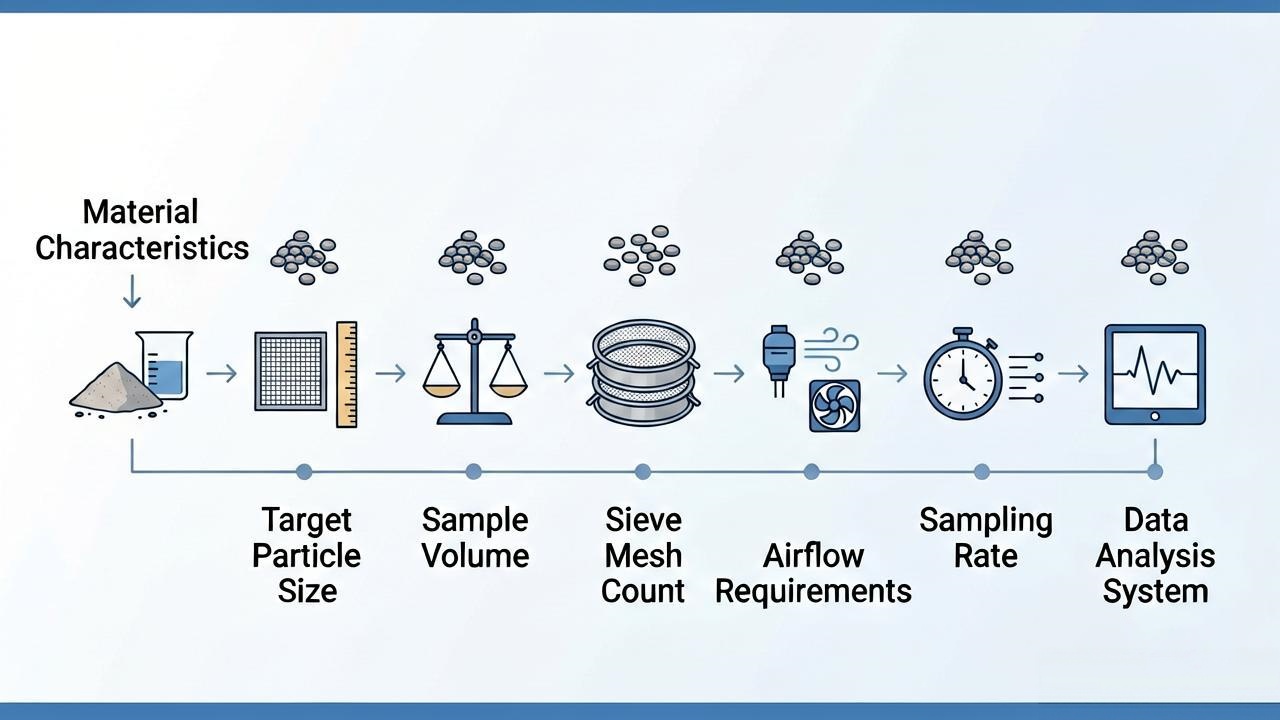
Select test sieves and operating conditions according to the applicable ASTM, ISO, USP, EP, or other testing method.
Automation and Cleaning
09 Frequently Asked Questions
What is Automatic Powder Testing Sieve Equipment?
Automatic Powder Testing Sieve Equipment is laboratory equipment used to separate powders or granular materials according to particle size. It automates the screening cycle and provides controlled conditions for repeatable particle size analysis.
How does automatic powder testing differ from manual sieve analysis?
Manual sieving depends more heavily on operator timing and technique. Automatic operation provides programmable test duration and controlled screening conditions, helping improve consistency between repeated tests.
What types of powder can be tested?
The equipment can be configured for many dry powders and granular materials, including pharmaceutical ingredients, food powders, chemicals, metal powders, minerals, and other particulate materials.
How many test sieves can be used in one test?
The standard configuration accommodates 1–8 sieve layers, with the collection pan allowing up to 9 particle size fractions from one screening operation.
Can standard test sieves be used?
The equipment can be configured with compatible laboratory test sieves. Sieve diameter, aperture, and applicable standard should be selected according to the required testing method.
How is cross-contamination reduced between samples?
Cleaning functions such as compressed air, vacuum cleaning, vibration, knocking balls, and optional ultrasonic cleaning can help remove residual particles from the sieve system before the next test.
10 Conclusion
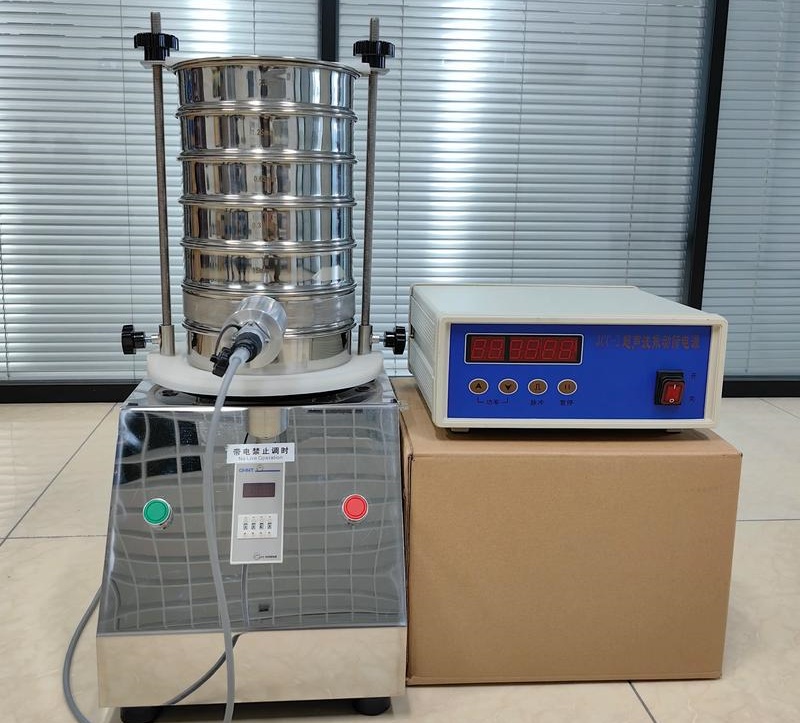
Automatic Powder Testing Sieve Equipment provides controlled and repeatable particle size testing for powders and granular materials. Programmable operation, multi-layer sieving, and selectable test conditions make it suitable for laboratory quality control and research applications.
The appropriate configuration should be selected according to particle size, sieve diameter, number of fractions, material characteristics, and applicable testing standards. Contact the technical team for model selection and application-specific requirements.