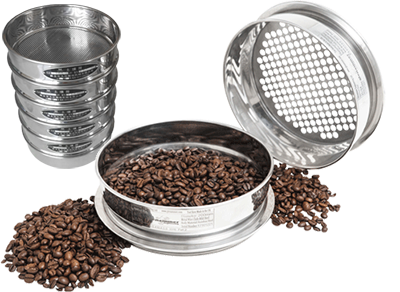
The purpose of Soil Test Sieve Analysis is to determine the relative content of particles of different sizes in a soil sample. The soil sample is separated into several particle size components through a series of standardized test sieves with specific apertures. Usually, this test is combined with dry sieving, wet sieving or sedimentation methods to adapt to the particle characteristics of different soils, especially for the distinction between fine powders and clays. Finally, the test results are presented in the form of data and curves, providing the actual situation of soil particle size distribution.
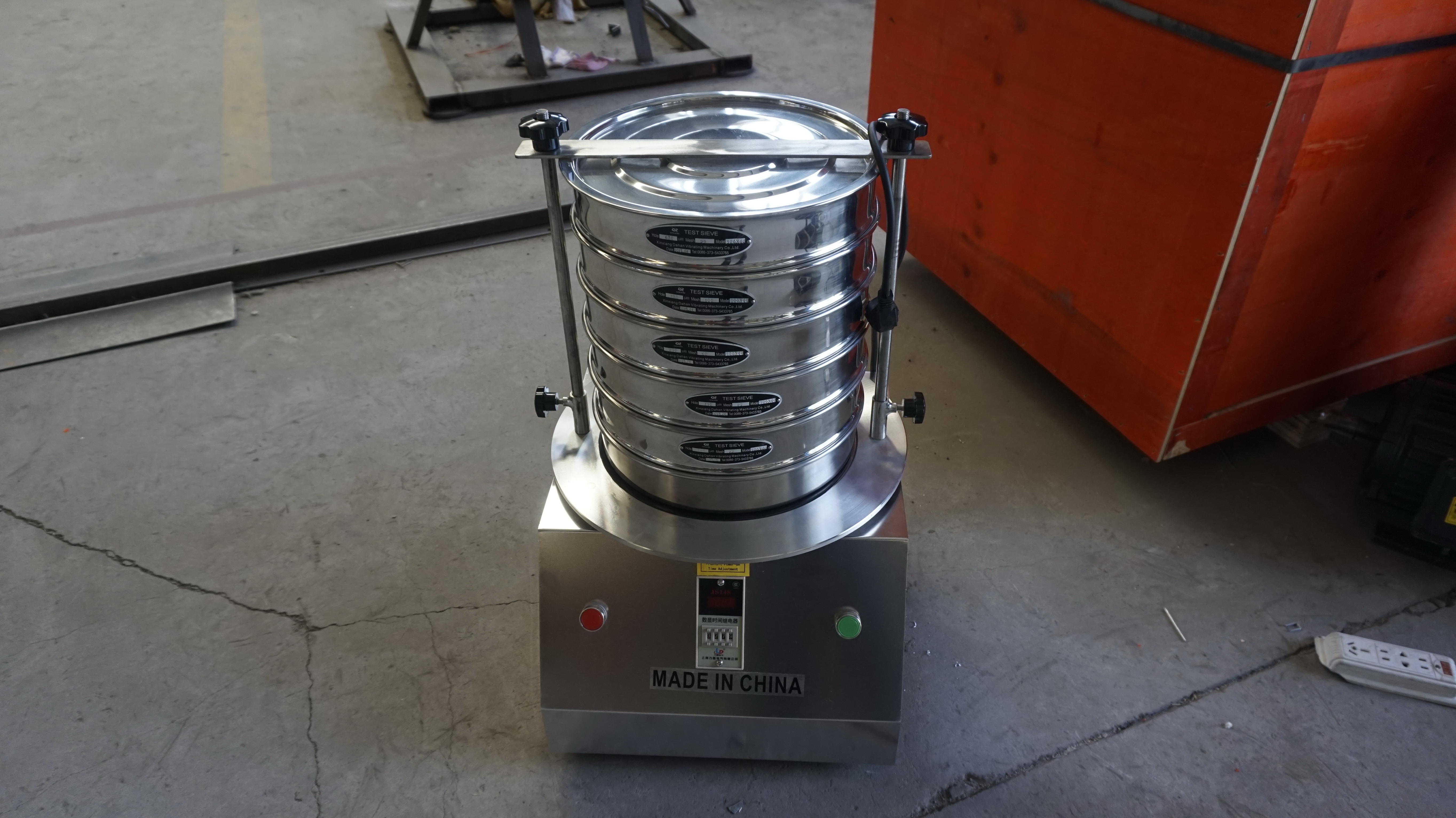
What is the principle of Soil Test Sieve Analysis?
The principle of Soil Test Sieve Analysis (also known as sieving analysis or particle grading analysis) is based on a very intuitive physical phenomenon: particles of different sizes will separate when passing through sieves of different apertures under the action of gravity.
Physical separation: When a dry soil sample passes through a series of standard test sieves with apertures arranged in descending order, particles larger than the sieve aperture will be retained on the sieve, while particles smaller than the sieve aperture will fall through the sieve aperture to the next sieve or sieve bottom plate.
Mass measurement: By accurately weighing the mass of soil remaining on each sieve, we can calculate the percentage content of soil particles within a specific particle size range.
Particle grading curve: Plotting these data into a particle grading curve (usually with the logarithm of the sieve size as the horizontal axis and the percentage as the vertical axis) can intuitively reflect the distribution of particles of different particle sizes in the soil.
What are the methods of Soil Test Sieve Analysis?
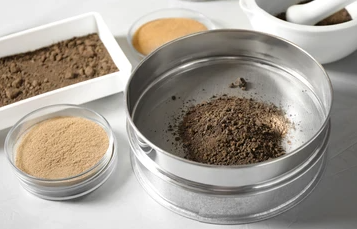
Soil Test Sieve Analysis (particle grading analysis) is an important method for determining the distribution of soil particle size. Depending on the content of fine particles (silt and clay) in the soil, dry sieving, wet sieving or sieving-sedimentation combined methods are usually used.
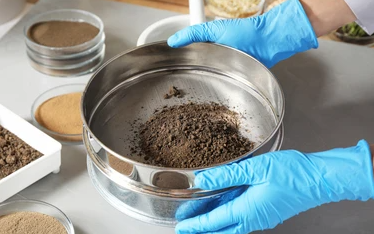
Dry sieving method
Features: Easy and fast operation, no water is required, and the steps of wetting, washing and drying are omitted, and the test cycle is relatively short. Low equipment requirements, only test sieves, vibrating screens and balances are required. Suitable for coarse particles, good separation effect on coarse soils such as sand and gravel.
Applicability: Suitable for coarse-grained soils, mainly used to analyze non-cohesive, free-flowing soils such as sand and gravel. Low fine particle content. When the content of particles passing through the 0.075 mm sieve in the soil is very small (usually less than 5% or 10%, depending on the standard requirements), the dry sieving method can be used directly. Quick preliminary analysis, as a quick and easy method, suitable for preliminary particle grading analysis of soil.
Wet sieving method
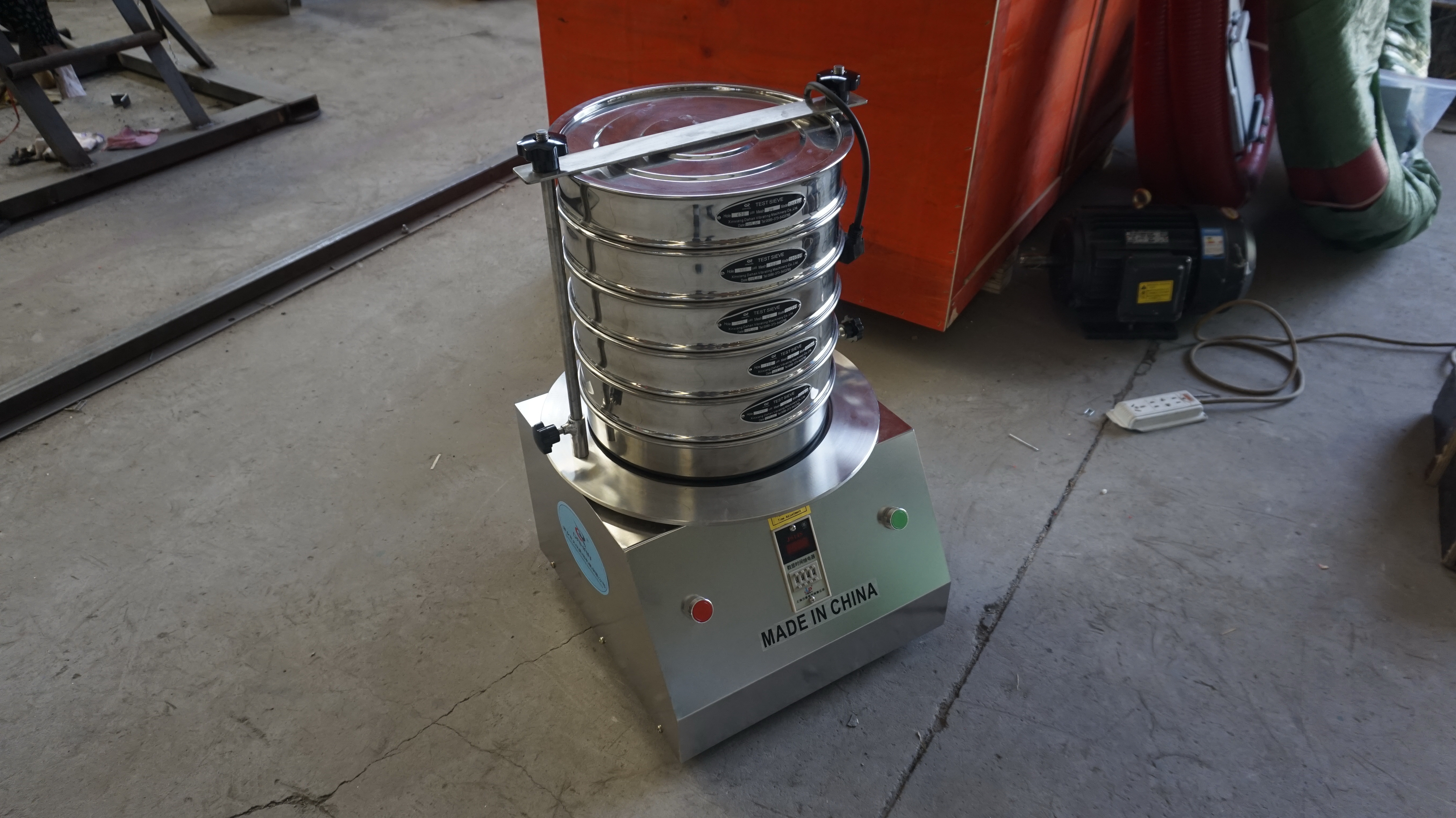
Features: Good dispersion effect, using the flushing effect of water flow (or adding dispersant), it can effectively disperse the sticky particles and agglomerates in the soil, prevent the sieve holes from being blocked, make the screening more thorough and the results more accurate. Applicable to fine-grained and cohesive soils, it can more accurately separate fine particles less than 0.075 mm, and provide pure fine soil samples for subsequent sedimentation analysis.
Applicability: Applicable to fine-grained and cohesive soils, mainly used to analyze soils containing more silt and clay, or soils with strong viscosity and easy to agglomerate. When it is necessary to accurately determine the fine particle content in the soil that passes through the 0.075 mm sieve and combine it with the sedimentation method for complete particle grading analysis, the wet screening method is an indispensable pretreatment step. It is suitable for soil samples that need to remove soluble salts or organic matter. The wet screening method can more accurately separate the skeleton particles (sand, gravel) of the soil, which helps to study its structural stability.
Sieving-sedimentation combined method
Scope of application: All types of soils, especially for soils with high fine particle content (more than 5% or 10% of particles passing the 0.075 mm sieve).
Sieving of coarse particles (>0.075 mm): Wet screening is usually used for pretreatment. Wet screen the soil sample that passes the 2 mm sieve (using a 0.075 mm sieve or other coarser sieves) to separate coarse particles larger than 0.075 mm and fine particles smaller than 0.075 mm.
Dry and weigh the particles larger than 0.075 mm, and further dry screen them according to the particle size to obtain the particle size distribution of these particles.
Sedimentation analysis of fine particles (<0.075mm): Collect the fine particle suspension that passes through the 0.075mm sieve in the wet sieving method for the next sedimentation analysis.
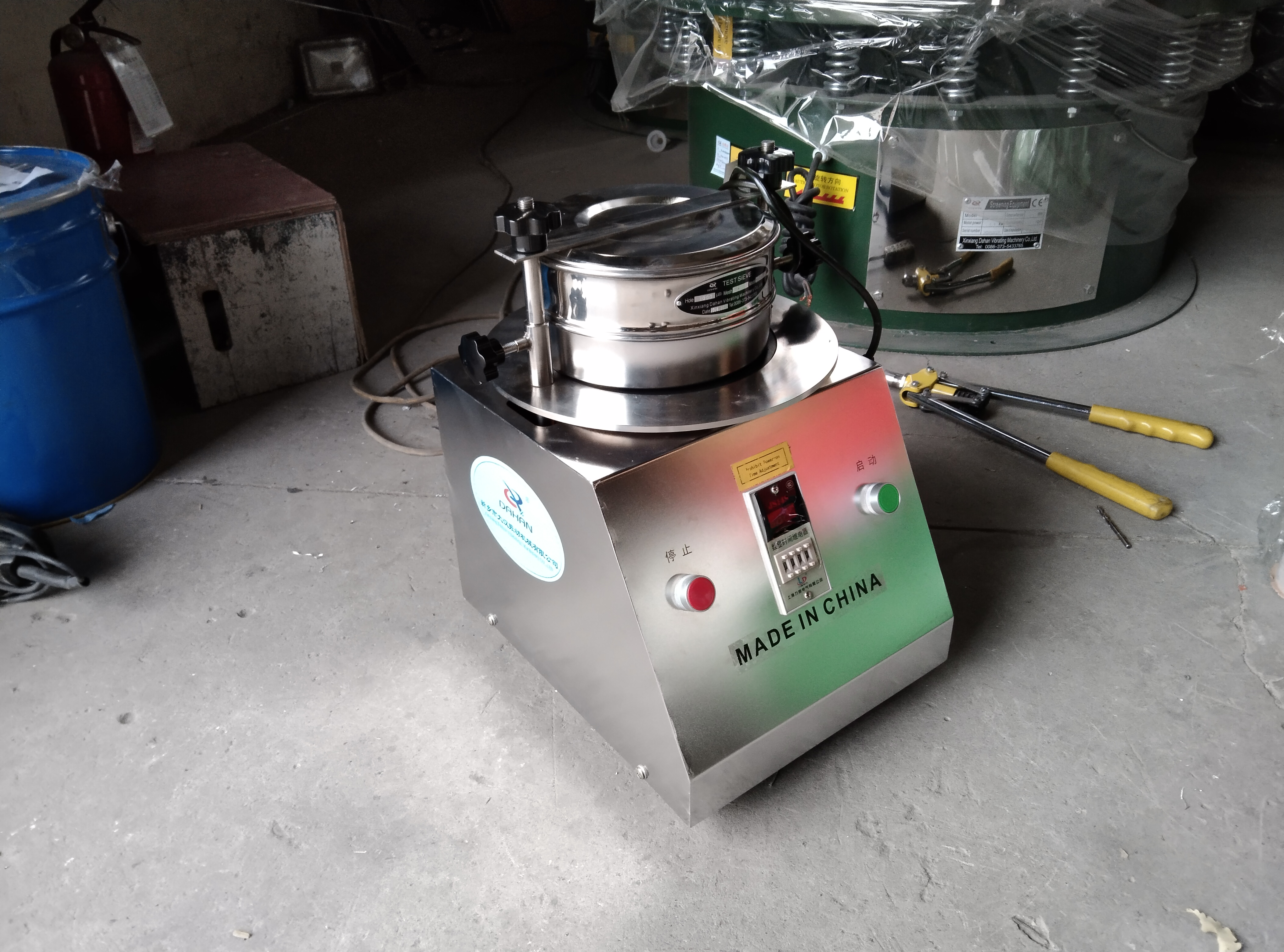
Soil Test Sieve Analysis is used in practical soil analysis in many fields. It provides a standardized method to obtain specific size data of soil particles, which is essential for evaluating the engineering performance or agricultural adaptability of soil. Through this operation, the relative content of major components such as sand, silt and clay in the soil can be determined, and these data directly support subsequent construction planning, farmland management or environmental remediation decisions. Therefore, the soil test sieve is a tool for collecting basic physical information of soil in actual projects, and its role is reflected in providing a reliable reference basis for various soil-related practical activities.