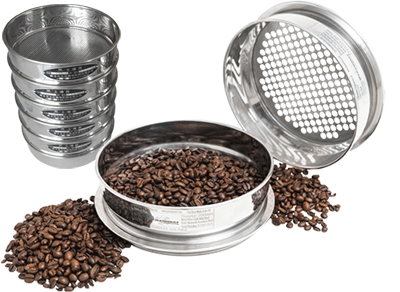
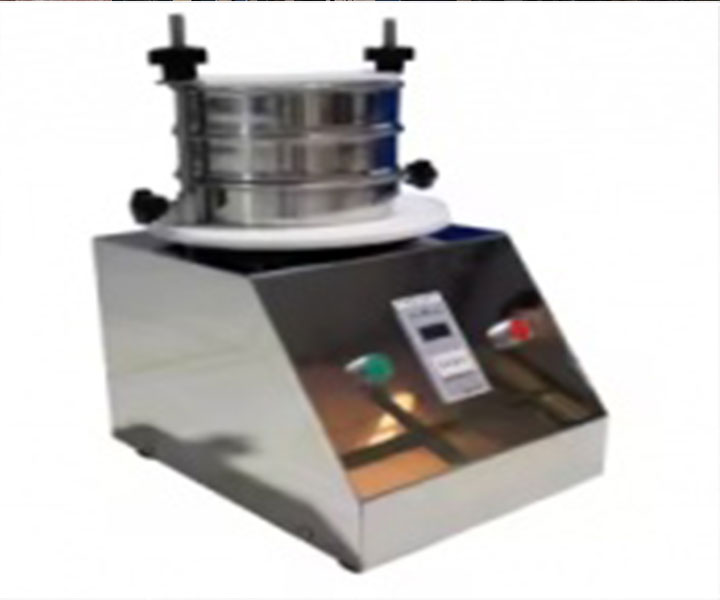
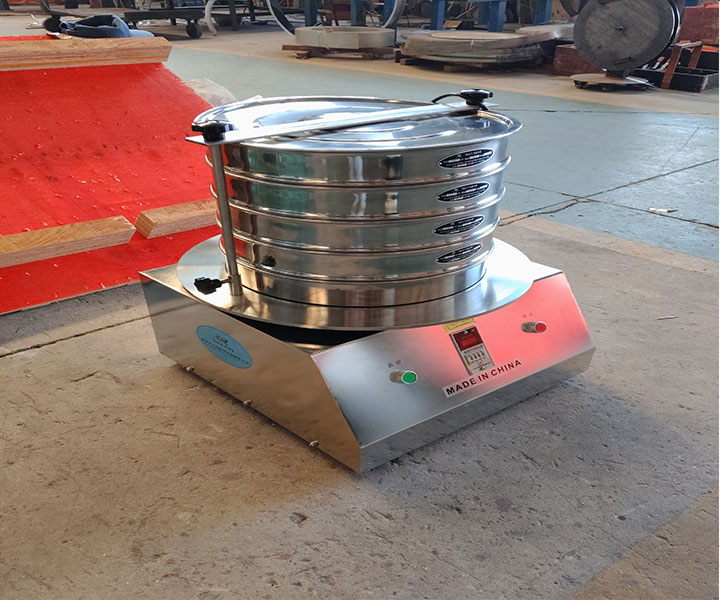
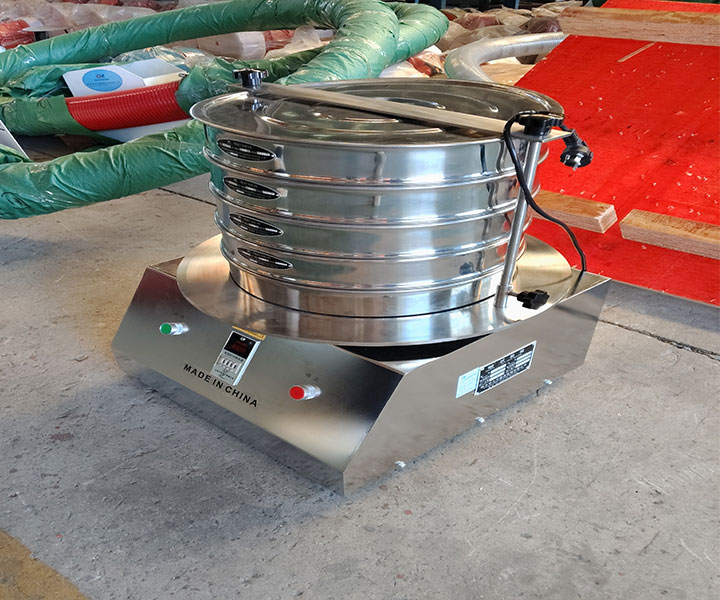
The function of Cement Test Sieve For Quality Control is to accurately determine the fineness of cement. Through a precise screening process, cement particles of different particle sizes can be effectively separated, thereby quantifying their fineness distribution and providing basic data for cement quality control. The material of the test sieve is usually made of wear-resistant and corrosion-resistant stainless steel wire mesh as the sieve, supplemented by a sturdy stainless steel or brass sieve frame to ensure the stability of the sieve size and the accuracy of the test results in long-term use. Its screening mesh range is mainly concentrated in key particle sizes such as 75 microns (or 80 microns) and 45 microns, which can meet the inspection needs of cement products with different fineness requirements.
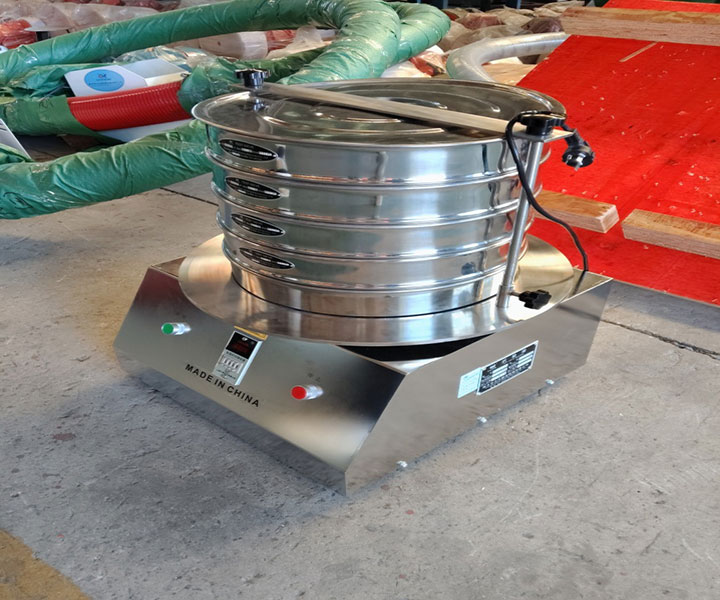
What is the mesh number of Cement Test Sieve For Quality Control?
In cement fineness inspection, cement fineness is usually expressed as the sieve residue of 80μm square hole sieve. For some special cement varieties, the sieve residue of 45μm square hole sieve may also be involved. The following are some common sieve mesh sizes:
80 mesh sieve: sieve size is about 180μm
100 mesh sieve: sieve size is about 150μm
200 mesh sieve: sieve size is about 75μm
325 mesh sieve: sieve size is about 45μm
Therefore, the 80μm square hole sieve used for cement fineness inspection is roughly equivalent to a sieve of about 200 mesh.
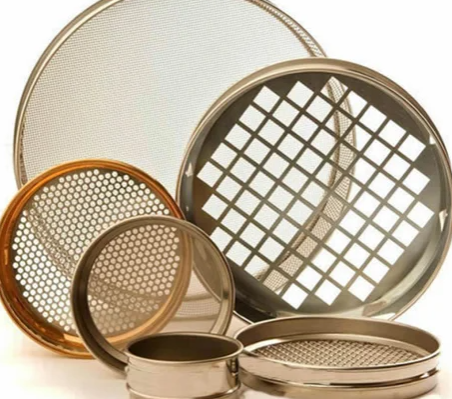
What are the materials of Cement Test Sieve For Quality Control?
The materials of Cement Test Sieve For Quality Control are mainly composed of the following two parts:
Screen material
Stainless steel wire mesh: This is a common and recommended material. Stainless steel has excellent corrosion resistance, wear resistance and high strength, which can ensure that the sieve hole maintains stable dimensional accuracy in long-term use, is not easy to deform or rust, thereby ensuring the accuracy of the test results. Common grades are 304 or 316 stainless steel.
Copper mesh/brass mesh: Early or certain special purpose sieves may be made of copper or brass. Although copper and brass have good processability, their wear resistance and corrosion resistance are not as good as stainless steel. The sieve holes may wear or oxidize during long-term use, affecting the accuracy. Therefore, cement test sieves tend to use stainless steel more.
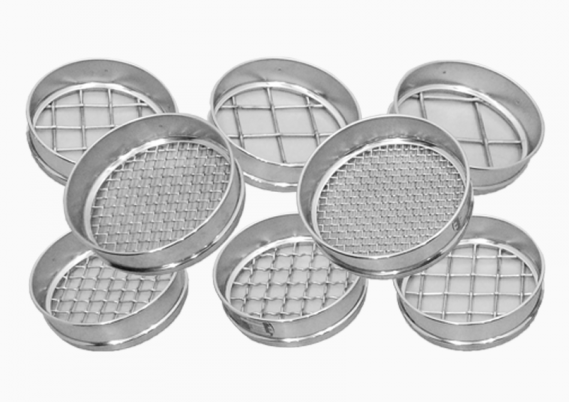
Sieve frame material
The sieve frame mainly supports and fixes the sieve, and is convenient for stacking the test sieve and installing it on the vibrating screen.
Stainless steel: The stainless steel sieve frame has good corrosion resistance, strength and appearance, and is the preferred material for high-quality test sieves. It ensures that the sieve frame is not easy to rust and deform in a humid or dusty laboratory environment, extending its service life.
Brass: Some test sieves also use brass as the sieve frame material. Brass has certain corrosion resistance and is easy to process.
Plastic: Plastic sieve frames may also be used for some special purposes or non-standard sieves, but they are usually not used for rigorous cement quality control tests because the stability and wear resistance of plastics may not meet standard requirements.
What are the functions of Cement Test Sieve For Quality Control?
Control cement quality: The fineness of cement is directly related to the hydration reaction speed and strength development of cement. The higher the degree of grinding, the more complete the cement hydration, and the faster the early strength and later strength development. Through the screening test, it can be ensured that the cement fineness meets the standard, thereby ensuring the overall quality of cement.
Optimize the production process: Timely monitoring of the fineness of raw materials and cement helps to optimize the grinding process, avoid over-grinding, and maximize the use of raw materials.
Guide concrete mix design: The fineness of cement affects the water demand, workability and strength development of concrete, so the fineness data is an important basis for concrete mix design.

The application of Cement Test Sieve For Quality Control runs through multiple links such as cement factory inspection, on-site acceptance and scientific research analysis, providing intuitive and quantifiable data support for the daily quality management of cement. Through standardized operation and regular calibration, the test sieve can continuously provide accurate fineness test results, which is of direct significance for determining whether cement products meet technical specifications. At each node of the cement industry chain, the correct use of the test sieve for fineness detection is a practical measure to ensure that cement products meet basic quality requirements and avoid potential risks.